POETRY FROM PARADISE VALLEY

POETRY FROM PARADISE VALLEY
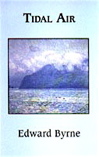
Click Image to Visit the Pecan Grove Press Web Page for Poetry from Paradise Valley

POETRY FROM PARADISE VALLEY web page

Poetry From Paradise Valley

Pecan Grove Press has released an anthology of poems, a sampling of works published in Valparaiso Poetry Review during its first decade, from the original 1999-2000 volume to the 2009-2010 volume.


Poetry from Paradise Valley includes a stellar roster of 50 poets. Among the contributors are a former Poet Laureate of the United States, a winner of the Griffin International Prize, two Pulitzer Prize winners, two National Book Award winners, two National Book Critics Circle winners, six finalists for the National Book Award, four finalists for the National Book Critics Circle Award, two finalists for the Pulitzer Prize, and a few dozen recipients of other honors, such as fellowships from the Guggenheim Foundation, the National Endowment for the Arts, etc.

Readers are encouraged to visit the Poetry from Paradise Valley page at the publisher's web site, where ordering information about the book can be found.

Best Books of Indiana 2011: Finalist. Judges' Citation: "Poetry from Paradise Valley is an excellent anthology that features world-class poetry, including the work of many artists from the Midwest, such as Jared Carter, Annie Finch, David Baker, and Allison Joseph. It’s an eclectic and always interesting collection where poems on similar themes flow into each other. It showcases the highest caliber of U. S. poetry."
—Indiana Center for the Book, Indiana State Library

Thursday, May 31, 2007

William Meredith: "Rhode Island"

Today comes the sad news from Connecticut College that William Meredith has died at the age of 88. Meredith, a professor emeritus from that institution, had written 11 books of poetry, most notably Partial Accounts: New and Selected Poems (1987), which won the Pulitzer Prize and the Los Angeles Times Book Award, and Effort at Speech: New and Selected Poems (1997), which received the National Book Award.

Meredith had suffered a stroke in 1983 that limited his speech and hindered his ability to write. He began to suffer from expressive aphasia, an inability to express oneself at will. Michael Collier explained in his foreword to Effort at Speech: New and Selected Poems: “Trapped, as it were, inside his body, which has profoundly betrayed him, for the past decade and a half Meredith has remained occupied with the poet’s struggle—the struggle to speak.”

A more complete obituary appears at the Connecticut College news web site. Perhaps this would be a perfect time to remember William Meredith by listening to an Academy of American Poets recording of him reading a poem, “Rhode Island,” at the Guggenheim Museum on October 26, 1975.

Wednesday, May 30, 2007

Goodbye to the Gotham Book Mart

This week the entire inventory of the Gotham Book Mart was auctioned and the storied history of that New York cultural icon came to a close. Opened in 1920 by the legendary Frances Steloff, the bookstore became a central location for much of the city’s literary scene and a favorite haunt, or even a meeting place, for generations of writers, including Theodore Dreiser, W.H. Auden, Eugene O’Neill, Tennessee Williams (once fired from his job as a clerk at the store), Truman Capote, Saul Bellow, Arthur Miller, and John Updike. Early on, Steloff and her bookstore achieved a reputation as being truly independent, extending to the point of challenging censorship laws and smuggling into the country copies of banned books by D. H. Lawrence and Henry Miller.

The bookstore attracted celebrities from the entertainment world as well. From Charlie Chaplin, George Gershwin, and Gloria Swanson to Woody Allen, Patti Smith, and David Bowie, familiar figures would often be seen browsing seemingly chaotic and disorderly shelves or loose stacks of books lining the few aisles. Indeed, the shop was unusual in many ways, including this literary gem’s location in the center of the midtown diamond district, surrounded by wholesale outlets and appraisers of precious stones. Walking down 47th Street’s narrow passageway of storefront windows glittering with valuable gems and expensive jewelry, one would suddenly come upon the famous sign above the Gotham Book Mart’s entrance, “Wise Men Fish Here,” a reminder to all that the title alluded to a nursery lyric inspiration for the bookstore’s name—L. Frank Baum’s “Three Wise Men of Gotham” from the Mother Goose rhymes.

Although Frances Steloff sold the Gotham Book Mart to Andreas Brown in 1967, she continued to live in her apartment above the store and remained a distinct personality frequently sought out by visitors. Steloff died in 1989 at the age of 101. Two years ago, when the original site of the bookstore was marketed and sold, Brown preserved the Gotham Book Mart by moving it a block away to 46th Street. However, this year the storeowner faced eviction from his new spot, which also had once been home to an antiquarian bookseller. (In fact, the landlords apparently purchased all the properties of the Gotham Book Mart with a $400,000 blanket bid at the auction.)

My own memories of the Gotham Book Mart mark my emotional reactions to this week’s closing with much nostalgia and some sadness. When I worked in Manhattan at the New York Public Library on 42nd Street while still a student and apprentice poet, I’d regularly spend my lunch hour picking through the new poetry books from small presses and the latest issues of literary magazines. Fortunately, part of my job at the library in the acquisitions department entailed purchasing limited editions and rare books from the Gotham Book Mart; therefore, I sometimes mixed business with my personal literary interests.

Moreover, after work I often attended poetry readings and the publication parties sometimes held at the Gotham Book Mart in the evenings. On these occasions I’d be amazed by the famous faces among those in attendance and offering presentations, whether Edward Gorey or Andy Warhol or Allen Ginsberg or W.S. Merwin. Indeed, the Gotham Book Mart represented a special place for some of the best-known poets, many who premiered their books with readings or book-signing receptions in the upstairs gallery area.

When I was a student of John Ashbery I attended the publication party for Self-Portrait in a Convex Mirror, and I remember it as a wonderful gathering. In the years after that celebration, I recall days when I would arrive early from work to attend a later reading and I visited a nearby tavern (if I remember correctly, appropriately named Keats’ Pub) to eat, drink, and pass time before the evening event. On a couple of occasions I found the famous featured poet at the bar also, perhaps preparing for his performance, and we engaged in friendly conversation about books and writing.

Therefore, I was thrilled when my own book of poems was about to be released by Boa Editions and publisher Al Poulin phoned me to announce that a publication party would be held at the Gotham Book Mart. He had reserved the second floor open area for what he hoped would be a large gathering who would celebrate the release of my collection of poems alongside the simultaneous release of a James Dickey volume by the press. I was told the two of us also would be signing books. Since John Ashbery had written a preface to my collection and would be attending to sign books as well, Al seemed to have assured a considerable turnout for the evening.

Surely enough, in addition to a number of my friends and former classmates, an array of people appeared at the publication party, including other poets and personalities from the art world, as well as a few actors and actresses from Broadway, the movies, and television. During the evening, three odd and memorable instances occurred that I still find amusing. First, after years of anonymously noticing her around the store when I’d browse the shelves but too shy to speak to her, Frances Steloff introduced herself to me, remarked how wonderful that I was the young poet whose book she was holding in her hands, and told me that she was pleased to meet me. Second, at the end of entertaining a small group of listeners with tall tales he was dramatically narrating, James Dickey turned to me and asked if I’d like to trade signed copies of our books, to which I agreed quickly, knowing that I was getting the better end of that deal. Third, Richard Thomas, very much looking like the famous character of a young and aspiring writer he played on television, and in a voice sounding every bit that of John Boy Walton, approached and congratulated me on my book of poems.

Of course, my personal memories merely make up a slim and insignificant page in the long chronicles of the Gotham Book Mart, and there are many others who have even more interesting recollections or personal ties to the bookstore. Certainly, one would need considerably fewer than six degrees of separation to connect the Gotham Book Mart with just about every one of the authors who have written important works of literature in the last 87 years. Perhaps the following picture, the most famous image of individuals gathering at the Gotham Book Mart, illustrates such a point.


The above photograph was taken November 9, 1948, during a reception at the Gotham Book Mart for Dame Edith & Sir Osbert Sitwell (seated in the center). Clockwise, they are surrounded by W.H. Auden (seated on the ladder), Elizabeth Bishop, Marianne Moore, Delmore Schwartz, Randall Jarrell, Charles Henri Ford, William Rose Benet, Stephen Spender, Marya Zaturenska, Horace Gregory, Tennessee Williams, Richard Eberhart, Gore Vidal, and José Garcia Villa. The Gotham Book Mart is now gone, but its important position in twentieth-century literary history will persist long into the future—alongside a few other book shops, like Shakespeare & Co. in Paris or the City Lights Bookstore in San Francisco—permanently associated with many of the period’s finest writers, including those individuals captured in that black-and-white snapshot nearly six decades ago.

Tuesday, May 29, 2007

Sherod Santos: "Airport Security"

The Poem of the Week is Sherod Santos’s “Airport Security,” which appeared in the Fall/Winter 2003-2004 issue of Valparaiso Poetry Review.

Sherod Santos is the author of five books of poetry, most recently The Perishing (W.W. Norton, 2003). A previous collection of poems, The Pilot Star Elegies, won the Theodore Roethke Poetry Prize and was a finalist for both the National Book Award and The New Yorker Book Award. His other honors for poetry include an Academy Award in Literature from the American Academy of Arts and Letters, the B.F. Connors Long Poem Prize from the Paris Review, and the Poetry Society of America's Lyric Poetry Prize.

His book of essays on poetry and poetics, A Poetry of Two Minds, was a finalist for the National Book Critics Circle Award in Criticism. In 2005 Santos published a collection of translations, Greek Lyric Poetry, which was awarded the Umhoefer Prize for Achievement in the Humanities. Andrew Mulvania conducts an interview with Santos in Volume V, Number 1 of VPR, which also contains my extended review of his work. Sherod Santos retired after the spring 2007 semester as Curators’ Distinguished Professor of English at the University of Missouri.

Tuesday of each week “One Poet’s Notes” highlights work by a poet selected from the archives of Valparaiso Poetry Review. Please check the sidebar to view the list of poets and works that have been past “Poem of the Week” selections.

Friday, May 25, 2007

H. Palmer Hall: "New Names"


This Memorial Day weekend seems the perfect time to revisit H. Palmer Hall’s “New Names,” a poem first published in Volume I, Number 2 (Spring/Summer 2000) of Valparaiso Poetry Review and which also was once a “Poem of the Week” selection of “One Poet’s Notes.” In addition to his poetry, VPR has been pleased to present some of his prose pieces, including “Why I Still Write About the War” in Volume V, Number 1 (Fall/Winter 2003-2004), which will be among the essays in Hall’s forthcoming book, Coming to Terms (Plain View Press). Other recent books by Hall are Reflections on Publishing, Writing and Other Things (2003) and Deep Thicket and Still Waters (1999). His poems, essays, and stories have appeared in various literary reviews and anthologies, such as Ascent, Briar Cliff Review, Florida Review, North American Review, and Texas Review. He will contribute an article on John Balaban in the upcoming issue of VPR this fall. Hall is the library director at St. Mary’s University, where he also teaches English.

NEW NAMES

for Pat Valdata


1

Cherry blossoms blow along the ground
and green buds promise leaves to come,
closed walkways send us west and nothing’s
mirrored in the murky pond.

She notes that gulls soar much as she does
when the clouds build just this way.

She paces me, stride for stride, sees
mallards, heads buried in the slime.
She seems entranced with winged things.


2

Here, the cherries blossom still—a little
north and east of where we stand.
The path leads down beside a polished wall
that sprouts the names of one war’s dead.

New faces blossom, new letters grow
from black wings struggling to rise, but
anchored in the hill and in our minds.

New names to link old remains—men
and women who will not grow old.
The wings reflect, although the pond does not,
cherry blossoms in the April sun.

Thursday, May 24, 2007

Elizabeth Bishop: The Poet's Voice

In the end of November 1977, less than two years before Elizabeth Bishop’s death, I was invited to attend a reading by her at the Guggenheim Museum, where Mark Strand delivered the introduction. Personally introduced to her briefly after the reading, I felt honored by even such a momentary meeting. I was a student who thoroughly admired Bishop’s poetry, and I still do. However, I remember my disappointment at the presentation, in which Bishop’s voice seemed weak and without much inflection or enthusiasm, appearing almost as if she believed she had been compelled to endure an unpleasant experience. Of course, I did not realize then how poor Bishop’s health had become, nor was I aware of her fragile emotional state at that time due to the poet’s continuing personal problems, as well as the recent death of her close friend, Robert Lowell.

Nevertheless, Elizabeth Bishop’s voice at that event always accompanies any reading of her poetry I have done in the three decades since that evening. In addition, Elizabeth Bishop, known and appreciated for her reluctance to publish poems until convinced—sometimes by mentors Marianne Moore and Robert Lowell—that they were ready for readers, also usually resisted personal recordings of her work throughout most of her career. Fortunately, however, a handful of recordings exists of Bishop reading her poems, including a few available online at Salon. Recent readers of Bishop’s poetry, like my students, now can associate her wonderful work with a more youthful voice in “The Fish,” recorded in 1947, and a bit more invigorated voice in the other poems (“In the Waiting Room” and “The Moose”) than I had witnessed, even though the later poems were recorded in the 1970s and Bishop still never seems fully comfortable with public performance.

Also, I’m pleased to note that one of my former students, Laura Ebberson, offers a fine article, “Elizabeth Bishop’s Poetic Voice: Reconciling Influences,” in Volume VIII, Number 1 of Valparaiso Poetry Review. I hope all will listen to Elizabeth Bishop’s readings and hear the poet’s voice. Additionally, I invite everyone to examine Ebberson’s essay about Bishop, which analyzes as well the impact upon her poetry by Marianne Moore and Robert Lowell.

Tuesday, May 22, 2007

David Graham: "Cold Comfort"

The Poem of the Week is David Graham’s “Cold Comfort,” which first appeared in the Fall/Winter 2005-2006 issue of VPR.

David Graham's six collections of poetry include Stutter Monk (Flume Press), Second Wind (Texas Tech University Press), and Magic Shows (Cleveland State University Press). With Kate Sontag, he co-edited After Confession: Poetry as Autobiography (Graywolf Press), from which excerpts are available in Volume IV, Number 1 of VPR. He is a professor of English at Ripon College, and he has a personal web page. He also maintains a web page containing a library of valuable poetry resources.

Tuesday of each week "One Poet's Notes" highlights work by a poet selected from the archives of Valparaiso Poetry Review. Please check the sidebar to view the list of poets and works that have been past “Poem of the Week” selections.

Sunday, May 20, 2007

Peter Pereira: WHAT'S WRITTEN ON THE BODY

When encountering a new collection of poems, any astute reader usually seeks to discover a distinctive voice narrating an array of events with imaginative imagery; however, one also often hopes to find some bonus of a varying tone among the poems, modulating as it expresses particular feelings or persuasively displaying a fairly disparate emotional range between the book’s opening work and its closing poem. Nevertheless, a poet who masters passionately elegiac language, through descriptions of intense situations or articulation of a more somber mood, may not be equally adept at presenting a lighter side of the human spirit. Likewise, those poets known for their wit and humor frequently strike something of a false note when attempting to address convincingly the darker conditions of living and the ever-present awareness of one’s mortality.

Indeed, the likelihood of an imbalance of emotional content probably characterizes most collections of poetry. In many cases such attention to certain colors of the emotional palette at the expense of others occurs as a deliberate tactic. The poet purposely controls readers’ sentiments in response to the work and even restrains (perhaps even retrains) their expectations of a straying from the set timbre of voice that follows through from poem to poem in the book. Poets who offer thematic book-length studies or sequences of pieces possibly exploring the emotional depths of individual experiences and moments of personal pain may seek precisely the targeting of particular reader sensations rather than divert or dilute the power of their poetry by reaching for a greater range of reactions.

With this in mind as I read the beginning section (titled “Anagrammer” after the initial work in its pages) of Peter Pereira’s new volume of poetry, What’s Written on the Body, I immediately appreciated the poet’s marvelous display of wit and pleasant humor, his ability to recognize and dissect the internal elements of language—its vocabulary and the accompanying denotative meanings or connotative suggestions many words carry on their own or offer when coupled with others that are homonyms or similarly spelled, perhaps anagrams. Even as I was entertained by the playfulness exhibited in this wordsmith’s poems of the book’s opening section, my poetic instinct also identified with the speaker’s focus on designed or coincidental connections created by placing particular words near one another, sometimes by simply rearranging letters to alter meaning in delightfully unexpected ways.

Pereira begins “Anagrammer,” the collection’s opening poem, with observations on a belief in “the magic of language,” an impression shared by most accomplished writers, especially poets: “If you believe the letters themselves / contain a power within them, / then you understand / what makes outside tedious, / how desperation becomes a rope ends it.” This trust in language leads to the practicing poet’s confidence: “That if you could just rearrange things the right way / you’d find your true life, / the right path, the answer to your questions.”

Pereira’s love of language proceeds unabated through the intelligently amusing lines of the premiere portion of What’s Written on the Body. Even the book’s cover bears its obviously ambiguous title referring to a similarly titled poem in the collection’s second section, where the poet, a family physician who frequently treats recent immigrants, remarks upon markings found upon one of his patients: “Holding the stethoscope’s bell I’m stunned / by the whirl of icons and script / tattooed across his back, their teal green color / the outline of a map which looks / like Cambodia, perhaps his village, a lake, / then a scroll of letters in a watery signature. / I ask the interpreter what it means.”

In this poem the poet’s passion for the written word and his devotion to physical healing combine in a perfect metaphor. Even the writings on the patient’s body seem as symbolic and in need of interpretation as any complex or allusive poem might. An earlier piece shows readers how mischievous Pereira can be when combining his ardor for words with his medical training as he presents “The Devil’s Dictionary of Medical Terms,” a list of humorous or ironic anagrams for phrases found in the physician’s daily lexicon. For instance, a few the poet proposes: “Lower back pain: Incapable work”; “Prostate Cancer: Crap! Not as erect. Procreates? Can’t”; “Vasectomy: My octaves!”; “Whiplash Injury: Shh! I win jury, pal.”

The lighthearted nature of the book’s first section delights with its careful attention to the workings of language and its twisting of common words or terms into surprising lines with refreshing phrases that invite the reader to examine written messages more closely. As Pereira cleverly hints in “Think or Swim,” such an inspired and inventive look at common parlance merely reflects the poet’s approach: “Poetry without the why is just trope.”

Nevertheless, Pereira’s poetry progresses toward darker territory in its second section, as the poet subtly discloses his persona as a compassionate physician facing patients confronted with difficult decisions or caught in incidents of pain and sadness that evoke an array of emotional responses from each poem’s speaker. In this part of the volume, “Practicing,” Pereira prominently provides perceptible and palpable indications of the attendant sentiments doctors deal with daily, though as professionals they often must submerge their personal feelings beneath a false façade, the reassuring exterior presence patients witness. In “Scald” the doctor observes a toddler’s mother agonizing as her son is brought in to the hospital after being burned by “a pot / of boiling noodles.” The woman is seen “screaming in the ER / as his chest and belly bubble, / his peeling genitals and thighs / turn scarlet—her Spanish a litany / of coyote howls and moans.” Eventually, the doctor describes his own reaction: “The oxygen mask covers his face. / His beautiful face. // I think to myself: at least / it spared / his face.”

Peter Pereira’s poetic sensibility serves him well when he describes the physical details of his doctoring. In the section’s title poem, a wonderful centerpiece work itself separated into seven sections, the speaker recounts treatment during Christmas week of an “eighty-year-old / woman with no family of her own.” The poet’s lyricism almost makes musical the technical language employed: “The sonographer wonders / if he sees a stellate mass blocking the blue / sky of her vena cava.”

In another section of the poem a young mother undergoes needle biopsy of her breast, and the casual conversation between physician and patient about summer travels becomes suddenly stilled: “when the needle / of my aspirator hits something firm / and stops, our offhand chatter halts. / She is pale as a cloud.” However, in this instance the outcome appears positive as the examination continues: “We’ll wait for the path lab’s / verdict, the mammogram, but for now / this is good news.” The poem closes with the physician witnessing the woman’s emotional release: “she’s already gone, lifting her / two-year-old into living arms.”

As suggested by the simile embedded in the cloud imagery describing the pale woman’s complexion that reflects the concern for her health, Peter Pereira’s poetry contains snatches of Romanticism’s fascination with nature’s elements, especially as ingredients for constructing metaphor. In fact, Pereira’s poems in the third section of What’s Written on the Body turn to the allure of gardening and admiration for botanical beauty. (In “Crossing the Pear,” readers even learn Pereira is Portuguese for pear tree: “My father’s name / is all that’s left of him, a vague sweetness, / the taste of pear.”)

In “The Garden Buddha,” the speaker seeks to understand aspects of life as he looks upon a “stone Buddha” and wonders: “Why don’t I share his one-minded happiness? / The pear blossom, the crimson-petaled magnolia, / filling me instead with a mixture of nostalgia // and yearning.” The persona hopes to learn something from his observations of nature: “The seasons wheeling despite my photographs / and notes, my desire to make them pause. / Is that the lesson? That stasis, this holding on, // is not life?”

During lines in “The Scholar’s Garden” the speaker reveals a reluctance to end the respite its surroundings allow: “I cannot bring myself / even to look at my watch.” Still, Pereira recognizes the reality of nature. Rather than becoming overly sentimental and romanticizing, he declares: “Two errors in perceiving / the world this way: / First, seeing only a mirror / of the self. Then, not seeing / the self as part of the world” (“Mount Baker in August”). At the end of this poem Pereira even revisits one of the more famous relationships in literary history, the connection between “death” and “beauty,” and he notes nature’s ability sometimes to deceive: “The way a scorpion will hide / in a conch’s dark hollow. / Death disguised as beauty.”

The linking of nature’s beauty with death reappears in “Night-blooming Cereus,” a piece near the end of section three. Dedicated to “Carol,” the poem relates a sorrowful situation: “That summer you were home dying of breast cancer.” Yet, this work addresses death with skill and tact, first commenting upon the subject’s disdain for others’ cruelty and disregard for life when she viewed a woman on a freeway bridge, who “straddled the railing in the middle of rush hour,” being urged to jump by irate drivers in a hurry home. Then this poet-doctor closes the poem with a splendid final stanza that needs to be quoted whole: “Though you’d doctored others for years / you were uneasy speaking of your own death. / But later, through the fog of chemo and morphine, / you called one evening— / the cereus in your kitchen / was growing the most amazing flower, / the magnificent white bud slowly opening / before your eyes. And I should come quickly, / you didn’t want me to miss it— / its dying fragrance soon to fill the house.”

What’s Written on the Body is a generous book in its spirit but also in the 70 poems it includes, perhaps enough for two volumes by some other poets. Even as early as the final lines of this book’s fourth poem, “Possessed by Words,” Pereira already had demonstrated his central concerns for medicine, language, nature, beauty, and death: “How they said it was too late, / by the time they got to the hospital— / it was too late, the infection / was florid: meaning, like flowers.”

“Night-blooming Cereus” serves almost as an indicator of the striking poems, many about personal relationships, to be found at the end of the third section and into the volume’s final section, “Night Walk.” However, one of the poems (“Serafina”) in this last grouping also regards reactions to the events of September 11, 2001, and it represents one of the best pieces I’ve seen written about the topic. The poem begins with finely fashioned and effective imagery: “That day the sky seemed torn open like a letter. / All morning on the television bodies falling // in flames as steel and glass towers crumbled.” The speaker and his partner decide to take a night walk to a “neighborhood bistro,” where the calm seems soothing and the candle, bread, and oil on the table appear “almost sacramental.” However, the poem’s closing shows the impact already felt by the speaker as he watches the interplay between the bistro’s singer and her pianist, “the well-worn strand of an engagement between lovers.” Contemplating this pair brings to mind “how that other couple stood / together on their fiery ledge— // how they turned to each other and / joined hands, before stepping off.”

Pereiras What’s Written on the Body guides its readers from humorous wordplay through patients’ medical dramas witnessed by a doctor-poet, or poignant personal encounters in his own life, toward the iconic imagery of a tragic public spectacle. The poet always seems at ease in this collection, no matter which components on the spectrum of emotions are involved, and the range of expressions in the four sections of this volume contributes to its effectiveness. One marvels at the inventive use of language, and even admires an innovative use of form in “Doppelgänger” (perfectly selected for its topic, examining stages of a relationship twenty years apart), a two-stanza poem in which exactly the same words are written in each, though remarkably rearranged.

An absorbing elegiac poem, “The Cruciverbalist,” describes its female subject, perhaps the same woman in “Night-blooming Cereus,” as attaining “serious pleasure in the tangle / of clues and meanings, / this knitting of letters like a scarf. / She loves how words work at cross-purposes . . ..” Similarly, Peter Pereira’s poetry apparently mirrors the immense satisfaction he finds in the knitting of language that summons readers to view words and their meanings in a new light, to discover for themselves the great pleasure poetry may afford when presented so passionately and so expertly.

Pereira, Peter. What’s Written on the Body. Copper Canyon Press, 2007.

Friday, May 18, 2007

Robert Penn Warren: "The Nature of a Mirror"

The spring semester has now ended, but the previous post referencing Robert Penn Warren reminded me of something students in my Twentieth-Century Poetry class brought to my attention this year. During the course I would play audio clips of the poets reading their works, and my students seemed fascinated by an ability to link the written words in their books with the actual sound of the poet’s voice, especially when the speaker’s tone or accent struck them as distinctive. Therefore, I’d like to offer occasionally an opportunity to listen as poets present their own lines, and it only appears appropriate to start with Warren reading “The Nature of a Mirror” at the website for the Academy of American Poets. The accompanying image comes from the commemorative postal stamp issued in 2005 on the 100th anniversary of Warren’s birth.

Monday, May 14, 2007

A Flood of Memories: Reading and Writing

Two weeks ago as nearly five inches of rain fell in the area, according to my backyard gauge, both the sump pump for my house and its backup pump failed, resulting in flooding of the lowest level. On that bottom floor I have a group of rooms—including an office, library, media room, and others—where I do most of my reading and writing. In fact, there among the other rooms are a bathroom and a room with a freezer and pantry (both of which were the rooms with deepest water, though luckily neither is carpeted and they were easier to clean). My wife and I have jokingly commented that the rooms would be the perfect suite for a mother-in-law apartment, easily separated to be independent from the two floors of rooms above.

Fortunately, the evening when the flooding began, I happened to be home watching a movie in the media room, and I noticed the flow before too much damage could occur. Bailing water with the help of my father-in-law to stem the rising level while my brother-in-law replaced the sump pump (thankfully, both relatives live nearby), we managed to restrict the spread of water to seepage into all the carpeting and to prevent damage to any of the furniture. Nevertheless, the following week required professional restoration treatment and cleaning of the carpets, which also meant moving the furniture, as well as all the books in shelves on that level of the house.

The first comments by one of the workers when he saw the number of books to be moved echoed words I have frequently heard from other visitors: “How many books do you have?” “Have you read all those books?” The restoration workers and I estimated that the lowest level of the house may hold nearly 5000 books (as well as a thousand cds and dvds), and there are numerous bookshelves in the rooms on the upper two floors, as well as about a thousand books in my university office, so I am not exactly sure what the exact total may be that I own, and I couldn’t answer the first question accurately. And no, I had to acknowledge, I hadn’t read every single one, though the percentage yet to be read was small, and some are on my summer reading list along with other newer books already on order.

Although the worker then spotted my first-edition copy of Robert Penn Warren’s thick novel, Flood, and declared it the ideal title for my situation, many of those books in my library are slim volumes of poetry, each taking less shelf space for itself. Nevertheless, Warren’s Flood, a book I’d read decades ago, became a central object of attention during the ordeal, and I eventually kept the novel aside as the ceremonial last book to be returned to its place at the end of the process. As I discovered when moving the books into this house five years ago, removing and then re-shelving the books in the past week—after the completion of the clean up and the carpeting appearing as good as new—presented a time-consuming and strenuous task.

At the same time, as I positioned every book into place again on the shelves, occasionally working with the suitable background music from older albums like Bob Dylan’s Before the Flood and the Grateful Dead’s In the Wake of the Flood, I remembered when I’d first read each volume of poetry, novel, or book of criticism, and I flagged some for rereading this summer. In addition, thumbing through their pages I often refreshed my memory of their contents by examining the marginal notes of commentary I’d scribbled years earlier, sometimes as much as a quarter century ago.

Coincidentally, these past two weeks have been the last ones of the spring semester, and I also have been busy reading students’ term papers, ranging from 10 to 30 pages in length, as well as an honors project on Kierkegaard that extends more than 100 pages. During the preparation for writing their papers, a few students asked about my process of writing reviews, especially those regularly printed in this space, and their inquiries reminded me of how I first learned my procedure for writing critical commentary or, as the blog’s title indicates, simply recording one poet’s notes analyzing recently encountered collections of poetry.

As I explained to the students, my system is not complex. I initially read a book of poems through from beginning to end with little marginal commentary except shorthand symbols to myself: an exclamation mark (perhaps even two or three for special emphasis) to specify some phrase or image that seems extraordinary, an underlining of samples of lyrical passages or lines that seem to reflect the poet’s typical voice, a question mark in some location where I believe disputable or controversial content exists, a plus sign for the poet’s most positive contributions to the collection and a minus sign to tag weaker works, a check mark alongside titles I believe need to be included individually in any final commentary, and letters of abbreviation at the end of poems (such as “e” for elegy or “s” for sonnet) to label subject matter, style, form, or emotional content that might be similar to those found in other poems now bearing the same letters and could be linked in analysis.

When I reread any collection, I make more substantive marginal notes of a sentence or two, perhaps even a brief paragraph, for poems upon which I intend to focus in later more formal prose. Then I write the review straight through using those notes as an outline, rapidly proof once and post to the web, all in one fairly quick sitting. Though I haven’t checked this out for myself, I have been informed by others that Montaigne, the inventor of the modern essay, was believed to have begun his composition of pieces with such concise marginal note taking of his own perceptions and reactions as well.

However, as I recommend to my students, I follow much the same method even when I don’t intend to write a review or essay of commentary, since this manner of approaching works mirrors the active reading I encourage, especially among my creative writing students. I find following this system to be as close to a dialogue with the author one can get or almost as if engaging in an ongoing discussion with the text’s speaker, whether a persona or an autobiographical figure, ultimately permitting a more precise scrutiny of the writing.

As for myself, I learned this method of reviewing when I was a graduate student and one of my professors, a well-known poet who at the time was regularly authoring poetry reviews for a major journal publication, loaned to me a few poetry books from his library for a project I was writing. When I opened the borrowed volumes, I spotted the kind of markings described above in the margins of all his books. In fact, he was so meticulous that text underlining and jotted notes were sometimes color coded in different inks—something I confess I also do once in a while. When I asked him about the coding, he told me he used colors to make connections to be linked in his summary and analysis: for instance, red for elements of imagery, green for lyrical or inventive language, blue for thematic patterns threaded through a volume of poems, and black for interpretive comments.

Surprisingly, as I write these notes this evening once again in my home library surrounded by the thousands of books, this time I’m reminded not of those many books read, but of the sad realization concerning the many more books that will never be read during my lifetime. For a few years when I was a college student I worked in the main building of the New York Public Library. I still have a prized pair of marble bookends here resembling the lions outside the front entrance to that research library on Fifth Avenue. (Ironically, a kids’ game titled "Flood" about re-shelving books after a library has been flooded appears at the PBS "Between the Lions" web page.) When I worked on the fabled floors of stacks in that building, each the size of city blocks, and I walked the miles of storage shelves holding millions of books, I sometimes wondered how many a person could reasonably read in a lifetime.

Today, with the additional resources available through the Internet, adding to frustration with an inability to read as much of the vast written history as I’d like during my lifetime, I now conclude no matter how widely one reads, perhaps more important would be to read wisely, a goal I remind my students might be more likely in reach, as near as the end of a pen point scratching notes alongside the printed text and preserving thoughts on the material, a flood of content containing memories one may return to fondly and with wonder, though occasionally with embarrassment as some opinions admittedly seem as dated as trendy wardrobe fashion statements, many years or decades later.

Monday, May 7, 2007

Virgil Suárez: 90 MILES: SELECTED AND NEW POEMS

In the last decade Virgil Suárez has authored seven collections of poetry, most recently 90 Miles: Selected and New Poems. Such a flourish of publishing credits seems almost incredible when one considers the challenges many new, younger, and emerging poets must confront as they seek imprint homes for their manuscripts. Despite an apparent and welcomed burgeoning list of new releases (if VPR’s roster of recent and recommended books of poetry offers an accurate indication)—some still appearing at larger presses, but most volumes released by reputable small or university presses—securing publication for one’s manuscript of poetry nowadays usually remains a problematic task.

Indeed, in recent years Virgil Suárez has rapidly become a familiar name frequently encountered among the contributors to numerous magazines across the country, including as a featured poet in a past issue of Valparaiso Poetry Review. With the closing poem of 90 Miles: Selected and New Poems, a piece humorously titled “Upon Hearing That My Poetry Is Being Published ‘Everywhere,’” Suárez even appears to acknowledge and play upon this impression of his growing presence in contemporary poetry. However, if there were any doubt among readers about the value of the work represented by such a publishing record, in the case of Suárez, this book’s amassing of poetry from his first half dozen volumes with an additional group of fifteen new poems proves such a rush of increased recognition seems warranted.

Earlier this past week as May Day immigration rallies filled television screens and Fidel Castro’s absence from Cuban celebrations fueled further speculation about his physical condition or reignited rumors suggesting that nation neared the end of his rule, my re-reading of Virgil Suárez’s poetry held an enhanced significance. After all, a persistent focus on the experiences of an immigrant’s existence and an expatriate’s memories of pre-Castro Cuba has always been central to Suárez’s poetry.

The poet, born in Havana in 1962, arrived in the United States at the age of twelve by way of Franco’s Spain. He and his family or friends have exemplified the life of exile while waiting for the day they may safely return to Cuba should they choose to do so. In fact, an epigraph that opens this collection reinforces Suárez’s intentions in the 90 Miles of the title: “The distance between Cuba and the United States according to a mile marker at the southernmost point in Key West, Florida, and where thousands of Cubans have lost their lives and continue to do so in their desperate journey to freedom.”

Even this weekend’s Cinco de Mayo festivities in various American cities fed a greater interest in revisiting this poet’s personal history as an immigrant whose work continually attempts to connect two cultures and two countries employing a lyrical language that also often borrows from both of the poet’s backgrounds. Certainly, creating cultural connections or building bridges linking people, whether from differing geographical locations or from differing generations, even blending events from the past with current situations and associating individuals from his personal autobiography—friends or family, acquaintances or ancestors—using an acute awareness and exposure to emotional states with which readers may empathize, Suárez regularly reveals a poetic instinct that serves him so well.

Virgil Suárez delivers poetry that is personal though not private, pieces that appear intimate yet seem to respond to larger concerns of his fellow exiles, and work that corresponds with his own search for knowledge or comprehension of inherent human frailties, small faults of behavior, and unwavering faith in the future. He reports in his VPR interview with Ryan G. Van Cleave from the Fall/Winter 2001-2002 issue: “I aim to write about the people I know. In this particular case my work focuses on Cubans and Cuban-Americans. I consider myself a Cuban-American because I have lived most of my life here in the United States. I don’t see myself going back to Cuba any time soon, if ever. I have made my life here in exile. I write about the nature of exile and the travails of my people because that’s what I feel I know best. My work stems from my trying to understand our condition, our exiled situations and lives.”

As I have written before about editions of “selected and new poems” by other authors, I welcome an occasion to glimpse works gathered from different volumes and to observe them side by side, sometimes in a way to indicate a writer’s growth and continuing development, at other times to display alternative ways one poet perceives individual subjects or situations at distinct stages of his or her life and career. However, I also have commented upon my belief that the “new” poetry assembled in such books often suffers by being overlooked or unfairly compared with the “best poems” chosen from previous collections. In 90 Miles: Selected and New Poems one would be doing a disservice to neglect or slight in any manner the fine new poems included in this volume’s final section. Consequently, I’d like to concentrate my current commentary on those latest additions to Suarez’s estimable assortment of poetry.

An early piece in the “New Poems” section of this book, “The Exile Speaks,” already offers a forceful addition to Virgil Suárez’s body of work. As the poet discloses, an exile tells “of a red tongue, black words, / a necessary longing for the shadow.” The poem extends Suárez’s tendency to mix natural images, especially those rich with color, with the human palette’s sampling of emotions, as “fingers claw / any dirt; seeds bloom into fists, // as anger never allowed to ebb, / dreams of rotted, worm infested // pulp, all that tastes bitter, agrio / like bile, a regurgitation of lost // steps.” In this piece the speaker replies to an often-asked question: “Why not forget?” A powerful response vividly closes the poem with an evocative and haunting set of details: “Teeth / chatter in cold night air, dentures // in a glass. Away from the mouth, / teeth sing to all those about to drown.” As with the poet, an exile speaks, even sings, not only for himself, but for all who do not yet have the freedom of such speech, for those of the past perhaps imprisoned, tortured or killed for their exercise of speech, and for those who sought to sing their words in freedom, yet came up short and were lost in their passage over those 90 miles of water separating them from the promise of liberty.

Suárez follows this poem, including its last line’s reference to singing, with a lovely “Poem for Eliades Ochoa, Maestro del alambre dulce,” another work that weaves English and Spanish within its lyrical lines. The poem’s opening suggests that guitarist and composer Ochoa’s music—like much of Suárez’s poetry, I’d propose—makes “the trees sing,” and “Cuba’s / landscape comes alive through the pick & twang.” Suárez, as he has done in the past, blends landscape and lyric, creating his own musical tributes to Cuba: “Hills, verdant valleys, a brook, endless pasture lands, // the bronze of neighing horses, how you make music / out of wood, string, this plucking of chords, zing // in rhythm with the clave, guayo, and maracas.” By the final lines, the poet shows how music provides “healing,” sounds that soothe, spanning the 90 miles between the exiles’ emotions and the beauty of their beloved Cuban countryside: “Bridges between two long and interminable distances.”

Another wonderful piece among the “New Poems” of this volume, “The Seed Collector,” connects Cuba and the United States through the spreading of fruit or vegetable seeds by the speaker’s father: “My father, for all the years he lived in exile, / spent afternoons, after he arrived from work, // slicing open pomegranates, guayaba, mangos, / eating of their meaty pulp, then saving the seeds.” The young son doesn’t understand his father’s actions; however, the poem later reveals: “He scattered them everywhere as he walked, / on people’s yards, in his own, on the medians, // sidewalks, open fields, vacant lots. His mission / was to plant these seeds along his path, a memory // of his days in Cuba, our days in paradise, he said / and walked out of the house toward the setting sun.” One might easily see this poet’s poignant pieces as literary seeds also allowing memories to grow for all readers, but especially for those members of immigrant families, perhaps like himself, who were born too recently to know fully the Cuba their parents or grandparents experienced.

Similarly, in “The What of Rocks” the speaker begins by confiding to readers his own collection of objects: “Everywhere I travel I stop to pick up a rock, / a hard-kept promise to my mother who needs / the foundation of hard things in my life, / some certainty at my hand.” Further, he believes when he gathers the small smooth stones in darkness, “They are the eyes of my father / in moonlight.” The poem progresses toward an ambiguous and moving moment, perhaps even one of love and longing: “A rock held in the night does feel / as light as a dead father, a tongue gone dry, / a mouth so thirsty for words that when / you say ‘rock,’ something grounds you / to the spot, though it could simply be / the earth mistaking you for its hunger.”

The dedication at the front of this book addresses Virgil Suárez’s wife and daughters as ones “who bridge the distances”; however, in his six previous volumes of poetry and now in these new poems released with the selected works from those past collections, Suárez has repeatedly and importantly bridged distances. His poetry connects the pasts of his parents and grandparents with the lives he and his family now lead. His poems couple Cuba’s gloriously colorful history with the difficult present conditions under Fidel Castro. The lyrical lines Suárez writes unite his backgrounds in the English and Spanish languages or literature. Finally, the singular work Virgil Suárez produces often joins Cuba’s numerous exiles with the cherished land they left and the dear home they hope to revisit sometime soon, as Suárez bridges the distance, those 90 miles so carefully calibrated, again and again in the measured expressions and emotional texture of each poem.

Suárez, Virgil. 90 Miles: Selected and New Poems. University of Pittsburgh Press, 2005.