POETRY FROM PARADISE VALLEY

POETRY FROM PARADISE VALLEY
Click Image to Visit the Pecan Grove Press Web Page for Poetry from Paradise Valley

POETRY FROM PARADISE VALLEY web page

Poetry From Paradise Valley

Pecan Grove Press has released an anthology of poems, a sampling of works published in Valparaiso Poetry Review during its first decade, from the original 1999-2000 volume to the 2009-2010 volume.


Poetry from Paradise Valley includes a stellar roster of 50 poets. Among the contributors are a former Poet Laureate of the United States, a winner of the Griffin International Prize, two Pulitzer Prize winners, two National Book Award winners, two National Book Critics Circle winners, six finalists for the National Book Award, four finalists for the National Book Critics Circle Award, two finalists for the Pulitzer Prize, and a few dozen recipients of other honors, such as fellowships from the Guggenheim Foundation, the National Endowment for the Arts, etc.

Readers are encouraged to visit the Poetry from Paradise Valley page at the publisher's web site, where ordering information about the book can be found.

Best Books of Indiana 2011: Finalist. Judges' Citation: "Poetry from Paradise Valley is an excellent anthology that features world-class poetry, including the work of many artists from the Midwest, such as Jared Carter, Annie Finch, David Baker, and Allison Joseph. It’s an eclectic and always interesting collection where poems on similar themes flow into each other. It showcases the highest caliber of U. S. poetry."
—Indiana Center for the Book, Indiana State Library

Tuesday, April 29, 2008

Kathrine Varnes: "Four Sonnets from 'His Next Ex-Wife'"

The VPR Poetry of the Week is Kathrine Varnes’s “Four Sonnets from ‘His Next Ex-Wife,’” which appeared in the Fall/Winter 2003-2004 issue (Volume V, Number 1) of Valparaiso Poetry Review.

Varnes’s book of poems, The Paragon, was published by Word Tech Press in 2005. Her poetry has appeared in a number of literary magazines, including American Literary Review, Black Warrior Review, Comstock Review, Prairie Schooner, and Salt River Review. Her essays on contemporary poetry and feminism also have appeared in various journals and collections including After New Formalism, Connotations, and Parnassus. Varnes co-edited, with Annie Finch, An Exaltation of Forms: Contemporary Poets Celebrate the Diversity of their Art (University of Michigan Press, 2002).

Tuesday of each week “One Poet’s Notes” highlights an exceptional work by a poet selected from the archives of Valparaiso Poetry Review with the recommendation that readers revisit it. Please check the sidebar to view the list of poets and works that have been past “Poem of the Week” selections. Additionally, readers are reminded that VPR pages are best read with the browser font preference in which they were set, 12 pt. Times New Roman, in order to guarantee the stanza alignment and the breaks of longer lines are preserved.

Sunday, April 27, 2008

Lynnell Edwards: THE HIGHWAYMAN'S WIFE

Lynnell Edwards is the featured poet in the Spring/Summer 2008 issue of Valparaiso Poetry Review (Volume IX, Number 2). The new issue of VPR also includes my review of her latest book of poems, as can be seen in the following excerpt and accompanying link to the entire essay.


Standing Straight in a Sparking Storm: Lynnell Edwards’ The Highwayman’s Wife

With her second collection of poetry, The Highwayman’s Wife, Lynnell Edwards continues to present work readers often find emphatic, even uniquely forceful, frequently requiring an alert and attentive listener who appreciates lyrical poetry posing a point of view that at times educates and almost always entertains. In addition to her two books of poetry, over the years Edwards regularly has written reviews for various literary journals. During one of her reviews that appeared in the Fall 2005 issue of Georgia Review, Lynnell Edwards commented on a couple of collections of poetry criticism, including a volume by Helen Vendler. In her remarks, Edwards discussed and complimented how Vendler stresses the importance of voice in a poet’s work, citing the examples of Walt Whitman, Emily Dickinson, and William Butler Yeats. Edwards agrees with Vendler that an individual writer’s distinguishing voice, even when modulated to suit a persona as speaker, effectively reveals to readers the poet’s thinking process and personal perspective, and it welcomes each reader into the world of the poet or the poem’s persona.

While reading Lynnell Edwards’ poetry—both The Highwayman’s Wife and her previous volume, The Farmer’s Daughter (Red Hen Press, 2003)—I have repeatedly been pleased to discover precisely the characteristic admired by Vendler to be evident in so many poems. Edwards’ work continually demonstrates a distinctive voice revealing a process of thought, inviting her readers to witness the process and sharing with the readers an individual view—sometimes representing the poet’s perception, other times shown through the eyes of a carefully chosen persona — on the subject matter under discussion or delivering an emotional response evoked within the lines of poetry.

Indeed, The Highwayman’s Wife offers a generous collection of poems also demonstrating Edwards’ ability to adjust her voice when employing traditional form, such as the sonnet, or when straying away from rigid form toward the looser and more informal language contained within her free verse pieces. Importantly, the poet appears confident and in control no matter which tactic or type of poem she chooses as the way to convey engaging content that continually enlightens. As one might expect, the collection’s title poem may serve as an appropriate point of reference. “The Highwayman’s Wife” exists as a sonnet with an irregular rhyme scheme sitting within a section of eleven such sonnets. The form supplies a sense of boundaries beyond which the speaker must move through use of effective language that projects some compelling subject matter to its readers, inviting personal involvement or emotional interest.

“The Highwayman’s Wife” skillfully blends descriptive passage with declarative statement (“Another moon past and again the persistent rain. / She wants a child.”) to create a persuasive and authoritative voice that depicts its situation with a definitive tone. While the wife remains home, distracted by sounds from her neighbor’s children—“the shouts of their game, the debris of their play / strewn across her sister’s lawn”—she endures a loneliness: her husband roams far, “always away,” and when he does return, he’s simply “whiskied and loose, / distracted, rambling about some deal.” The wife wants children of her own, small ones she could “stack at night in their little beds, / huddle them into her empty, empty arms, / and carry them into her marvelous, flower-filled yard.”

In the opening poem (“Go”) of this sonnet sequence about a figure of folklore, readers view the highwayman preparing once more for another journey, hesitant as he awaits the best day for travel: “Three days ago he’d packed his case, shined / his boots and bit, but could not lift the latch.” The wife also can be seen reluctantly readying for his absence: “when the night arrives, / wood and larder stocked, wife resigned / and sighing by her lonesome stove . . ..” However, this central series of sonnets in the volume also shows Edwards’ poetry presenting a progressive sense of suspense and action, as she vividly displays the highwayman’s method of operation when he preys upon drunkards in the dark who “stagger from the lighted inn” or rural family men who “travel to town, helpless, burdened / with a foundered hog, a ragged goat.” The poet shares the following instructions in “How It’s Done”:

A knifepoint and a level stare is all you need.
Call it highway tax, or ferry toll: your due receipt.
But for the wayward coach the expert guile
is to ride along beside, affect a lover’s smile,
offer help, safe passageway and then assassinate
the driver.


Elsewhere in the series, Edwards allows readers an opportunity to understand the uncertainties on this road: “Pistols, derringers, daggers, ropes, no matter / what you pack you’re not prepared. Disaster / happens quick from lack of feed as powder, / your beast no more certain than the weather” (“Weapons, the Road”). An ironic comment contained in “The Problem of Roommates” suggests that even the thief can be vulnerable and must be cautious about others: “while you rest, they steal, / smuggle small goods from your leather pack.” Speaking in second person, the highwayman lends a word to the wise as he reminds himself about occasions of distrust and deception, those twisted conditions in the life he has chosen to pursue:

. . . Again, another night
you meant to trust a fellow thief, and instead
of honor, found absence and deception, cold regret,
portent clouds, a rush of swallows, the story of your life.


Earlier in the collection, readers had been introduced to the Highwayman when Edwards began the book with a prelude titled “Sonnet for the Highwayman.” In that first glimpse at the figure, he is depicted as the victim of another at a stop he considered a “safe house, the happy way / station on the lonely road.” The female speaker in this poem boasts: “I will rob you, lover. Cut your purse, / pilfer the gold coins stitched inside your shirt / when I reach for a kiss, ungirdle your bright sword / for my own device, whirl away into the Highland night.” The poet discloses the wild and wily woman who knows how to disarm and deceive even the thieves. She is one of the “youngest daughters / taught to lie, steal, before they can read.” Unlike the highwayman’s wife—who yearns for her man’s presence at home, her husband’s attention, and a few children of her own—this speaker reveals she does not desire “domestic lore”; instead, she has been trained to trick men with falsehood:

. . . we are schooled in deception, forgery,
as quick to sign our names as another.
So abandon your treasure, your precious bounty,
loose your horse to forage his animal soul,
then on your knees, love. I have already stolen your cloak.


Despite the book’s title, the prelude, and the central location of this fine sequence of sonnets concerning a highwayman, the collection contains other complex connections between individual poems. . ..

[Visitors are invited to read the rest of the review, as well as other works in the new issue of Valparaiso Poetry Review.]

Thursday, April 24, 2008

Jeffrey Frank on Zbigniew Herbert

The Spring/Summer 2008 issue of Valparaiso Poetry Review contains “Poetry and the Cosmopolitan," an essay by Jeffrey Frank on the poetry of Zbigniew Herbert. I am pleased to present here the work’s preface and a link to the rest of the essay.


Poetry and the Cosmopolitan: Zbigniew Herbert’s Collected Poems

In “Patriotism and Cosmopolitanism” Martha Nussbaum argues that patriotism causes moral blindness and should be supplanted by cosmopolitanism. Nussbaum's cosmopolitanism emphasizes rights and universal reason over loyalty to country or attachment to local cultures. The cosmopolitan must not let her attachments to country or local community blind her to her obligations as a citizen of the world. As a world citizen, she must strive—often a lonely and difficult process that leads to something like exile—to break down the prejudices that cause her to see humans from other countries or other communities as foreign, and hence beyond the purview of her ethical concern. Her cosmopolitan worldview is not determined by the country or the community that she is born into. Her worldview is ever-expanding and ever-growing. The goal of this process is that none of the varieties of human experience will be alien to her. Patriotism, for Nussbaum, hinders the development of this expansive worldview.

Nussbaum's cosmopolitanism is as inspiring as it is problematic. Reading the responses to her essay collected in For Love Of Country? one begins to see just how contentious an issue the cosmopolitan is. Reflecting on these responses, Jeremy Waldron writes “it is as though the critics always know exactly what to say, and what ancient terms of abuse to dust off and wheel out, whenever claims in behalf of humanity are put forward in opposition to traditional allegiances to blood, kin, and nation.” (1) This blow is meant to glance many of the respondents, but its real force is thrown at Robert Pinsky. I find this disappointing. Far from wheeling out old defenses, in “Eros Against Esperanto” Pinsky offers an alternative—though also a potentially complementary—framework for thinking about cosmopolitanism.

Rather than pitting patriotism against the cosmopolitan, Pinsky suggests that the patriotic impulse is founded on an eros of the local. Patriotism is not necessarily an infantile passion that adults blindly hang onto for fear of facing difference. Instead of looking at patriotism from the outside, Pinsky shows that when one seriously thinks about what it means to live as member of a country or a community, the meaning of patriotism changes. It is a complex passion that is as alluring as it is terrifying; near at hand and at the same time alien. To illustrate this point, Pinsky describes his experience of the Brooklyn Dodgers. The Dodgers are domesticated; an American institution; the object of simple passions. And yet when one looks closer, the Dodgers resemble the city they play in. Brooklyn is “historic and raw, vulgar and urbane, many-tongued and idiosyncratic, a borough of Hispanic blacks and Swedish carpenters, provincial enough to have its own newspaper yet worldly beyond measure.” (2) This insight into the dual-nature of the local teaches Pinsky that patriotism, far from being a simplistic passion that leads to blindness, is teaming with contradictory powers that are always in process. Because of its richness and complexity, Pinsky argues that one can do better than substituting an abstract concept of the cosmopolitan in its place. The eros of patriotism needs to be counterbalanced by an eros of the cosmopolitan.

Though Pinsky does not fully develop this counterbalancing eros, he creates a framework for its development by establishing two things. First, the cosmopolitan is an appealing concept, capable of generating its own eros. Rather than leading to the state of exile described by Nussbaum, cosmopolitanism may lead one to something like membership in a new yet unapproachable Brooklyn. Pinsky’s Brooklyn is premised on Emerson’s idea of America; a country taken by the romance of change and enamored with—and hence also afraid of—the possibility of drawing a new circle around the limited horizon of each accomplishment and each achieved idea. Second, though the cosmopolitan gains in appeal by becoming less abstract, it also gains complexity. A love relationship, though proximally close, always retains the distance of difference. The relationship teaches “how extreme an act of imagination paying attention to the other must be, in order to succeed even a little” (p. 88).

In this essay I will read Zbigniew Herbert’s poetry within Pinsky’s framework so as to begin developing an eros of the cosmopolitan. Though imposing an alien framework onto Herbert’s poetry may initially appear disquieting, I hope to dispel this feeling at the outset by showing how Herbert develops a similar framework for the cosmopolitan in his prose work. Thus instead of proving an arbitrary limitation to Herbert’s work, Pinsky’s framework will illumine cosmopolitan eros, while leading to an appreciation of unexplored aspects of Herbert’s poetry.

[Please read the rest of Jeffrey Frank’s essay on Zbigniew Herbert in the new issue of VPR.]

Monday, April 21, 2008

VPR: Spring/Summer 2008 Issue


I am pleased to announce the Spring/Summer 2008 issue (Volume IX, Number 2) of Valparaiso Poetry Review has been released today. I invite you to read new works included by the following authors.

Featured Poet: Lynnell Edwards

Additional Poets: Mary Biddinger, Ronda Broatch, Peter Cooley, Lightsey Darst, Carol V. Davis, Chris Ellis, Patricia Fargnoli, Brent Goodman, Julia Kasdorf, April Lindner, Frannie Lindsay, Joanne Lowery, Jennifer MacPherson, Greg McBride, Peggy Miller, Joey Nicoletti, Doug Ramspeck, Sean David Ross, Lex Runciman, Don Schofield, Martin Walls, Vincent Wixon

Essay: Jeffrey Frank on Zbigniew Herbert

Poets Reviewed: Lynnell Edwards, Bobbi Lurie, Sarah Manguso, Kate Northrup, Rosemary Winslow

Cover Art Commentary: Gregg Hertzlieb on Frederic Edwin Church

Friday, April 18, 2008

Danny Federici: In Memory


In memory of Danny Federici, a keyboardist in Bruce Springsteen’s E Street Band for forty years who died yesterday after a three-year battle with melanoma, I offer the above 1975 video of the group performing “4th of July, Asbury Park (Sandy).” Danny can be seen playing the accordion in this number.

I must acknowledge this song may be one of those I have listened to most often over the last thirty-five years. I grew up in New York and would hang out at clubs where the band played before they became famous. In the early days, I recall obtaining tickets at the door for only two dollars on nights of performances by Springsteen and the E Street Band. Eventually, their music became a constant soundtrack for my friends and me, and I am sure my early poems were influenced somewhat by the wonderful lyrics of the first few albums that seemed so poetic to us.

Of course, I continued to attend Springsteen concerts throughout the decades, even traveling back east for each tour so that I could enjoy those huge events with my brother and others in New Jersey, particularly feeling at home when the arena was named after Brendan Byrne, or across the river at Madison Square Garden. My iPod contains an extended list of songs by Springsteen and the E Street Band. However, today, as I look back at early concerts like the one in this video, I maintain fond memories for the nights I first discovered the energy and excitement the band always displayed, particularly in the more intimate settings of the smaller clubs, and I remember those sets that seemed to turn into all-night parties—especially when others like Southside Johnny and the Asbury Jukes joined in the fun on stage.

Today, I am holding my original LP album of The Wild, The Innocent, and the E Street Shuffle on which “4th of July, Asbury Park (Sandy)” first appeared in 1973. The cardboard cover is a little wrinkly from age, but the record still plays on my old turntable, and right now I prefer it to my cd or the iPod because the slightly scratchy sound seems just right.


4TH OF JULY, ASBURY PARK (SANDY)

Sandy, the fireworks are hailin' over Little Eden tonight
Forcin' a light into all those stony faces left stranded on this warm July
Down in town the circuit's full of switchblade lovers, so fast, so shiny, so sharp
As the wizards play down on Pinball Way on the boardwalk way past dark
And the boys from the casino dance with their shirts open like Latin lovers on the shore
Chasin' all them silly New York virgins by the score

Sandy, the aurora is risin' behind us
Those pier lights, our carnival life forever
Oh, love me tonight, for I may never see you again
Hey, Sandy girl... my baby

Now the greasers, they tramp the streets or get busted for sleepin' on the beach all night
Them boys in their high heels, ah Sandy, their skins are so white
And me, I just got tired of hangin' in them dusty arcades, bangin' them pleasure machines
Chasin' the factory girls underneath the boardwalk, where they all promised to unsnap their jeans
And you know that Tilt-a-Whirl down on the south beach drag? I got on it last night and my shirt got caught
And it kept me spinnin', they didn't think I'd ever get off

Sandy, the aurora is risin' behind us
Those pier lights, our carnival life on the water
Runnin', laughin' underneath the boardwalk with the boss's daughter
I remember, Sandy girl... my baby

Sandy, the waitress I was seein' lost her desire for me
I spoke with her last night, she said she won't set herself on fire for me anymore
She worked that joint under the boardwalk, she was always the girl you saw boppin' down the beach with the radio
Kids say last night she was dressed like a star in one of the cheap little seaside bars, and I saw her parked with her lover boy out on the Kokomo
Did you hear, the cops finally busted Madame Marie for tellin' fortunes better than they do?
For me this carnival life's through-- you ought to quit this scene too

Sandy, the aurora is risin' behind us
Those pier lights, our carnival life forever
Oh, love me tonight and I promise I'll love you forever
Oh, I mean it, Sandy girl.

Tuesday, April 15, 2008

Carol Frost: "One Fine Day"

The VPR Poem of the Week is Carol Frost’s “One Fine Day,” which appeared in the Fall/Winter 2002-2003 issue (Volume IV, Number 1) of Valparaiso Poetry Review.

Carol Frost is the author of nine collections of poetry since her first book, The Salt Lesson, appeared in 1976. . Her most recent volumes of poetry are I Will Say Beauty (2003) and The Queen’s Desertion (2006), both released by Northwestern University Press. She has had her work published widely in many literary journals, magazines, and newspapers, including Atlantic Monthly, Kenyon Review, New England Review, The New York Times, Paris Review, Poetry, Shenandoah, Southern Review, and TriQuarterly. Frost has received two fellowships from the National Endowment for the Arts and three Pushcart Prizes. In addition, she served as a poetry editor for the 2004 Pushcart Prize Anthology. Carol Frost is a Professor of English and Writer in Residence at Hartwick College.

Tuesday of each week “One Poet’s Notes” highlights an exceptional work by a poet selected from the archives of Valparaiso Poetry Review with the recommendation that readers revisit it. Please check the sidebar to view the list of poets and works that have been past “Poem of the Week” selections. Additionally, readers are reminded that VPR pages are best read with the browser font preference in which they were set, 12 pt. Times New Roman, in order to guarantee the stanza alignment and the breaks of longer lines are preserved.


Sunday, April 13, 2008

"Golfing with My Father"


On this day of the final round in the Masters at Augusta National Golf Club, I remind readers of “Golfing with My Father,” a poem by W.D. Ehrhart included in the current issue (Volume IX, Number 1: Fall/Winter 2007-2008) of Valparaiso Poetry Review. Along with Ehrhart’s poem, I encourage readers to revisit the entire issue once more. In less than two weeks this issue of VPR will be archived and the new Spring/Summer 2008 issue will be released.

For many like myself, the Masters golf tournament represents a sure sign spring has arrived for good. With each of its holes named for the shrubbery, trees, or floral displays found around the course, the scenery seems as luxuriant and inviting as one might find in a botanical park, especially during years when the colorful azaleas are in full bloom. The most famous hole on the course, and one of the best known in all of golf, the twelfth’s par three (“Golden Bell”) provides for a short but perilous poke of about 150 yards over a curve of Rae’s Creek, which winds through Amen Corner, a very difficult part of the course—behind the eleventh green, in front of the twelfth green, and up from the thirteenth tee.

I recall April afternoons when I was young as I watched the tournament on my family’s first color television with my father, both of us born in New York City and products of urban apartment life, wondering what it might be like to walk such manicured stretches of green while birds chirped from brightly flowering branches or lush bushes bordering our path. At the time, we certainly didn’t golf (we knew nobody who did), but we admired the celebrated men on our screen, especially my father’s favorite, Arnold Palmer, whom he initially had watched on our aged black-and-white television set. Indeed, this year marks the 50th anniversary of Palmer winning the Masters in 1958, donning his first of four championship green jackets at Augusta.

Years later, after my father had retired and I was an adult attending graduate school three-quarters of the way across the country, my family moved to Florida. By then, my father and I had both taken up golf separately; however, we would meet each spring and often during the summer months to play the local club’s course that wound around his new house. In fact, I would travel for annual visits on spring break, which fortunately always coincided with the professional golf tournament at Bay Hill, near my family’s home. Its legendary resident, Arnold Palmer, has always hosted the Bay Hill tournament.

Unlike other major sports, fans easily can speak with the players, as they gather at the practice greens and driving range, and whenever possible—especially during practice rounds—one can walk the course engaged in conversation with the players at each tee. Frequently, my father and I took advantage of these opportunities. I can still picture my father’s enthusiasm and amazement the first time he spoke with Palmer, asking a question about his powerful and sharply finishing swing as Arnie paused to chat while waiting for a group in front of him to finish their tee shots. (I still hear Palmer’s half laughing and half serious response, commenting about how he had always hit the ball as hard and as far as he could, then went looking to see where it wound up.) After all, here was the “King” of golf, that figure my father had followed typically marching with his confident swagger the length of fairways on the television set in our Brooklyn living room or on the small screen fixed to the corner of a wall at the VFW hall. Arnold Palmer was now sharing bits of humor just like any other pal might on a Friday night at the VFW, where my dad would volunteer to tend bar once a week.

Nevertheless, I must admit, although we walked Bay Hill’s fairways with a number of the greatest golf pros over the years, my best memories are of the many days my father and I walked together as we played the course at his club with nobody else accompanying us. Those long rounds that began in early morning light but sometimes went into afternoon hours as we tackled the eighteen holes—halting for a lunch at the turn before the tenth hole—presented us suddenly with opportunities we’d never really had before (especially since my father usually was not a man of many words, and neither was I) for extended discussions about almost anything.

At the end of each day we penciled the scores on our cards, and all season we kept records of our rounds; however, nowadays when I reflect or write of my recollections of those events, the numbers are absent and only the content of our conversations remains. Consequently, when I read W.D. Ehrhart’s wonderful poem about golfing with his father I am thankful my history is different, and I continue to consider the time spent on the golf course with my father as among the most enjoyable experiences and happiest days I can remember.


GOLFING WITH MY FATHER

My father took up golf in middle age,
the dumbest game I ever tried to play,
but it was nineteen-sixty-nine, and I
was at a loss to figure out a way
to bridge the gaping generation gap
that lay between us like an open wound:

the ex-Marine just back from Vietnam
and telling anyone who’d listen what
a crock of crap the myth of manhood was;
the minister who’d spent his life convinced
his cousin Bob had died in Germany
because my dad had never been to war.

Not a lot of common ground between us
in those bad old days of Richard Nixon,
Jimi Hendrix, burning bras, and LSD.

So the afternoon my dad invited me
to play a round, I figured what the heck,
it can’t be all that hard to hit a ball
that isn’t moving, and it’s something he
and I can do together. Which it was.

Or wasn’t. More exactly, it was something
he could do while I could only hack my
way from hole to hole like some demented
backhoe operator digging random
trenches by the dozen ten and fifteen
yards apart from here to Kingdom Come.

Dad tried to coach me, but he might as well
have tried to teach a mackerel how to dance.

Before we reached the seventh hole, with what
few shreds of sanity I still had left
I realized I’d better quit before
I killed someone: my dad, or me—or maybe
the sonofabitch a hole behind us
laughing every time another chunk of God’s
green acres sailed farther than the ball.

Next time my dad suggested golf, we went
for lunch to Meg & Bill’s instead. They served
a wicked cheesesteak sandwich and we ate
in silence, elbows on the counter top,
shoulders hunched, our fingers dripping grease.


—W.D. Ehrhart


W.D. Ehrhart is the author of more than twenty books or chapbooks of poetry and prose, including seven full-length collections of poems. He also has edited anthologies of literature about the Vietnam and Korean wars. In addition, his work has appeared widely in magazines and literary journals, such as American Poetry Review, Colorado Review, Michigan Quarterly Review, New Letters, North American Review, Virginia Quarterly Review, and War, Literature & Arts.

Friday, April 11, 2008

Marking Mark Strand's Birthday

Mark Strand was born on Prince Edward Island, Canada, on April 11, 1934. However, he spent much of his youth in the United States, Mexico, and South America. In his early years Strand became fascinated with art, and after graduating from Antioch College, Strand studied painting at Yale under the guidance of Joseph Albers. Strand originally intended to become an artist. However, as he explains in his collection of prose pieces, The Weather of Words, when he visited his family while on vacation from art school, he confided to his mother that he suddenly had become “more interested in poetry.”

Nevertheless, Strand’s artistic background always has been present as an influence on his poetry. His admiration for Edward Hopper’s works especially has been evident in Strand’s depictions of place and atmosphere. As Strand reports in the opening section of Hopper, his book-length commentary on more than thirty artworks by the iconic American painter: “I often feel that the scenes in Edward Hopper paintings are scenes from my own past. It may be because I was a child in the 1940s and the world I saw was pretty much the one I see when I look at Hoppers today. It may be because the adult world that surrounded me seemed as remote as the one that flourishes in his work. The clothes, the houses, the streets and storefronts are the same. When I was a child what I saw of the world beyond my immediate neighborhood I saw from the backseat of my parents’ car. It was a world glimpsed in passing. It was still. It had its own life and did not know or care that I happened by at a particular time. Like the world of Hopper’s paintings, it did not return my gaze.”

Strand clarified his perception of the purpose for poetry, as well as his attraction to it, with a bit from his narrative in the introduction he wrote when editing the 1991 edition of the annual Best American Poetry anthology. The essay, which was later reprinted in The Weather of Words, describes Strand’s realization of his interest in poetry, and the ways his parents reacted to the revelation he would pursue a poet’s path. His mother’s initial response was to dismiss the notion by advising him: “But then you’ll never be able to make a living.”

Strand’s father gradually grew to consider and comprehend the poetry: “It is 1965. My mother has died. My first book of poems has been published. My father, who, like my mother, has never been a reader of poems, reads my book. I am moved. The image of my father pondering what I have written fills me with unutterable joy.” Witnessing his father’s acceptance of the poetry and the manner in which the meaning of the poems affect the father, especially since “the ones that mean most are those that speak for his sense of loss following my mother’s death,” Strand suggests an understanding about how poetry sometimes impacts its readers.

Strand remarks: “The way poetry has of setting our internal house in order, of formalizing emotion difficult to articulate, is one of the reasons we still depend on it in moments of crisis and during those times when it is important that we know, in so many words, what we are going through. I am thinking of funerals in particular, but the same is true of marriages and birthdays. Without poetry, we would have either silence or banality, the former leaving us to our own inadequate devices for experiencing illumination, the latter cheapening with generalization what we wished to have for ourselves alone, turning our experience into impoverishment, our sense of ourselves into embarrassment.”

From those beginnings as a painter turned poet whose first poetry book, Sleeping with One Eye Open, appeared in 1964, Mark Strand has continued a career that would surprise his mother, more than a dozen volumes with poems that repeatedly fulfill the purpose initially detected in his father’s reception of them: “They seem to tell him what he knows but cannot say. They tell him in so many words what he is feeling. They bring him back to himself.”

In the following decades Strand has published numerous collections of poetry, and he has earned a number of awards, including a Pulitzer Prize, the Bollingen Prize, and a MacArthur Fellowship. He also served as the Poet Laureate of the United States. Along the way, Strand has maintained his interest in art, with books written about the works of Edward Hopper and William Bailey, as well as individual poems either inspired by a painter, such as Giorgio de Chirico, or containing descriptions resembling the details on a painter’s canvas. Strand at times has even illustrated his poetry or created the jacket artwork on the covers of some of his books.

Today, on Mark Strand’s birthday, I’d like to recall a section from Dark Harbor, a book-length poem in forty-five parts that sometimes seems to be less remembered by readers. This piece in the volume reminds me of the blended perspective Strand often offers in his work, combining an artist’s eye for impressively luminous imagery with a poet’s ear for subtly lyrical language:


SECTION XV

What light is this that says the air is golden,
That even the green trees can be saved
For a moment and look bejeweled,

That my hand, as I lift it over the shade
Of my body, becomes a flame pointing the way
To a world from which no one returns, yet towards

Which everyone travels? The sheen of the possible
Is adjusting itself to a change of venue: the look
Of farewell, the sun dipping under the clouds,

Faltering at the serrated edge of the mountains,
Then going quickly. And the new place, the night,
Spacious, empty, a tomb of lights, turning away,

And going under, becoming what no one remembers.


Visitors are invited to view in Valparaiso Poetry Review or “One Poet’s Notes” a couple of my reviews concerning Mark Strand’s books: an extended review of four decades of Strand’s career, “Weather Watch: The Weather of Words,” and a review of his 2006 collection, Man and Camel. Also, readers will find in “One Poet’s Notes” a previous article about Mark Strand’s “Poem After the Seven Last Words.”

Tuesday, April 8, 2008

Remembering Rochelle Ratner: "Fish Tank"

The VPR Poem of the Week is Rochelle Ratner’s “Fish Tank,” a prose poem which appeared in the Fall/Winter 2004-2005 issue (Volume VI, Number 1) of Valparaiso Poetry Review.

Rochelle Ratner, who passed away March 31st at the age of 59, was the author of sixteen collections of poetry, including Practicing to Be a Woman: New and Selected Poems (Scarecrow Press, 1982), Someday Songs (BkMk Press, 1992), House and Home (Marsh Hawk Press, 2003), and Balancing Acts (Marsh Hawk Press, 2006), which was a finalist for the Milt Kessler Book Award. Ratner also authored two novels published by Coffee House Press, Bobby’s Girl (1986) and The Lion’s Share (1991). An anthology she edited, Bearing Life: Women’s Writings on Childlessness, was published by The Feminist Press in 2000.

Her poetry and criticism appeared widely in literary journals, including Library Journal, Nation, Poetry Review, and Shenandoah. Over the decades she contributed to literature, Ratner served as an editor for a number of periodicals, including more than twenty-five years as Executive Editor or Associate Editor of American Book Review. In addition, Rochelle Ratner was a member of the Book Critics Circle board of directors, and for a couple years she was the National Book Critics Circle Vice President for Publications.

I am pleased Valparaiso Poetry Review was able to present Rochelle Ratner’s “Fish Tank”:

FISH TANK

It just seems perverse to her, to have this fish tank dead center in the ophthalmologist’s waiting room. To have people sit trapped and facing those small moving forms, their reflections captured in the glass at different angles. Black and white against green foliage and rich brown coral, small stripes, wide stripes, hints of red, not to mention pebbles. Deep unmoving and unflinching eyes. Relentless sound of gurgling. New shapes appearing out of nowhere. One with long, thin whiskers that she didn’t see before.


Tuesday of each week “One Poet’s Notes” highlights an exceptional work by a poet selected from the archives of Valparaiso Poetry Review with the recommendation that readers revisit it. Please check the sidebar to view the list of poets and works that have been past “Poem of the Week” selections. Additionally, readers are reminded that VPR pages are best read with the browser font preference in which they were set, 12 pt. Times New Roman, in order to guarantee the stanza alignment and the breaks of longer lines are preserved.

Sunday, April 6, 2008

Postage Increase Reminder and Revised Guidelines

The U.S. Postal Service recently announced that its rates are set for an increase effective May 12. The new rates will include a one-cent rise in the price for mailing first-class letters, which will cost 42 cents. The 17-cent price for each additional ounce will remain the same. As many may remember, the last rate increase occurred in May of last year, when the price of a stamp rose from 39 cents to 41 cents.

Therefore, this seems like a good moment to remind those submitting work by postal mail to any journals that the enclosed self-addressed stamped envelope now should reflect the new rate, since responses from most magazines probably will happen after the May 12 deadline. Please note that the “Forever Stamps” can still be bought at the current rate, and they will continue to be good after any future rate changes.

In addition, I would like to point out that Valparaiso Poetry Review has accepted e-mail submissions since its inception in 1999. Indeed, although the majority of submissions at first were sent by postal mail, about two-thirds of the nearly 6,000 poems received in the last year were sent by e-mail. Curious about the relationship of submissions to acceptances, I noticed that exactly two-thirds of the works in the latest issues also were submitted electronically, suggesting no subconscious editorial bias toward either form of submission.

Increasingly, a number of literary journals, including some print journals, have discovered the ease, manageability, and savings allowed by e-mail submissions for both authors and editors. Indeed, in their guidelines a few literary magazines have turned to limiting submissions to the electronic format. As I was working today on construction of the upcoming issue of VPR, due out in a couple weeks, I realized the journal’s description and submission guidelines have never been revised since they were established nine years ago. However, believing it necessary to further emphasize an openness to e-mail submissions, I have revised slightly the submission guidelines as they will appear when the next issue of VPR is released.

The new guidelines will read as follows:

Valparaiso Poetry Review presents new, emerging, and well-known voices in contemporary poetry alongside one another, and this literary journal offers another opportunity for more readers to discover young or established poets whose writings deserve an even larger audience.

Due to the large number of submissions and the competitive level of excellence displayed in so many poems received each year, Valparaiso Poetry Review will be highly selective in choosing pieces for inclusion in each issue, accepting only accomplished, quality poetry. Indeed, a number of works that first appeared in VPR have been nominated for special commendation by outside organizations, and some have received honors or been chosen for inclusion in award anthologies.

Postal submissions and e-mail submissions are equally encouraged. Unsolicited manuscripts are read year round. Valparaiso Poetry Review accepts submissions of unpublished poems, book reviews, author interviews, and essays about poetry or poetics that have not appeared online and for which the rights belong to the author. In rare instances, previously published material will be considered if it is unavailable anywhere else online. If a submission has been previously published in a print journal or book, the original publication must be identified.

Valparaiso Poetry Review has been recognized over the years with inclusion in acknowledgments for scores of poetry volumes, anthologies, and collections of critical essays where works first published in VPR have subsequently appeared. Since its initial issue in 1999, this electronic journal has been meant to serve as a complement to print issues of literary magazines and poetry collections, not as a replacement for those traditional and greatly valued publications.

Unsolicited book reviews are welcome. Please check the VPR list of “Recent and Recommended Books” for possible subjects of reviews. Publishers and poets are urged to send books for review consideration to the postal address below.

Submit an essay, book review, interview, or no more than five poems at a time, and include biographical information. Postal submissions should contain a SASE, and should be sent to the following address:

Valparaiso Poetry Review
Edward Byrne, Editor
Department of English
Valparaiso University
Valparaiso, IN 46383-6493


If possible, please include an e-mail return address with any postal submission. Authors of postal submissions sometimes may be contacted by e-mail for a Word document copy of the work.

E-mail submissions, inquiries, or correspondence should be sent to the following:
VPR@Valpo.Edu

Since typographical characteristics occasionally are lost when a poem is included within the text of e-mail, authors are encouraged to send a Word attachment of the submitted work in electronic submissions or to include a Word attachment in addition to the text of submissions appearing in the body of the e-mail.

Simultaneous submissions are permitted; however, confirmation of acceptance is regarded as a commitment to publication, and it is expected that the manuscript will not be later withdrawn for placement with another publication. Also, should a submission still pending be accepted elsewhere, the courtesy of immediate notification is expected. All rights remain with the author. Due to the heavy volume of submissions Valparaiso Poetry Review receives, response times may vary; nevertheless, VPR attempts to respond to all submissions within two months of receiving the work.

Wednesday, April 2, 2008

Autism and Poetry


The General Assembly of the United Nations has declared April 2 as World Autism Day beginning in 2008. In the United States, April also represents Autism Awareness Month. Since this coincides with National Poetry Month, I felt the following poem would provide complementary recognition of both poetry and the increasing epidemic of autism. Ten years ago autism struck 1 in 10,000 children; today 1 in less than 150 children may be diagnosed with the disorder, and a conservative estimate suggests 35 million people worldwide are autistic. In the foreword to her book, Changing the Course of Autism: A Scientific Approach for Parents and Physicians, Katie Wright concludes that every 20 minutes another family is confronted by the discovery of autism in a child.


AUTISM: SEEKING INKLINGS IN AN OLD VIDEO

He held mussel shells—indigo blue inside and black
on back—or those round pebbles he had

found rolling like dark marbles in the tidewater
wash, as if he had a handful of hard candy.

The wind’s speed picked up, the sea shining behind
him, each wave displayed like a crinkled

sheet of tinfoil unfurled under that day’s final
splay of sunlight. Every one of our son’s

uneasy steps at the ocean’s edge left an impression,
still refilling with water—even as I witness

it now, in midwinter three years later. We could
not have known then to watch for the few

symptoms we would soon learn to view with fear.
Even those little hints we missed, a lack

of balance whenever he would lean to lift another
stick of driftwood, as if the shoreline’s

slant had suddenly become too steep, or the tipped
head and sideways glance he’d give us,

though we thought he only wanted reassurance,
were never seen as dubious sorts of acts

that ought to indicate a reason to have misgivings.
But to the two of us, now so suspicious,

feeling guilt, every unsure move that camera caught
appears to be uninvestigated evidence left

behind, even in this scene when the tape runs to its end.
He sits on the sand, back toward the shore,

counting out his collection of shells in a single file,
as if pretending every one of them were part

of some private treasure, the way anyone might
arrange family keepsakes, jewels or gems

kept as heirlooms somewhere in a darkened drawer,
brought out for comfort in a time of grief.


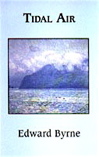
[“Autism: Seeking Inklings in an Old Video” appeared as part of a sequence of poems, “Whole Notes and Half Tones: Songs for My Son,” in my collection, Tidal Air, published by Pecan Grove Press in 2002.]

Tuesday, April 1, 2008

Hugh Laurie: Poetry for Modern Life


A special treat for April Fool’s Day: Hugh Laurie presents ideal poetry and practical advice for modern readers with a busy lifestyle. Enjoy!


HUGH’S POEM
—by Hugh Laurie

Underneath the bellied skies
Where dust and rain find space to fall
To fall and lie and change again
Without a care or mind at all
For art and life and things above
In that there look just there
No right left up down past or future
We have but ourselves to fear.


INSTITUTIONS
—by Richard Maddox

Le


THE REST OF MY LIFE
—by T.P. Mitchell

“Forward and back,”
Said the old man in the dance
As he whittled away at his stick,
Long gone, long gone
Without a glance
To the entrance made of brick.