POETRY FROM PARADISE VALLEY

POETRY FROM PARADISE VALLEY
Click Image to Visit the Pecan Grove Press Web Page for Poetry from Paradise Valley

POETRY FROM PARADISE VALLEY web page

Poetry From Paradise Valley

Pecan Grove Press has released an anthology of poems, a sampling of works published in Valparaiso Poetry Review during its first decade, from the original 1999-2000 volume to the 2009-2010 volume.


Poetry from Paradise Valley includes a stellar roster of 50 poets. Among the contributors are a former Poet Laureate of the United States, a winner of the Griffin International Prize, two Pulitzer Prize winners, two National Book Award winners, two National Book Critics Circle winners, six finalists for the National Book Award, four finalists for the National Book Critics Circle Award, two finalists for the Pulitzer Prize, and a few dozen recipients of other honors, such as fellowships from the Guggenheim Foundation, the National Endowment for the Arts, etc.

Readers are encouraged to visit the Poetry from Paradise Valley page at the publisher's web site, where ordering information about the book can be found.

Best Books of Indiana 2011: Finalist. Judges' Citation: "Poetry from Paradise Valley is an excellent anthology that features world-class poetry, including the work of many artists from the Midwest, such as Jared Carter, Annie Finch, David Baker, and Allison Joseph. It’s an eclectic and always interesting collection where poems on similar themes flow into each other. It showcases the highest caliber of U. S. poetry."
—Indiana Center for the Book, Indiana State Library

Tuesday, February 26, 2008

Catherine Tufariello: "Small Girl in a Gift Shop"

The VPR Poem of the Week is Catherine Tufariello’s “Small Girl in a Gift Shop,” which appeared in the Spring/Summer 2006 issue (Volume VII, Number 2) of Valparaiso Poetry Review.

Catherine Tufariello’s first full-length collection of poems, Keeping My Name, won the Walt McDonald First-Book Award in Poetry and was published by Texas Tech University Press in 2004. The book was a Booklist Editors’ Choice recommendation, a Los Angeles Times Book Prize Finalist, and named the winner of the 2005 Poets’ Prize, given annually for the best book of verse published by an American in the preceding year. Keeping My Name is reviewed by Kathleen Mullen in the Spring/Summer 2006 issue of VPR, which also includes Mullen’s interview with Catherine Tufariello.

Tufariello’s two poetry chapbooks, Annunciations (Aralia Press) and Free Time (Robert L. Barth), both appeared in 2001. Her work has appeared in Hudson Review, Poetry, and Yale Italian Poetry (translations), as well as other literary magazines. Her poetry also has been chosen for many anthologies, including Longman literature anthologies, The POETRY Anthology: 1912-2002, The New Penguin Book of Love Poetry, The Zoo Anthology of Younger American Poets, 101 Contemporary Sonnets, and Western Wind.

Tuesday of each week “One Poet’s Notes” highlights an exceptional work by a poet selected from the archives of Valparaiso Poetry Review with the recommendation that readers revisit it. Please check the sidebar to view the list of poets and works that have been past “Poem of the Week” selections. Additionally, readers are reminded that VPR pages are best read with the browser font preference in which they were set, 12 pt. Times New Roman, in order to guarantee the stanza alignment and the breaks of longer lines are preserved.

Sunday, February 24, 2008

The Writer and Hollywood


The recent strike by screenwriters in Hollywood resolved in time for this year’s Academy Awards ceremony has renewed my interest in the artistic or economic interactions between authors and the film industry. Author Alexander King once stated: “The films take our best ideas. We work like slaves, inventing, devising, changing to please the morons who run this game. We spend endless hours in search of novel ideas and, in the end, what do we get for it? A lousy fortune!” Film producer Sam Spiegel once quipped: “Fifty thousand dollars for your thoughts.”

That the relationship between writers and the leaders of the film industry has always been strained, at times antagonistic, and that in many cases the situation continues today, is almost a given fact in Hollywood. Nevertheless, when young untested novelists can collect a million dollars for screen rights to their unpublished manuscripts and even the average screenwriter can command hundreds of thousands of dollars just to polish a film script, the writers’ reluctance to work with Hollywood becomes difficult for most moviegoers to comprehend.

Perhaps this inability to understand the confrontational relationship between writers and film producers is the result of a failure to grasp the complexity of the conflicts at work in such a kinship. After all, any investigation of the history of the relationship between the writer and Hollywood may reveal as much about the impact the cinema has had on American literary art and American society as it does about the positions of the principal parties involved.

No one would deny that the art of filmmaking was altered forever when the narrative forms of literature were introduced to the cinema on those early days of the silent-film era. As has been noted, D.W. Griffith’s adaptation of Thomas Dixon’s novel, The Clansman, into a movie masterpiece with controversial content, Birth of a Nation, not only readjusted the expectations for fiction in film by the growing American audience, but also further defined the way in which future directors would view their own medium.

As Francois Truffaut stated: “When cinema was invented, it was initially used to record life, like an extension of photography. It became an art when it moved away from the documentary. It was at this point that it was acknowledged as no longer a means of mirroring life, but a medium by which to intensify it.” Thus, the dominant form for filmmakers became fictional storytelling on screen. Accompanying the acceptance of plays and novels as legitimate sources for narrative film, directors discovered they often had to make an effort to enter into an uneasy alliance with the playwrights and novelists who gave birth to those narratives.

During the silent-film era, difficulties between novelists and filmmakers did not occur on a large scale. Still, in the beginning, as the first books were adapted for the screen, film producers did attempt to reject any arguments that fees ought to be paid for screen rights, declaring that the publicity received by both the book and its author would be ample reimbursement for all rights. When the courts upheld the claims of authors for monetary compensation, the economic concerns of novelists and playwrights were protected; however, an additional regard for retention of authorial rights was forfeited. The writer relinquished any entitlement to power over the production process of the film when the business transaction took place, except in the rare occurrence that this aspect was otherwise covered in the contract.

The film studios acceded to the demands for payment of writers but held firm on contract concessions that would surrender any power or control over the final film product. Anyway, at the time such statements were considered unnecessary by most writers and, therefore, did not appear in the contracts. In the 1920s, the novel was a prominent art form, and American novelists—led by F. Scott Fitzgerald and Ernest Hemingway—were among the country’s noted celebrities. In addition, along with the literary critics and academics, most American fiction writers did not take cinema seriously as an art form or as a potential source of competition, a rival.

Even into the 1930s, Hollywood was merely a place for a novelist to make some quick cash between publications, as clearly illustrated in the biographical accounts of Fitzgerald and William Faulkner, both of whom despised working in Hollywood. Each detested the artificiality of its environment, mistrusted the motives of its inhabitants, and questioned the worth of its work, but neither could refuse the lucrative offers originating from the West Coast. Faulkner summed up his attitude toward working in film when he commented: “Hollywood is the only place in the world where a man can get stabbed in the back while climbing a ladder.”

Writers who in the 1920s viewed the movies as harmless diversions not worthy of serious consideration soon came to see films as a threat to their positions in society and to their art. The economic depression of the 1930s forced Americans to clutch more tightly to their income—that portion spent in nonessential areas, including entertainment, lessened—and the cost of a movie ticket was cheaper than the cover price of a novel. When fewer novels were bought, fewer were published, while the production of films flourished. With a few exceptions, novelists lost their position as celebrities, replaced by the larger-than-life figures of the silver screen. Perhaps most importantly, with the transition from silent films to all-talking features, filmmakers trespassed upon territory formerly the exclusive property of the playwrights and novelists—words.

Directors now had the ability to alter the language—perhaps to tailor the words used by the novel’s narrator or play’s characters—in order to suit the cinematography, and even Shakespeare's words were not immune to this. Many writers felt their work violated in the process. The attitude of screenwriters seemed no better. In 1933, James M. Cain wrote: “Of the three hundred or so writers actually employed in Hollywood, I suppose I know fifty, and I don’t know one who doesn’t dislike movie work, and wish he could afford to quit it.” Cain was one of the few novelists able to adjust to writing for film. Working in Hollywood for nearly two decades (1931-1948), he understood that cinema represented a separate medium, a separate art form, and to expect re-creation of another medium was unrealistic, perhaps even undesirable.

As Cain explained: “That thing up there isn’t primarily the record of a novel, a play, or a story. It is a series of photographed pictures.” The logical conclusion one could infer, therefore, was that those who control what pictures appear and in which order they are presented would possess the power, would be the medium’s true authors.

By the end of the twentieth century writers were beginning to take advantage of this knowledge. For decades American authors followed advice similar to that once rendered by John Updike when he suggested that the author ought “to take the money and run. And hide, ideally. For the author owes, at least, his Hollywood benefactors a tactful silence.” This recommendation was seconded by Nicholas Delbanco, a former student of Updike who has had his own negative reactions to seeing his novel transferred to film, when he counseled writers to “follow Woody Allen’s wisdom, to ‘take the money and run,’ and avoid dealing with film people.”


Wednesday, February 20, 2008

Two Poets View Cuban Roots

After almost half a century as the Communist ruler of Cuba, Fidel Castro this week finally quit his official position. Having been seriously ill for nearly two years, Castro at last hinted toward the extent of his weakened physical condition by handing in his resignation. Consequences of this development for the Cuban citizens still seem unclear. However, despite the probability Castro will be succeeded by his brother Raul, indications point toward an eventual end of the dark dictatorship that has held the island nation in isolation, especially separate from the large neighbor lying only 90 miles to its north.

Indeed, word concerning Cuba’s changing political situation quickly spread through Florida’s communities populated by numerous Cuban exiles—many who left more than forty years ago when Castro captured total control of his nation—and a couple of generations of their families. Since hopes of a free Cuba have been raised among the exiles a number of times in the past few decades only to be dashed by Fidel Castro’s uncanny ability to retain power, most in the Cuban-American communities continue again to express hesitancy about embracing great optimism. As reported in the New York Times, one exile who left the island in 1960 seemed to speak for others he knew: “It will continue. The brother took power. The older generation is still in power.”

Nevertheless, one must regard with curiosity Castro’s relinquishment of power and his diminished health, maybe seeing them as signs of an approaching political transition that someday will transform the closed society in the long-suffering country, allowing an end to the lengthy breach between Cuba and the United States. Certainly, Cuban-Americans who have relatives still living in Cuba, perhaps some held as political prisoners, know the seriousness and the magnitude of what is at stake if change does occur.

Virgil Suárez frequently has given his perceptions about this issue in engaging and enlightening poetry. As I mentioned in my review of his recent volume, 90 Miles: Selected and New Poems, Suárez has offered “a persistent focus on the experiences of an immigrant’s existence, and an expatriate’s memories of pre-Castro Cuba has always been central” to his work.

Born in Havana in 1962, Suárez arrived in the United States with his family when he was twelve years old. Suárez has written significant pieces, often in vivid and compelling language, that celebrate the lives of exiles and elegize those individuals or circumstances lost during Castro’s iron-fisted control of Cuba. In my previous commentary on Suárez’s writing, I noted the use of an exile persona in his poetry who, like the poet, “speaks, even sings, not only for himself, but for all who do not yet have the freedom of such speech, for those of the past perhaps imprisoned, tortured or killed for their exercise of speech, and for those who sought to sing their words in freedom, yet came up short and were lost in their passage over those 90 miles of water separating them from the promise of liberty.”

In his seven collections of poetry, Virgil Suárez repeatedly has attempted to build bridges that span the distance between Cuba and the United States, between the exiles he has observed and those relatives or friends left behind on the island, between the past and the present, between generations of family members, between the English and Spanish languages spoken by those he knows, as well as between the literature and arts of the two cultures he has experienced.

Virgil Suárez was the featured poet in Volume III, Number 1 of Valparaiso Poetry Review (Fall/Winter 2001-2002). The issue includes an interview of Suárez by Ryan G. Van Cleave and a group of three poems, among which readers will find the following:


SONG FOR THE CUCUYO

caught them at sundown in the tall grass
by the plantain plants by the porch

of our house in Havana, put several
in clear marmalade jars, brought them

inside the house, as pets, for the night;
there on the nightstand, in the dark,

they flashed their incendiary illuminations,
flashes of fluorescence, like faint lights

of a distant tarmac to signal the passing
of fears, such fears that keep children

awake for so long: old men in cold rooms
sit in the dark, stained undershirts,

the sound of phlegm, fingers gone yellow
from cigarette smoking. This long, long

road through distant cities, wrapped
in strange light. Everywhere, cucuyos,

from Havana to Tallahassee, to light
this child's way home.


Readers also will find in the same volume of VPR work by Jill Peláez Baumgaertner, another poet who writes about her family background, notably her Cuban ancestry and perhaps the extended exile of some during Castro’s regime. The issue contains a review by David Craig of Baumgaertner’s book of poetry, Finding Cuba, and a pair of her poems, including “Uprooted,” which previously has been featured in “One Poet’s Notes,” yet serves as a fine example that I wish to share here as well:


UPROOTED

The artists painting Cuba from memory
or from photographs, from family stories
of the exodus, from dreams, know
their bloodlines are not clear. The work
is mongrel, neither Cuban nor American.

They paint masks, figures floating, palm
trees set on pedestals. They sculpt women
locked in birth. What they want is a particular
place. What they find is borrowed space.
In hand-colored gelatin silver prints or wood

with oil and gold leaf or oil on linen or on
masonite or on carved locust bark, they discover
new rooms, dream landscapes, regions of origin
as small as phone-booths, as expansive as cane
fields, rented, tenanted, temporary.

Interprete mi silencio—, one says.
They are like poets scratching out their
metaphors sideways on pieces of lined paper,
crossgrain, drafting possibilities,
unsettled, undecided.

These artists ask and never receive replies,
remember without mementos, feel without touching.
They have heard of the royal palm, seventy feet tall
and seek its landscape. How odd its trunk
is almost hollow, its roots mere threads.

Tuesday, February 19, 2008

J.P. Dancing Bear: "Island Like a Heart"

The VPR Poem of the Week is J.P. Dancing Bear’s “Island Like a Heart,” which appeared in the Spring/Summer 2004 issue (Volume V, Number 2) of Valparaiso Poetry Review.

J. P. Dancing Bear has published poems in numerous journals, including Adirondack Review, Atlanta Review, Mississippi Review, New York Quarterly, North American Review, Shenandoah, and Seattle Review. His chapbook, What Language, won the 2002 Slipstream Press Poetry Prize. Pudding House Press published another chapbook, Blue Hand, in 2002. His full-length books of poetry include Billy Lost Crow, published by Turning Point Books in 2004, and Conflicted Light, which is forthcoming from Salmon Poetry. His work also has been included in anthologies, such as In A Fine Frenzy: Poets Respond to Shakespeare (University of Iowa Press, 2005) and Red, White and Blues: Poets on the Promise of America (University of Iowa Press, 2004). He is the editor of The American Poetry Journal.

Tuesday of each week “One Poet’s Notes” highlights an exceptional work by a poet selected from the archives of Valparaiso Poetry Review with the recommendation that readers revisit it. Please check the sidebar to view the list of poets and works that have been past “Poem of the Week” selections. Additionally, readers are reminded that VPR pages are best read with the browser font preference in which they were set, 12 pt. Times New Roman, in order to guarantee the stanza alignment and the breaks of longer lines are preserved.

Sunday, February 17, 2008

Cars, Culture, and Contemporary Poetry

This week I have been reminded how the automobile has become one of America’s most important icons during the last century. As one who considers the artfully designed contours of a car’s body to be equivalent to carefully brushed strokes on a canvas, I have been following a pair of annual events during recent days. Nearby, the Chicago Auto Show, regarded as North America’s largest and most significant consumer exposition, marked its 100th edition, the first auto show to reach that milestone. Attendance at the Chicago Auto Show will again exceed 300,000 for the week, as car lovers examine more than 1,000 new autos spread across the McCormick Place convention center’s 850,000 square feet of exhibitors’ space.

The Chicago Auto Show includes the NASCAR Pavilion, where the motor sport’s organization exhibits its historic racecars, including Dale Earnhardt’s familiar number 3 on its black background, perhaps the show’s primary examples of speed and power. Coincidentally, NASCAR has been celebrating the opening week of its season, known as “Speed Week,” with a series of qualifying runs, practice sessions, and races at Daytona International Speedway, this year culminating with Sunday’s 50th running of the Daytona 500. NASCAR’s premier race, often characterized as the sport’s Super Bowl, began in 1959 as a local event and has grown into an internationally televised extravaganza drawing millions of viewers. Track attendance for the spectacle will once more approach 250,000, with nearly 170,000 in the grandstands and another 80,000 watching from the vast infield area.

As an admirer of automobiles and an avid NASCAR fan, I usually consider these two February events—along with the arrival in Florida or Arizona of major league pitchers and catchers for first practices—as the initial happy signals that spring is on the horizon after months of bad weather. Indeed, like many Americans, I frequently link different emotions and memories to the image of the automobile. Anyone who watches television or has viewed movies over the decades will recognize the numerous associations our culture has created with automobiles.

Even readers of fiction will identify various ways characters are defined or their futures determined by driving cars, whether recalling the dramatic scene sealing a tragic fate in F. Scott Fitzgerald’s The Great Gatsby or remembering the symbolic travels described in Jack Kerouac’s On the Road. Automobiles often represent the very movement down the road of life toward one’s destiny, providing power and freedom yet sometimes signifying potential disaster when their speed results in a loss of control that causes a crash. In fact, one can connect cars to the deaths of a number of cultural icons: James Dean, Grace Kelly, Jackson Pollock, Frank O’Hara, Princess Diana, etc.

Cars also allow a sense of independence, especially for young drivers, and in some stories or poems supply a location for sexual initiation. For instance, readers perhaps will note the couples in cars during Robert Lowell’s scene along lover’s lane in “Skunk Hour.” Additionally, many of us may have socialized as teens by cruising in cars on summer evenings, as shown in movies like American Graffiti. Pop songs have long been filled with images of teens driving in cars. Television commercials suggest stylish automobiles even can hint at one’s material success and convey personal confidence or sophistication.

Not surprisingly, the act of driving a car has had a presence in a fair amount of contemporary poetry. Kurt Brown edited an anthology of such poems, Drive, They Said: Poems about Americans and Their Cars, for Milkweed Editions in 1994. The volume included approximately 200 examples, such as Richard Hugo’s “Driving Montana,” Jonathan Holden’s “Cutting Loose on an August Night,” Donald Finkel’s “Hitting the Road,” William Matthews’ “Driving All Night,” William Stafford’s “Travelling through the Dark,” Linda Hogan’s “Driving at Night,” John Balaban’s “Riding Westward,” Ted Kooser’s “Highway 30,” and Theodore Roethke’s “Highway: Michigan,” just to name a few.

I have written some poems of my own about experiences driving interstates across the country or occasionally dangerously climbing up narrow mountainside roads, and I have even written about my fascination with the beauty and grace of stock cars or the great risks of racing, particularly the peculiar nature of a sport in which the participants literally place their lives on the line each time they start their engines, forty-three cars speeding side by side up to 200 miles an hour. (I’m sometimes surprised, myself, when I look at the “favorite channels” saved on my TiVo, and I see Ovation’s arts channel offerings alongside the Speed Channel’s racing programs, but then I am reminded of the cars painted by artists like Lichtenstein or Warhol and the two worlds combine again.)

A famous quote, usually falsely attributed to Ernest Hemingway though apparently spoken by another writer from the same time, claims danger separates sports from games: “Auto racing, bullfighting, and mountain climbing are the only real sports . . . all others are games.” Indeed, when watching auto racing with my young son I’m always aware I may have to explain why his favorite driver that he has been cheering to the lead in a race has suddenly died in front of his eyes, just as many parents found themselves doing in the 2001 Daytona 500 when Dale Earnhardt was killed in a crash on the last lap. Watching auto racing one always must be prepared to witness a transformation from a perceived beauty of power and speed to the unexpected tragedy of destruction and death.

Just such a quick transition from a time of fun to a moment of death filled the front pages of newspapers Saturday morning as articles reported an incident the night before in Maryland along Route 210, where eight spectators lined on an isolated highway to observe an illegal drag-race were killed by an unsuspecting driver who did not see the individuals in the dark stretch of road and plowed over them. As I read the news story, I thought of all these events happening on the same weekend, and I went back to a fabulous book of poetry by B.H. Fairchild, The Arrival of the Future, that includes one of my favorite poems about automobiles. This piece seems most appropriate today:


CARS

They were our bright lights.
At night we were stars
coming out, amazing main
street with our fluid bodies,
liquid under light, seven
coats of finish streaming by
in candy-apple red, green
flaked with gold, or
blue in six shades from
midnight to metallic.

Inside, our songs said life
was sad except for love,
which was everywhere,
like pain. Love hard
and die young, one sang,
so we pulled our women
closer and drove fast
to a river with a moon,
an arch of cottonwoods,
and the cicada’s harsh
complaint. Flesh was easy,
but death was distant
as the spaces mirrored
in our laminated hoods.

When late that summer night
we pulled Jimmy Deeds
from his crumpled heap
on Highway 54,
we looked up at the red
light swooping through the trees
and saw how metal lay
in moonlight like sequins.
We spoke no more of love
or the other thing. And I
remember in the almost quiet
night the sudden strangeness
of our sleek and singing cars.

[For my extended essay on some of B.H. Fairchild’s poetry, readers are invited to examine an article included in the Spring/Summer 2006 issue of Valparaiso Poetry Review.]

Thursday, February 14, 2008

Edward Hirsch: ON LOVE, "D.H. Lawrence"

Since most readers of “One Poet’s Notes” share a love for literature, particularly poetry, I sought to present today a post that acts as a sort of valentine, a note about one poet’s work frequently containing characteristics of physical and emotional love combined with a passion for poetry and a literary ardor. I felt I would recommend a writer whose poetry often unabashedly admits to giving critics cause to pause and consider the risk he exhibits when he explores the sharp edges separating emotion and sentimentality.

Indeed, when literary critics discuss the tenuous balance between genuinely evocative emotional poetry and a distracting tendency toward sentimentality among some contemporary American poets, the name of Edward Hirsch occasionally arises. Throughout his career, Hirsch has written different types of poetry—at times in relaxed and intimate language, elsewhere sounding more formal and seemingly a bit distant. However, in most of his poetic experiments Edward Hirsch’s emphasis often has been placed upon poems that appear to promote his long-held personal preference for characteristics attached to the Metaphysical poets or associated with Romantic lyrics.

Hirsch first admired the Metaphysical poets when he was a young man. In a Kenyon Review interview with Tod Marshall from Spring 2000, Hirsch once commented: “I loved (and still love) the way that intellect and feeling come together in the work of John Donne, Andrew Marvell, and others. I love the wild ingenuity of their best conceits. George Herbert was also a poet who was important to me.” Later, Hirsch adopted an affection for the more Romantic mode of poetry displayed by Wallace Stevens, as well as his predecessors like Wordsworth, Coleridge, Keats, and Shelley: “I felt and still feel much closer—in terms of the passions of poetry—to Keats and Shelley, who give such high priority to emotion. Intensity is all.”

Readers will note that priority on emotion and attempt to exhibit intensity in Hirsch’s poetry, and for some these traits may provide a subject for debate. Although complimented for the passion one might find in his poetry, Hirsch also has endured criticism for the ease with which he may present emotion. As he has acknowledged, his “style has not always met with critical approval.” The mixed reception for his poems might be detailed in statements by David Wojahn reviewing Wild Gratitude (“Hirsch’s tenderness sometimes threatens to become merely ingratiating”) and Stephen Dobyns reviewing The Night Parade (“Too many poems become sentimental or seem willed rather than come from the heart”).

Nevertheless, most critics have praised Hirsch’s heartfelt messages and his ability to control the tone in his poetry, evoking emotion while conveying credible and compelling circumstances within well-written lines. In addition, readers ought to appreciate Hirsch’s daring and willingness to address emotion so openly in his poetry. Perhaps the most obvious collection in which Hirsch displays this determination would be his 1998 volume, On Love. In this book, Hirsch delivers a typically experimental series of meditations on the emotional and physical aspects of love through the use of monologues supposedly spoken in the voices of two-dozen well-known literary figures—such as Charles Baudelaire, Ralph Waldo Emerson, Oscar Wilde, Federico Garcia Lorca, Gertrude Stein, and others—after whom the poems are titled.

Describing the series in the Kenyon Review interview, Edward Hirsch confided how he blended intellect and emotion in these pieces: “There’s a dialectic in the poems between separation and fusion, between autonomy and blur, between the lover and the beloved. The voices of the speakers in the poems are ways to think about love. Each one represents some aspect of love . . .. I don’t think they are exactly dramatic monologues because I don’t think you are meant to believe that the previous historical voices are really speaking. I think you see the poet peeking through the mask, speaking through the voice. It’s a little like a drag show where you put on different voices and costumes and they allow you to get at certain feelings and emotions. At the same time, each one tries to be as true as possible to the voice that the poet is inhabiting.”

Hirsch concluded that his compilation of poems in various voices was meant to “offer some kind of encyclopedic portrait of modern love.” Therefore, as today is Valentine’s Day, I thought I would revisit the poems included in On Love and share an example from the book’s extended sequence of love poems, show one work that combines intellect and emotion, physical lust and a literary passion, “D. H. Lawrence,” which Hirsch has mentioned as representing “a wildly Dionysian ethic”:


D.H. LAWRENCE

A Short History of Love

After the sweet red wine and the dry lecture,
“The History of Love in Western Imagination”
(history is loveless without imagination)
we could not abide another listless lecture

and so we slipped into the castle library
and pushed highbacked chairs against a door
that refused to lock (so jam the door!)
and knelt to each other in the library.

I confess my fear of patrolling watchmen;
you seemed courageous and sure, as always:
I have learned to adore your myriad ways
of taking us back into man and woman . . .

And when we lay naked among the books,
the bookshelves enclosed a sacred garden
for Adam and Eve safely restored to Eden,
ourselves immersed in a paradise of books.


Edward Hirsch has expressed his ongoing love for literature, particularly poetry, in a book of commentary, How to Read a Poem and Fall in Love with Poetry, published by Harcourt in 1999. He continues to serve as an ardent advocate for poetry, and readers can view a full video of Hirsch delivering a lecture presentation on poetry at Wellesley College, with a closing question and answer period, at the WGBH web site.

Edward Hirsch is the author of a half-dozen volumes of poetry, including Wild Gratitude, which won the National Book Critics Circle Award. In addition, he has received numerous honors, including the Delmore Schwartz Memorial Award, the Prix de Rome, a Guggenheim Fellowship, a National Endowment for the Arts Award, the American Academy of Arts & Letters Award for Literature, and a MacArthur Fellowship.


Tuesday, February 12, 2008

Kate Sontag: "American Honeymoon Lyric, Circa 1987"

The VPR Poem of the Week is Kate Sontag’s “American Honeymoon Lyric, Circa 1987,” which appeared in the Fall/Winter 2002-2003 issue (Volume IV, Number 1) of Valparaiso Poetry Review, where she was a featured poet.

With David Graham, Kate Sontag co-edited After Confession: Poetry as Autobiography (Graywolf, 2001), a collection of critical commentary that was reviewed in VPR. Her essay from that book, “Mother May I? Writing with Love,” also appeared in Valparaiso Poetry Review. Sontag’s work has been published in a number of anthologies, including Boomer Girls, Are You Experienced, In Praise of Pedagogy, and the Chester H. Jones National Winners Anthology. In addition, her poetry has appeared in various literary journals, such as Blue Moon Review, Green Mountains Review, Kalliope, Nimrod, Prairie Schooner, Rattle, Salt Hill Journal, and Southern Poetry Review. She teaches at Ripon College.

Tuesday of each week “One Poet’s Notes” highlights an exceptional work by a poet selected from the archives of Valparaiso Poetry Review with the recommendation that readers revisit it. Please check the sidebar to view the list of poets and works that have been past “Poem of the Week” selections. Additionally, readers are reminded that VPR pages are best read with the browser font preference in which they were set, 12 pt. Times New Roman, in order to guarantee the stanza alignment and the breaks of longer lines are preserved.

Saturday, February 9, 2008

Poetry Prize


Last week I was involved with promoting the annual university literary contest held during the spring semester, which encourages all undergraduate students to submit poems (as well as fiction and nonfiction) for various prizes, including the Academy of American Poets Award. Usually, more than one hundred poetry submissions with varying levels of sophistication and assorted subject matter are received from across the campus for forwarding to judges. The entries are unread by me or anyone else on the English department faculty before they are sent for consideration by the judges.

Judges for the contest are always selected from among published writers or editors of journals outside the university; therefore, the winning poetry entry remains unknown to me and my colleagues until notice is received from the judge for announcement at an annual end-of-semester ceremony held in late April, where the prize-winning students and other finalists are asked to read aloud their works to a sizable gathering from the campus community, as well as those parents who sometimes attend. Occasionally, the poems chosen for honor have proven to be puzzling or provocative pieces containing daring language challenging differing boundaries of taste and evoking interesting comments from those in the audience.

In addition, this week students in one of my introductory creative writing courses are submitting early drafts of poems for initial consideration by the class. Each semester as new poetry-writing students share their work for the first time, I am curious what kind of personal revelation I will find within the lines on the page. Though the poems are mostly rough drafts and in need of polish, rarely do the relatively wide range of free expression and the attempts at inventiveness in the vivid language shown by these beginning writers disappoint me.

Nevertheless, having taught poetry writing for a number of years, I can recall extreme examples containing uniquely disturbing perspectives or graphic use of language presented in the student poetry I have received, sometimes leading to rather curious conferences in my office as we discuss ways to edit and revise the poetry for improvement.

Therefore, every year at this portion of the spring semester, as the student writing contest entries arrive and the in-class workshops begin, I again am reminded of the humor found in this classic video comedy sketch (“Poetry Prize”) with Stephen Fry and Hugh Laurie—yes, also known as Dr. House to all of us who are devoted fans of the television show. I hope you enjoy this spoof of student poetry and the creative writing conference!

Thursday, February 7, 2008

Tornado Thoughts

The other evening as many in the nation viewed results of the Super Tuesday presidential primaries scrolling across their television screens, weather bulletins occasionally interrupted with reports of severe storms and tornado warnings sweeping across some Southern states. Only in morning light, as the early news programs continued to tally delegate counts earned in California districts by the candidates, could local authorities assess the extent of damage, destruction, and death in Alabama, Arkansas, Kentucky, and Tennessee, where dozens had died during the night.

Newspapers Wednesday recounted how a roof caving under pressure from the winds killed a number of people seeking shelter in a warehouse and warning sirens sounded for hours, blaring throughout the night. As I read the articles, I remembered the many times I have heard such sirens in the nearly twenty-five years since I moved to the Midwest, and I recalled stories told by a couple of old-timers who witnessed such devastation and recollected the enormous cost felt by neighbors in their own hometowns when they were young men. Even now, as they tell of the terrible scenes they had seen decades ago, their eyes reveal hints of lingering emotional ramifications.

On some spring evenings or summer nights when the prolonged signal of a tornado siren can be heard outside my windows—and the Doppler radar on the Weather Channel indicates possibly dangerous conditions—my wife, my son, and I have gathered in our second office and the entertainment room, those two large basement spots providing the safest places in our house and each furnished with extra guest beds. Once, on just such an instance during a power outage, when my son was young and still experiencing difficulty learning language because of his autism, though at times wondering aloud with curiosity about unfamiliar words, I tried to explain the terrifying strength a tornado possesses, and why we were sitting in the dark, the few items of furniture and other objects around us dimly silhouetted by a fading flashlight beam.

Therefore, as I watched network newscast video yesterday afternoon displaying the vast tracts of now vacant fields defining the winding tornado paths, strewn only with bits of ruined communities or unrecognizable rubble, and I listened to the sad stories shared by shaken survivors, my thoughts were with them. I also brought off one of my bookshelves this poem I wrote a while ago:


TORNADO


. . . . . I

I think of that one word learned long ago
. . . . . on a humid summer night much like tonight,

though only spoken softly by old men,
. . . . . their voices wavering with a sense of reverence

or fear. Tornado, they would whisper
. . . . . to the children as if to avoid being overheard

betraying a confidence; again and again
. . . . . they repeated its three syllables, barely audible

above the torrent of rain, the trembling elms,
. . . . . or the rumbling approach of onrushing gusts.


. . . . . II

Tornado. I first read its definition in scrawls
. . . . . of gnarled branches scattered across lawns,

and in the snarl of live power lines hissing
. . . . . like nesting snakes. Its signature was written

in the language of loss—the concrete
. . . . . foundation for the town cinema suddenly

uncovered, the warehouse roof removed,
. . . . . the twisted twin tracks torn from the trestle

bridge and tossed into the river below,
. . . . . the classmate killed by a collapsing water tower.


. . . . . III

My sleepy three-year-old mouths tornado,
. . . . . this new weather word I have spent the evening

teaching him. But by midnight, wretched
. . . . . Midwest winds weaken, their mourning wails

reduced to just a murmur of rustling leaves.
. . . . . A bubble of white moon bulges through black

and blue patterns of cloud breaks,
. . . . . a vault-like canopy opening over everything

we value, and now my son naps in my lap,
. . . . . tired of this term he has not yet gotten to know.


. . . . . —Edward Byrne


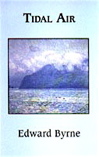
[“Tornado” appears in Tidal Air, published by Pecan Grove Press, 2002]

Tuesday, February 5, 2008

Alicia Ostriker: "Surface/Draft 6"

The VPR Poem of the Week is “Surface/Draft 6” by Alicia Ostriker, which appeared in the Fall/Winter 2002-2002 issue (Volume IV, Number 1) of Valparaiso Poetry Review.

Alicia Ostriker is the author of eleven volumes of poetry, including The Little Space: Poems Selected and New (1998) and The Crack in Everything (1996), both of which were National Book Award finalists. She is also the author of The Nakedness of the Fathers: Biblical Visions and Revisions, a combination of midrash and autobiography, and Dancing at the Devil's Party: Essays on Poetry, Politics, and the Erotic. Her work has appeared in numerous literary journals, including American Poetry Review, Kenyon Review, Nation, New Yorker, Paris Review, and Poetry. Ostriker has received awards from the National Endowment for the Arts, the Guggenheim Foundation, the Rockefeller Foundation, and the Poetry Society of America. She is Professor Emerita of English at Rutgers University.

Tuesday of each week “One Poet’s Notes” highlights an exceptional work by a poet selected from the archives of Valparaiso Poetry Review with the recommendation that readers revisit it. Please check the sidebar to view the list of poets and works that have been past “Poem of the Week” selections. Additionally, readers are reminded that VPR pages are best read with the browser font preference in which they were set, 12 pt. Times New Roman, in order to guarantee the stanza alignment and the breaks of longer lines are preserved.

Sunday, February 3, 2008

James Wright: "Autumn Begins in Martins Ferry, Ohio"

As much of the nation today prepares to celebrate Super Bowl Sunday, an occasion that has grown over the years to rival most official holidays—only on Thanksgiving do Americans eat more food, and hardly ever does any other event draw the communal television audience anywhere near that enjoyed by the telecast of the Super Bowl—I am again reminded of one of James Wright’s best-known works, “Autumn Begins in Martins Ferry, Ohio,” perhaps the most famous poem concerning football.

Although written about fall and the atmosphere surrounding high-school games in his old hometown, Wright’s poem subtly suggests a fascination with sport exhibited regularly by many Americans. In addition, the poem addresses issues of distinction or contrast based upon individuals’ wealth, class, ethnicity, race, and gender, while seemingly presenting a straightforward report with minimal intrusion by the speaker. The poem’s observations evoke emotional responses on the part of its readers, and the deceptively plainspoken narrative gradually reveals those corrosive conditions existing in the lives of citizens in similar towns across the country.

James Wright was born in Martins Ferry, Ohio, in 1927, the same year in which Galway Kinnell and W.S. Merwin were born, and only a year later than his influential friend, Robert Bly. Indeed, Wright belongs to that generation of American poets who matured during the mid-twentieth century and made the transition from traditional rhetorical poetry or conventional forms to a free verse style during the century’s second half.

Wright’s father was employed in a factory for the Hazel-Atlas Glass Company all his adult life, and his mother toiled for the White Swan Laundry. Apparently, neither experienced an education beyond the elementary level as each was forced to work at an early age. Across the river from Wheeling, West Virginia, Martins Ferry fit the stereotypical description of industrialized towns along the Ohio River. Its citizens led quiet lives that often were consumed daily by difficult labor and economic worries.

The poet knew he had been fortunate to escape the confining environment of such a situation when he left the army, in which he’d enlisted after high school, and took advantage of an education at Kenyon College as afforded by the G.I. Bill. Although Wright studied with John Crowe Ransom at Kenyon, a greater impact on Wright’s development as a poet may have been provided by Theodore Roethke, under whom Wright studied during his graduate days at the University of Washington and whose influence sometimes shows through Wright’s lines.

Success arrived pretty quickly to James Wright as he won the Yale Series of Younger Poets award with his first manuscript, The Green Wall, in 1957, and his second collection of poems, Saint Judas, appeared from the prestigious Wesleyan University Press in 1959. Nevertheless, as Wright readied his third volume for publication, he abruptly shifted style, moving away from the more formal characteristics of traditional meter or rhyme, as well as the complex syntax of his initial works, toward a free verse that sounded a greatly relaxed and overwhelmingly authoritative voice.

As Robert Lowell had done earlier—with Kinnell, Merwin, and a number of others following later—and swayed by the influence of his close poetic association with friend Robert Bly, Wright believed in the need for a more conversational tone with less language that might be perceived as artificial in his lyrical pieces. At the same time, Wright continued in his third book, The Branch Will Not Break, to focus upon important issues that most readers noticed in his first two books, especially the impact of economic hardship borne by numerous individuals or the deprivation of funds felt by many communities, and the accompanying emotions of despair or despondency.

The Branch Will Not Break proved to be a stunning collection of poems, and it served as an artistic breakthrough for James Wright. The works included in this book shook up an entire generation of young poets who soon discovered they were looking to Wright and his transformed style for guidance. Although James Wright had found in his education—eventually settling down as an academic teaching at Hunter College in New York City—a means to escape the rough existence of his birthplace and the lifetime of factory work his father had done, among the collection’s group of outstanding poems that have become anthologist’s material for the last four decades, Wright had written a poem that recalled through the use of metaphor both the ambitions and the anxieties he’d witnessed amid the townspeople he’d known so well:


AUTUMN BEGINS IN MARTINS FERRY, OHIO

In the Shreve High football stadium,
I think of Polacks nursing long beers in Tiltonsville,
And gray faces of Negroes in the blast furnace at Benwood,
And the ruptured night watchman of Wheeling Steel,
Dreaming of heroes.

All the proud fathers are ashamed to go home.
Their women cluck like starved pullets,
Dying for love.

Therefore,
Their sons grow suicidally beautiful
At the beginning of October,
And gallop terribly against each other's bodies.


This brief but engaging poem with its simple litany of images often lingers for a long time in the minds of readers. Although the speaker quickly acknowledges the scenes he shares are all thought (“I think”) rather than personally witnessed contemporaneously, his details convince readers of their authenticity. Thus, when the narrative comes to a conclusion, it does so in the manner of an intellectual argument, beginning the final supposition with an emphatic “Therefore,” the word isolated on its own line for even greater attention.

The speaker introduces himself as sitting at a football game in his old high school’s stadium, perhaps as if someone attending a homecoming or class reunion. The season is autumn, a time for harvesting in the Midwest, but also a time for fresh starts with the opening of a new school year. However, rather than relaying any of the festive activities one might expect at such a gathering, the poet instead confides, frequently in stark language, his concern for those he has left behind.

He notes the conditions of individuals in various positions on a layered social structure. Wright displays compassion for men stuck in dead-end jobs or possibly laid-off workers burdened by poverty as they face the responsibility of supporting a family. He also identifies with loners or outcasts in much of his poetry, and here he specifies the plight of “Polacks” resisting any urge to move on, “Negroes” working in hellish surroundings, and the “ruptured night watchman” whose job imposes a dark isolation upon him.

Some are “nursing long beers,” either unable to afford to order a fresh mug or unwilling to leave a place where some companionship is assured. Perhaps like the “proud fathers,” they also are “ashamed to go home,” embarrassed by the failures they have endured in contrast to the figures they once imagined they could become. The men even appear impotent, incapable of providing the love their wives now find lacking. Indeed, the lives of the women, powerless and helpless, appear to be slowly eroding as well: they are depicted as “starved pullets” who are “Dying for love.” Contrasting their present place with the hopes they may have possessed when they were high-school students anticipating a promising future has harmed the self-image held by the husbands and seemingly weakened their confidence as men.

“Therefore,” the community turns its eyes toward the young athletes on the football field, whose promise still exists and whose youthfulness recalls the better years most of the adults once happily experienced, when the blank slate of their lives lay ahead, and when they believed an unknown and uncharted future offered grounds for greater expectations. The fathers also participate vicariously as their sons now harbor hope and demonstrate the vigor of youth. The men who have spent their entire lives in this small Midwestern town wish a different outcome for their sons, maybe even an opportunity brought by an athletic college scholarship. As in much of America, the myth exists of success in sport as a ticket to freedom for the poor, even though the odds often are about as improbable as winning a lottery.

As a result, James Wright presents the sons’ actions as “suicidally beautiful.” He details their violent physical contact and deems them in natural terms, comparing them to animals that “gallop” against one another, while he slips in the persuasive “terribly.” He recognizes the inherent allure of youthful energy and the glory some may achieve, though fleetingly, perhaps even preserve as fond memories some day when they are family men laboring in factories, perchance feeling failure, and possibly as they continue to feel the aches and pains of injuries suffered during the pounding endured on the playing field.

Wright might likely have seen the violence and the battering competition in football as a metaphor for the kind of economic and social difficulties many from his hometown would later face in the larger world of business or personal affairs. Nevertheless, he also recognized the status of ritual that football, and now many other sports, had attained in America.

As millions of Americans turn their eyes to the gridiron on their television sets and watch players many consider their heroes competing for a championship worth millions of dollars, supported by enormous corporations represented in commercials costing about $90,000 per second, Wright’s vision of football as an American metaphor can only be enhanced on a much grander scale than he possibly could have imagined. Certainly, I acknowledge I will be watching as a born and bred New Yorker, supporting an upset by my old hometown team, the Giants. However, I also will think of this powerfully persuasive poem, which visitors can hear, as read by James Wright in 1964 at the Guggenheim Museum, on an Academy of American Poets web page.

Friday, February 1, 2008

Galway Kinnell: A Question of Life or Death

Galway Kinnell was born in Providence, Rhode Island on this date (February 1) in 1927. His first book of poetry, What a Kingdom It Was, appeared in 1960 and contained poems written during the ten years previous to its release. Still in his teens when he first wrote with the hope of someday publishing, as Kinnell once described to Albert Goldbarth in an interview about his early experiences trying to compose poetry: “I didn’t know if I could write poems. I knew that was the only thing I wanted to do, but I didn’t have the slightest idea whether or not I could actually do it . . .. It was a question of life or death to me.”

Over the past half century since composing those first poems included in his premiere volume, Galway Kinnell has proven his initial passion for the art form and his dedication to writing poetry were well-placed investments leading toward a lifetime of poetic achievement. During his career, Kinnell has received the Pulitzer Prize, a National Book Award, the Frost Medal, and a MacArthur Fellowship. Kinnell’s volumes of poetry include Strong Is Your Hold; A New Selected Poems; Imperfect Thirst; When One Has Lived a Long Time Alone; Selected Poems; The Past; Mortal Acts, Mortal Words; The Book of Nightmares; Body Rags; Flower Herding on Mount Monadnock; and What a Kingdom It Was. He has served as the editor of The Essential Whitman, and he also has published translations of works by Yves Bonnefoy, Yvan Goll, François Villon, and Rainer Maria Rilke.

Some of Galway Kinnell’s poems have become contemporary standards, works that measure well with the finest poems produced by others in his generation. Among those Kinnell works best known, readers will find “The Bear,” “The Porcupine,” “The Avenue Bearing the Initial of Christ into the New World,” “The Last River,” “Flower Herding on Mt. Monadnock,” “Vapor Trail Reflected in the Frog Pond,” and his book-length masterpiece, The Book of Nightmares, clearly affected by Rilke’s Duino Elegies.

Like a number of others in his generation who made similar transitions in style—including his college roommate at Princeton, W.S. Merwin—Kinnell began by writing poetry in more traditional rhyming lines with a regular rhythm that might have been influenced by his early interest in poets like William Butler Yeats, Emily Dickinson, and Edgar Allan Poe. However, as his distinctive voice developed, the poet adopted a loose but lyrical free verse that more closely resembled lines and language in the works of Walt Whitman or William Carlos Williams, though sometimes mixed with the dramatic intensity found in T.S Eliot’s poetry, especially in Kinnell’s pieces of political or social criticism.

The inevitability of death as defined by mortality and the intrinsic value of life in its many aspects stand as recurring themes in Kinnell’s poetry, whether examining the horrors of war and a cruel tendency toward violence among some humans or exploring the continuity of life through scenes of nature or in images of love. As well, his appreciation for life often can be found in evidence offered by his own children. One example:

AFTER MAKING LOVE WE HEAR FOOTSTEPS

For I can snore like a bullhorn
or play loud music
or sit up talking with any reasonably sober Irishman
and Fergus will only sink deeper
into his dreamless sleep, which goes by all in one flash,
but let there be that heavy breathing
or a stifled come-cry anywhere in the house
and he will wrench himself awake
and make for it on the run—as now, we lie together,
after making love, quiet, touching along the length of our bodies,
familiar touch of the long-married,
and he appears—in his baseball pajamas, it happens,
the neck opening so small he has to screw them on—
and flops down between us and hugs us and snuggles himself to sleep,
his face gleaming with satisfaction at being this very child.

In the half darkness we look at each other
and smile
and touch arms across this little, startlingly muscled body—
this one whom habit of memory propels to the ground of his making,
sleeper only the mortal sounds can sing awake,
this blessing love gives again into our arms.


Readers may listen to Galway Kinnell’s 1980 Guggenheim Museum reading of this poem (with a few added lines and other textual variations) at an Academy of American Poets web page. In addition, I recommend visitors view Kinnell’s very powerful reading of his poem, “Wait”—written “for a student considering suicide due to a love affair gone wrong”—in a video clip from WGBH. Finally, a previous post from September on “One Poet’s Notes” contains an engaging video interpretation of an excerpt with Kinnell reading from The Book of Nightmares. As these pieces suggest, throughout his body of work and now at age 81, Kinnell still seems to view poetry very much as “a question of life or death.”