POETRY FROM PARADISE VALLEY

POETRY FROM PARADISE VALLEY
Click Image to Visit the Pecan Grove Press Web Page for Poetry from Paradise Valley

POETRY FROM PARADISE VALLEY web page

Poetry From Paradise Valley

Pecan Grove Press has released an anthology of poems, a sampling of works published in Valparaiso Poetry Review during its first decade, from the original 1999-2000 volume to the 2009-2010 volume.


Poetry from Paradise Valley includes a stellar roster of 50 poets. Among the contributors are a former Poet Laureate of the United States, a winner of the Griffin International Prize, two Pulitzer Prize winners, two National Book Award winners, two National Book Critics Circle winners, six finalists for the National Book Award, four finalists for the National Book Critics Circle Award, two finalists for the Pulitzer Prize, and a few dozen recipients of other honors, such as fellowships from the Guggenheim Foundation, the National Endowment for the Arts, etc.

Readers are encouraged to visit the Poetry from Paradise Valley page at the publisher's web site, where ordering information about the book can be found.

Best Books of Indiana 2011: Finalist. Judges' Citation: "Poetry from Paradise Valley is an excellent anthology that features world-class poetry, including the work of many artists from the Midwest, such as Jared Carter, Annie Finch, David Baker, and Allison Joseph. It’s an eclectic and always interesting collection where poems on similar themes flow into each other. It showcases the highest caliber of U. S. poetry."
—Indiana Center for the Book, Indiana State Library

Monday, June 30, 2008

Stanley Clarke


My great interest in jazz blossomed when I was an undergraduate college student and then grew even more during a few years working at the New York Public Library on Fifth Avenue in Manhattan while I obtained my creative writing MFA in the graduate program at Brooklyn College, mostly attending night classes after finishing my workday. The initial introduction to many new musicians appearing on the scene often came as a result of my close friendship with a few African American coworkers who knew more about jazz than anyone I’d yet met. At the time, they recommended many artists and albums for me to sample. In fact, every payday my friends and I would walk to the record shop and select stacks of recent albums, both new releases by upcoming, yet mostly unknown, musicians and classic re-releases of original recordings by legendary figures.

On weekend evenings we’d often meet to visit clubs in midtown Manhattan, Greenwich Village, or Harlem where those jazz musicians we’d been following would be appearing. Whether the musicians were traditional acoustic performers or those who had moved into electronic jazz fusion remained one distinction we commonly considered when evaluating the music. Although we enjoyed many of the electronic jazz recordings we’d heard, and Miles Davis had legitimized the form for many with his production of albums like Bitches Brew, my friends and I usually reserved our higher tier of respect for those musicians who continued in the footsteps of the Bebop heroes we held above all in our esteem.

Nevertheless, as Miles had done, a few musicians shifted easily between acoustic and electronic. Among those individuals, Stanley Clarke, a young bassist who’d just graduated from the Philadelphia Academy of Music, was one with whom I became fascinated. Clarke’s first albums released in the early seventies revealed his ability to astound listeners of electronic jazz. Alternating between his role as a member of the great jazz fusion group, Return to Forever, and his own solo albums, Clarke established a distinctive style and drew much attention. Return to Forever had gone through a few changes in band members, but by the third album the group featured a trio of other young super stars—Chick Corea (who had played on Bitches Brew) on keyboards, a very young Al Di Meola on guitar, and Lenny White (who’d played in Miles Davis’s band with Corea) on drums—alongside Stanley Clarke. The music performed by this group is now considered among the best of its era and style.

At the same time, Stanley Clarke was creating his outstanding solo albums, including School Days, still considered one of the great jazz albums of the time. Clarke’s numerous recordings further emphasized his singular playing skills on electronic bass guitar and, as remarkably, on the acoustic double bass or even the piccolo bass. Watching Stanley Clarke’s technique on the bass, one comes away with an impression of excellence rarely matched. Whenever I witnessed Clarke’s performances or listened to his recordings, I imagined comparisons between him and other outstanding artists, perhaps even in poetry or painting, and I drew from him inspiration for odd nontraditional rhythm when writing lines of poetry.

In those days I was studying poetry writing with John Ashbery, and we’d sometimes discuss connections between classical musical pieces and poetry in his work and elsewhere. Consequently, I was developing my own surrealistic group of poems focused upon various jazz musicians. A poem I wrote then that later became one of my first published works, and was eventually included among my early collection in The Return to Black and White, followed Ashbery’s example and also expressed my admiration for Stanley Clarke.

Since Stanley Clarke was born on this date (June 30) in 1951, I thought I’d revisit the piece I had written and present a video of him performing for those who may not have had an opportunity to encounter either the poem or Clarke’s playing. As a bonus, the video includes a brief commentary by Clarke about his inventive approach to creating sound on the bass and providing entertainment.

STANLEY CLARKE

Startled by these starched features
of faces I have designed, shaped

out of balls of used newspaper,
a chain of comic expressions tied

to sticks neatly planted in a dry
field and left to harden, covered

by clouds as dense as the smoke
of rubber burning in a back yard

on the outskirts of a fragile city
where a tangle of snarled hedges

seems the signature of a wavering
hand and the blotches we call

homes have been bleached by years
of scrubbing, I see glass cannons

fill with fog and hear the sound
of horses in a flaming meadow;

and suddenly, I feel the way
Stanley Clarke must as his thin

fingers quickly bring all into focus.

Friday, June 27, 2008

Frank O'Hara: "Having a Coke with You"


Frank O’Hara was born on this date (June 27) in 1926. In the rare video above from 1966, just before his death in July of the same year, he presents “Having a Coke with You.”

HAVING A COKE WITH YOU

is even more fun than going to San Sebastian, Irún, Hendaye, Biarritz, Bayonne
or being sick to my stomach on the Travesera de Gracia in Barcelona
partly because in your orange shirt you look like a better happier St. Sebastian
partly because of my love for you, partly because of your love for yoghurt
partly because of the fluorescent orange tulips around the birches
partly because of the secrecy our smiles take on before people and statuary
it is hard to believe when I'm with you that there can be anything as still
as solemn as unpleasantly definitive as statuary when right in front of it
in the warm New York 4 o'clock light we are drifting back and forth
between each other like a tree breathing through its spectacles

and the portrait show seems to have no faces in it at all, just paint
you suddenly wonder why in the world anyone ever did them

I look
at you and I would rather look at you than all the portraits in the world
except possibly for the Polish Rider occasionally and anyway it's in the Frick
which thank heavens you haven't gone to yet so we can go together the first time
and the fact that you move so beautifully more or less takes care of Futurism
just as at home I never think of the Nude Descending a Staircase or
at a rehearsal a single drawing of Leonardo or Michelangelo that used to wow me
and what good does all the research of the Impressionists do them
when they never got the right person to stand near the tree when the sun sank
or for that matter Marino Marini when he didn't pick the rider as carefully
as the horse

it seems they were all cheated of some marvelous experience
which is not going to go wasted on me which is why I am telling you about it

—Frank O'Hara

In his book, The Last Avant-Garde: The Making of the New York School of Poets, David Lehman correctly comments about O’Hara’s poetry: “The surface of O’Hara’s poems is so dazzling, with taste so fine and sensibility so rare and appealing, that it comes as a surprise to investigate and realize that there are depths of meaning in his offhanded poems that seem as disarmingly immediate and perishable as telephone calls. The prejudice against humor and lightheartedness in poetry has caused some readers to overlook not only the lyric pathos informing O’Hara’s work but also the incisive way his work captures a world, a time, and a place.”

Readers are invited to view some of the other articles at “One Poet’s Notes” with commentary, audio, and video concerning Frank O’Hara: “Frank O’Hara on Writing About Experience,” “The Poet and the Painter: Grace Hartigan and Frank O’Hara,” “Grace Hartigan and Frank O’Hara,” “Larry Rivers and Frank O’Hara,” and “Frank O’Hara and Jackson Pollock.”


Wednesday, June 25, 2008

Sam Francis: SUMMER NO. 2


Since we have now entered the first full week of summer and Abstract Expressionist Sam Francis was born on this date (June 25) in 1923, today seems an appropriate time to present the above painting, Francis’s Summer No. 2.

Although originally a student of medicine and psychology, Francis turned to painting as a way of coping with an extended hospitalization when he was diagnosed with spinal tuberculosis. Francis worked many of the formative years of his career in the 1950s as an exile in France and, at times, in Japan. In an article written for Art News in the 1960s, “American Sanctuary in Paris,” John Ashbery mentioned Sam Francis as one of the post-World War II American painters who unfashionably had found their styles while residing in France rather than remaining in the United States, particularly the emerging center of contemporary art, New York City. One wonders whether Ashbery, who spent a decade in France between the mid-1950s and mid-1960s while he worked as an art editor and developed his poetic style, might have identified with the experiences of the expatriate painters.

Ironically, Ashbery suggested, despite the obvious influence of French art and culture, a large number of American artists had sought some sort of isolation and independence in Europe in the decades immediately following the war with “a feeling of wanting to keep their American-ness whole, in the surroundings in which it is most likely to flourish and take root. The calm and the isolation of exile work together to accomplish this perilous experiment which, when it succeeds, can result in an exciting art that is independent of environment, as art must be in order to survive when the environment is removed.”

Elsewhere, Ashbery commended Sam Francis as an exemplary model, one of the few American artists who “have managed to flourish on both sides of the Atlantic.” Writing an article on R.B. Kitaj in the late 1970s, Ashbery offered: “American artists who choose to expatriate themselves face a precarious fate. Confronted with the xenophobic indifference of both their adopted country and their homeland, always suspicious of the émigrés, they run a greater risk of living out obscure careers than their compatriots who stay home.”

Mark Rothko may have served as an original and lasting influence on Sam Francis, especially as witnessed in some of his art containing color field painting. Nevertheless, while living in Europe—working in Paris or visiting Paul Cezanne’s hometown of Aix-en-Provence—Francis adopted an approach exhibited by those members of the French school of art named Tachisme, involving spontaneous action painting, and combined that with a perspective emphasizing the impact degrees of light and bright colors could exert on the moods of viewers.

As evidenced in Summer No. 2, Sam Francis’s artwork often contrasts bare white patches of canvas with areas containing splashes and dashes of rich colors, perhaps the result of an additional influence he felt from observing Japanese techniques. These characteristics help distinguish much of Francis’s work from that of other artists with whom he sometimes might be compared, such as Arshile Gorky, Willem De Kooning, Jackson Pollock, Clyfford Still, and Mark Tobey.

Tuesday, June 24, 2008

John Knox: "Pentecost: 30 June 1993"

The VPR Poem of the Week is John Knox’s “Pentecost: 30 June 1993,” which appeared in the Fall/Winter 2000-2001 issue (Volume II, Number 1) of Valparaiso Poetry Review.

In addition to writing poetry, John Knox has authored a number of books about meteorology. He is a graduate of Columbia University and the NASA Goddard Institute for Space Studies, and formerly taught meteorology at Valparaiso University. Currently, he is an Associate Professor of Atmospheric Science in the Geography Department at the University of Georgia.

Tuesday of each week “One Poet’s Notes” highlights an exceptional work by a poet selected from the archives of Valparaiso Poetry Review with the recommendation that readers revisit it. Please check the sidebar to view the list of poets and works that have been past “Poem of the Week” selections. Additionally, readers are reminded that VPR pages are best read with the browser font preference in which they were set, 12 pt. Times New Roman, in order to guarantee the stanza alignment and the breaks of longer lines are preserved.

Monday, June 23, 2008

John Wieners: "A Poem for Record Players"


Since the last blog entry a couple days ago concerned conventional issues of typography in the typeface of traditional poetry books, I thought I’d balance that post by presenting this creative and playful electronic typographical presentation of poetry I found. The video is inspired by a John Wieners poem, “A Poem for Record Players.” The text of the poem originally appeared as follows:

A POEM FOR RECORD PLAYERS

The scene changes

Five hours later and
I come into a room
where a clock ticks.
I find a pillow to
muffle the sounds I make.
I am engaged in taking away
from God his sound.
The pigeons somewhere
above me, the cough
a man makes down the hall,
the flap of wings
below me, the squeak
of sparrows in the alley.
The scratches I itch
on my scalp, the landing
of birds under the bay
window out my window.
All dull details
I can only describe to you,
but which are here and
I hear and shall never
give up again, shall carry
with me over the streets
of this seacoast city,
forever; oh clack your
metal wings, god, you are
mine now in the morning.
I have you by the ears
in the exhaust pipes of
a thousand cars gunning
their motors turning over
all over town.

—John Wieners


Saturday, June 21, 2008

Fond of Fonts: The (Type)Face of Poetry

This week I have been preparing my manuscript of poems for the publisher, which includes expression of a preference for the book’s font, and once more I have been wondering about how the poems will be viewed on the printed page. Although I am not a sophisticated typophile, I do know when authors discuss poetics among one another that a volume’s typography—its distinct style and appearance—frequently emerges as a recurring subject of conversations. Even poets who are not “visual poets,” who do not indent or experiment in any way with spatial location of their words on the page, but instead write each line flush to the left margin with conventional line breaks and punctuation, express preferences in the process and profile of characters on the page.

Many poets maintain favorites among the numerous choices of fonts. Indeed, I recall dinner debates among classmates in my graduate writing program about the merits of certain typefaces, as well as the attitude or grace contributed to the page when a slight projection of a serif adorns particular letters or an italicized word leans tastefully forward in a line. My friends and I would pull books from our shelves and compliment the arrangement of print in the poetry as presented by publishers who took pride in such seemingly minor details.

Most poets I know enjoy reading the history of the selected font as it appears at the back of some poetry volumes or the technical typography notes on the copyright page in a book’s beginning section. Interest among poets in the experience of examining an entry about the typesetting reminds me of a similar attention given to closing credits at the end of movies by my colleagues in film studies or by fellow critics when I was writing cinema reviews for newspapers and magazines.

For example, when taking a poetry collection at random from one of my office shelves, I observe the following text at the end of Philip Levine’s Breath (published by Knopf), a collection that I reviewed favorably upon its release:

The text of this book was set in a typeface called Méridien, a classic roman designed by Adrian Frutiger for the French type foundry Deberny et Peignot in 1957. Adrian Frutiger was born in Interlaken, Switzerland, in 1928 and studied type design there and at Kunstgewerbeschule in Zurich. In 1953 he moved to Paris, where he joined Deberny et Peignot as a member of the design staff. Méridien, as well as his other typeface of world renown, Univers, was created for the Lumitype photoset machine.

Admittedly, none of this matters when evaluating the quality of the poems included within a book’s covers, whether one is considering Philip Levine or any other poet. In fact, some might suggest Levine’s plainspoken poetry should be delivered by a more ordinary print. Yet, I must acknowledge a subtly elegant and appropriate typeface can help establish a positive frame of mind or increase a reader’s sense of appreciation for the content, perhaps the way certain scents whet one’s appetite when entering an Italian delicatessen or a rich aroma of coffee can create a delightful response when waking in the morning even before one has enjoyed the first sip.

Also, obviously one must recognize that the more elaborate and exotic font history does not always guarantee a pleasant response from the reader. When I read the note on the type included at the closing of Mark Strand’s Man and Camel, also published by Knopf, the historical record appears more appealing to me than the actual typeface, which I find a bit dull, though I certainly presented a mostly positive review of this collection’s content of poems at the time of its publication. The volume’s account of its type reads:

This book was set in Janson, a typeface long thought to have been made by the Dutchman Anton Janson, who was a practicing typefounder in Leipzig during the years 1668-87. However, it has been conclusively demonstrated that these types are actually the work of Nicholas Kis (1650-1702), a Hungarian, who most probably learned his trade from the master Dutch typefounder Dirk Voskens. The type is an excellent example of the influential and sturdy Dutch types that prevailed in England up to the time William Caslon (1692-1766) developed his own incomparable designs from them.

When publishers allow poets their personal preferences, font selections may merely be a matter of taste, which like options in wine, fashion, or home décor should be recognized as such. Browsing through a few other of the later collections of Strand’s poetry on my shelves (Blizzard of One, The Continuous Life, Dark Harbor), I find a consistency in that all of them are set in the same typeface and carry a similar font history at the back of each book. Therefore, although I do not find it particularly appealing, I can only conclude Strand is fond of this font.

On the other hand, my unscientific sampling of some Levine collections in my home library reveals a shift in allegiance, by him or his editor, to an individual font for one reason or another. For instance, although The Mercy, which appeared just prior to Breath, contains the same Méridien font, immediately previous collections in Levine’s chronology—The Simple Truth and What Work Is—share an alternative choice described as follows:

This book was set in Monticello, a Linotype revival of the original Roman No. 1 cut by Archibald Binny and cast in 1796 by the Philadelphia type foundry Binny & Ronaldson. The face was named Monticello in honor of its use in the monumental fifty-volume Papers of Thomas Jefferson, published by Princeton University Press. Monticello is a transitional type design, embodying certain features of Bulmer and Baskerville, but it is a distinguished face in its own right.

During late-night conversations in graduate school or meetings of editors for the literary journal, my classmates and I occasionally compared personal preferences of fonts, should we ever get the option from a publisher. Today, I inspected some collections since produced by a few of my former classmates and found that, when given the opportunity, they had followed through on the selections we’d once discussed. The popular opinion back then among the group had been that a Bembo type would look best for poetry, and two of my classmates chose that font for their books, as did I when given the chance, while another used a modern version of a Garamond font, which we also favored.

The Bembo font is described briefly as “based on the roman cut by Francesco Griffo for Cardinal Bembo’s tract ‘de Aetna’ in 1495.” Garamond is attributed to a “French punchcutter, typefounder, and printer from the first half of the sixteenth century.” The Baskerville typeface, designed by an eighteenth-century Englishman, also appeals to me.

Of course, some fonts seem to me more suitable for poems with shorter lines or moderate-length lines, while others appear appropriate for longer lines. As my style of poetry has evolved toward longer line lengths over the years, the preference I hold for my poetry has moved from the Bembo type to the Garamond family of fonts; yet, I enjoy as well the Granjon font that is a later derivative of Garamond developed in the 1920s, though named after a sixteenth-century type cutter. I first appreciated Granjon when Knopf published Amy Clampitt’s The Kingfisher in that font twenty-five years ago. The note on the type in that collection informs readers:

This book was set on the Linotype in Granjon, a type named after Robert Granjon. George W. Jones based his designs for this type upon that used by Claude Garamond (c. 1480-1561) in his beautiful French books. Granjon more closely resembles Garamond’s own type than do the various modern types that bear his name. Robert Granjon began his career as type cutter in 1523 and was one of the first to practice the trade of type founder apart from that of printer.

Although, for a number of reasons expressed elsewhere, I have been a strong proponent of online publishing of literary journals, especially for poetry as evidenced by Valparaiso Poetry Review now entering its tenth year, I maintain an affection for poetry books and an avid devotion for fine printing—the feel of a volume in the hands, the physical turning of pages, and the distinct appearance of a classic font on a paper background. All forms of fonts can be imitated electronically; however, the distinguished and distinguishable character of a type often gets lost when illuminated on a computer screen.

Even now, as the Kindle e-book becomes more popular and many additional texts are available online, I know I am not alone among those who write poetry (or fiction, for that matter) when I continue to admire print positioned on a paper page—its proportional spacing, the thick or thin strokes, the tapered edges and sharp or hairline serifs, and the characteristic ascenders or descenders of minuscules. For me, these characteristics define not just a typeface in which a poem is published, but also describe features that for decades in a multitude of books have helped fix in my mind the face of poetry.

Tuesday, June 17, 2008

Jeff Friedman: "Two Salesmen (Sunday Night, Fall 1961)"

The VPR Poem of the Week is Jeff Friedman’s “Two Salesmen (Sunday Night, Fall 1961),” which appeared in the Spring/Summer 2003 issue (Volume IV, Number 2) of Valparaiso Poetry Review.

Jeff Friedman’s latest collection of poetry is Black Threads (Carnegie Mellon University Press, 2007), which was reviewed by Celia Bland in the Fall/Winter 2007-2008 issue (Volume IX, Number 1) of VPR. His previous book of poetry, Taking Down the Angel (Carnegie Mellon University Press, 2003), was reviewed by William Doreski in the Spring/Summer 2004 issue (Volume V, Number 2) of VPR. Other poetry books by Friedman include Scattering the Ashes (Carnegie Mellon University Press, 1998), and The Record-Breaking Heat Wave (BkMk Press — University of Missouri-Kansas City, 1986). Friedman’s work also has appeared widely in literary magazines such as American Poetry Review, Antioch Review, Manoa, New England Review, New Republic, Pleiades, and Poetry.

Tuesday of each week “One Poet’s Notes” highlights an exceptional work by a poet selected from the archives of Valparaiso Poetry Review with the recommendation that readers revisit it. Please check the sidebar to view the list of poets and works that have been past “Poem of the Week” selections. Additionally, readers are reminded that VPR pages are best read with the browser font preference in which they were set, 12 pt. Times New Roman, in order to guarantee the stanza alignment and the breaks of longer lines are preserved.

Sunday, June 15, 2008

Samuel Taylor Coleridge: "Frost at Midnight"

Every year as Father’s Day arrives a number of famous poems on the subject of fatherhood come to mind. However, one of the poems I often recall has added significance for other reasons. Samuel Taylor Coleridge’s “Frost at Midnight” is well known for the way it relates a father’s thoughts about his relationship with an infant son and the possibilities that exist for the son’s future, especially as he might come to experience or learn about nature and its lessons. Nevertheless, each time I read this poem I am reminded of a discussion during one of my graduate creative writing classes with Mark Strand. As we were deliberating about poems of mine under consideration, Mark suggested that some of the recurring concerns included in my poetry sometimes mirror those contained in “Frost at Midnight.”

The voice in the Coleridge poem sounds conversational while also emphasizing imagery. In addition, the poet contrasts his past, and an upbringing in the city among urban distractions, with the presence of nature in his present situation. Moreover, the speaker sees nature as an apt metaphor for a more spiritual attitude toward life, as well as an inspiration for the lessons it offers us. Indeed, the poem illustrates an individual’s meditative musings on nature and imagination, which also move from the past to the present and then toward a perception of possibilities for the future, especially as concerns the speaker’s young son.

At the time of the creative writing workshop, I was producing poems that attempted to imitate a relaxed informal voice yet including vivid imagery. Living in the Utah foothills, I frequently wrote poems contrasting the natural scenery currently around me, as well as my present experiences, with a childhood and upbringing in New York City. Often, my goals within the poetry concentrated on blending details of the natural environment with imaginative links to contemplative or speculative commentary, repeatedly bridging the past with the present and projecting into the future.

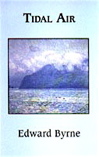
Although at the time I didn’t yet have a son about whom I would write, I already had a number of poems regarding the relationship I had enjoyed with my father. However, in recent years I have written many similar poems about the relationship I have with my son. In fact, Tidal Air has been described generously by Walt McDonald as a book-length diptych, a pair of poems—“first, about a son; last, about a father. The man we come to love both as father and as son is the voice caught in the middle of heartache and natural, ecstatic joy.”

When Mark Strand suggested studying more closely Coleridge’s “Frost at Midnight” as a model for my own poetry, I already knew the poem somewhat, but I admittedly hadn’t examined it as closely as I should have, nor did I immediately recognize the connections to many of my own poems. Strand insisted that I become more familiar with Coleridge’s poem by the next class meeting, which I did. In the decades since then, this poem has been a favorite of mine, one to which I have returned again and again for enlightenment, drawing upon it for guidance in my own writing. I was thankful for Strand’s recommendation that I reexamine Coleridge’s poem, and on this Father’s Day I would like to take the opportunity to urge readers revisit it as well.


FROST AT MIDNIGHT

The Frost performs its secret ministry,
Unhelped by any wind. The owlet’s cry
Came loud--and hark, again! loud as before.
The inmates of my cottage, all at rest,
Have left me to that solitude, which suits
Abstruser musings: save that at my side
My cradled infant slumbers peacefully.
’Tis calm indeed! so calm, that it disturbs
And vexes meditation with its strange
And extreme silentness. Sea, hill, and wood,
This populous village! Sea, and hill, and wood,
With all the numberless goings on of life,
Inaudible as dreams! the thin blue flame
Lies on my low burnt fire, and quivers not;
Only that film, which fluttered on the grate,
Still flutters there, the sole unquiet thing.
Methinks, its motion in this hush of nature
Gives it dim sympathies with me who live,
Making it a companionable form,
Whose puny flaps and freaks the idling Spirit
By its own moods interprets, every where
Echo or mirror seeking of itself,
And makes a toy of Thought.

But O! how oft,
How oft, at school, with most believing mind,
Presageful, have I gazed upon the bars,
To watch that fluttering stranger! and as oft
With unclosed lids, already had I dreamt
Of my sweet birth-place, and the old church-tower,
Whose bells, the poor man’s only music, rang
From morn to evening, all the hot Fair-day,
So sweetly, that they stirred and haunted me
With a wild pleasure, falling on mine ear
Most like articulate sounds of things to come!
So gazed I, till the soothing things, I dreamt,
Lulled me to sleep, and sleep prolonged my dreams!
And so I brooded all the following morn,
Awed by the stern preceptor’s face, mine eye
Fixed with mick study on my swimming book:
Save if the door half opened, and I snatched
A hasty glance, and still my heart leaped up,
For still I hoped to see the strangers face,
Townsman, or aunt, or sister more beloved,
My play-mate when we both were clothed alike!

Dear Babe, that sleepest cradled by my side,
Whose gentle breathings, heard in this deep calm,
Fill up the interspersed vacancies
And momentary pauses of the thought!
My babe so beautiful! it thrills my heart
With tender gladness, thus to look at thee,
And think that thou shalt learn far other lore,
And in far other scenes! For I was reared
In the great city, pent ’mid cloisters dim,
And saw nought lovely but the sky and stars.
But thou, my babe! shalt wander like a breeze
By lakes and sandy shores, beneath the clouds,
Which image in their bulk both lakes and shores
And mountain crags: so shalt thou see and hear
The lovely shapes and sounds intelligible
Of that eternal language, which thy God
Utters, who from eternity, doth teach
Himself in all, and all things in himself.
Great universal Teacher! he shall mould
Thy spirit, and by giving make it ask.

Therefore all seasons shall be sweet to thee,
Whether summer clothe the general earth
With greeness, or the redbreast sit and sing
Betwixt the tufts of snow on the bare branch
Of mossy apple-tree, while the nigh thatch
Smokes in the sun-thaw; whether the eave-drops fall
Heard only in the trances of the blast,
Or if the secret ministry of frost
Shall hang them up in silent icicles,
Quietly shining to the quiet Moon.

—Samuel Taylor Coleridge

Saturday, June 14, 2008

Walt Whitman: "Delicate Cluster"


On Flag Day, a poem from Walt Whitman’s “Drum Taps” section of Leaves of Grass, a group of poems that focus on his observations and emotional reactions after visiting the battlefront during the Civil War:

DELICATE CLUSTER

Delicate cluster! flag of teeming life!
Covering all my lands—all my seashores lining!
Flag of death! (how I watch’d you through the smoke of battle pressing!
How I heard you flap and rustle, cloth defiant!)
Flag cerulean—sunny flag, with the orbs of night dappled!
Ah my silvery beauty—ah my woolly white and crimson!
Ah to sing the song of you, my matron mighty!
My sacred one, my mother.

—Walt Whitman


Tuesday, June 10, 2008

Peter Serchuk: "Not Like This Rose"

The VPR Poem of the Week is Peter Serchuk’s “Not Like This Rose,” which appeared in the Fall/Winter 2003-2004 issue (Volume V, Number 1) of Valparaiso Poetry Review.

Peter Serchuk is the author of Waiting for Poppa at the Southtown Diner (University of Illinois Press). His poetry also has appeared in various literary journals—including American Poetry Review, Boulevard, Denver Quarterly, Mid-American Review, North American Review, Paris Review, Poetry, and South Carolina Review—as well as the recently released anthology, Best American Erotic Poems from 1800 to the Present (Scribner), edited by David Lehman.

Tuesday of each week “One Poet’s Notes” highlights an exceptional work by a poet selected from the archives of Valparaiso Poetry Review with the recommendation that readers revisit it. Please check the sidebar to view the list of poets and works that have been past “Poem of the Week” selections. Additionally, readers are reminded that VPR pages are best read with the browser font preference in which they were set, 12 pt. Times New Roman, in order to guarantee the stanza alignment and the breaks of longer lines are preserved.

Friday, June 6, 2008

Maxine Kumin: To Live Gracefully

In a recent article at the “Harriet” blog on the Poetry Foundation’s web site, Major Jackson discussed his habit of offering recognition to poets on their birthdays: “Once, for a whole year, I organized my reading life according to whose birthday occasioned a visit to the bookshelf. Normally I would choose the poet’s most recent work and honor them with an oral reading, voicing their existence and vision. Other times I would reacquaint myself with a favorite poem or seek some theretofore-unappreciated poem from an older volume. By no means did I do this everyday, but only when fancy struck.”

As can be attested by a number of posts at “One Poet’s Notes” the past couple of years, I also frequently like to acknowledge the birthdays of poets and take advantage of these annual reminders to recommend readers revisit the authors’ works, as well as familiarize themselves with relevant details from the poets’ biographical information. (For those interested, a fairly comprehensive calendar of poets’ birthdays can be found at Andrew Christ’s informative blog, “Birthdays of Poets.”) On some occasions such an exercise simply seems to refresh the reader’s appreciation of a poet’s contributions to our literary history. However, in other instances one obtains an opportunity to glimpse again another’s rich life and grasp some of the complexity or texture a mixture of someone’s personal experiences and observations has lent to the wisdom evident in the written word.

Today, as I pay tribute to Maxine Kumin on her 83rd birthday (born June 6, 1925), I also note that this year marks the tenth anniversary since her near-fatal accident in July of 1998, when a horse bolted during a carriage-driving incident. In the ten years since that traumatic event, Kumin has written in her memoirs and her poetry with a spirit that displays even greater appreciation for each day and that savors what life has to offer, especially in the form of nature’s gifts. Indeed, she relishes life of any kind, as can be discerned in her recent overtly political (though admittedly, at times somewhat less successful) poetry and can be observed in some of her stronger poems addressing unfortunate behavior towards nature and animals, as well as those increasingly frequent poignant and perceptive pieces in her latest books concerning life, aging, death, and an acceptance of one’s own mortality.

Maxine Kumin has published sixteen volumes of poetry, five collections of essays or memoirs, numerous children’s books, and a handful of novels. She has received various awards over the past four decades, including the Pulitzer Prize for Poetry, and she once served as the Consultant in Poetry to the Library of Congress, a position that now carries the title Poet Laureate of the United States.

As I mentioned over a year ago in my review of Jack and Other New Poems (W.W. Norton, 2005), when encountering Maxine Kumin’s poetry one can sometimes become lulled by the steady and resolute direction of her unpretentious sentences. Whether guided by traditional forms and a regular rhyme or filled with the more relaxed sense of free verse, Kumin’s work normally ends up engaging the reader as she steers the content toward a determined end. Even the patterns in her poems, deliberate meditations on nature or mortality and dramatic pieces reflecting personal or political perspectives, rarely seem very surprising and are hardly suspenseful. Yet, this poet’s usually careful control of language and overriding tone frequently prove persuasive enough to enlighten and enrich.

Moreover, in her more formal poems she still manages to present a relaxed or informal voice, one with a lyricism that invites listeners and with a rationale that reassures readers. Now in her eighties, Maxine Kumin often maintains a lively and engaging monologue in which one witnesses a mixture of her wisdom and her wit.

The wisdom arrives from a lifetime of noticing the relationship between humans and nature. Like Robert Frost and Elizabeth Bishop, Kumin has learned the lessons provided by elements in her environment. Although at times expressing herself in the urbane and sophisticated language one might associate with the Philadelphia or Boston of her early years, she now clearly seems more a product of rural New Hampshire, the location which she adopted as her home in the mid-1970s when she and her husband bought a farm for breeding horses. In fact, Kumin served as the New Hampshire Poet Laureate from 1989 to 1994.

A couple of months ago, in an April issue of the Christian Science Monitor, Elizabeth Lund presented a perceptive portrait of Kumin among her New Hampshire surroundings: “For Maxine Kumin, ‘Writing Is My Salvation.’” The profile suggests an author whose life has been devoted to writing, particularly poetry, because of her love for the craft and a feeling of necessity to express her ongoing wonder at the world around her. As Kumin asks when interviewed by Lund: “If I didn’t write, what would I do?” Kumin also confides: “I've reached a point in life where it would be easy to let down my guard and write simple imagistic poems. But I don’t want to write poems that aren’t necessary. I want to write poems that matter, that have an interesting point of view.”

In the Christian Science Monitor piece Lund reports Kumin has recovered remarkably from the broken neck she received in the accident ten years ago. Indeed, despite doctors’ prognosis, she now has regained most of the mobility she had lost. Perhaps partially influenced by the restrictions she has had to endure in recent years due to her physical limitations, the farm stands even more significantly as a place of safety and security. Lund also comments about the poet’s tendency to take in stray animals—dogs, horses, a cat—so that they too find refuge on Kumin’s property, curiously and comically named Pobiz Farm.

Maxine Kumin’s latest collection of poetry, Still to Mow (W.W. Norton, 2007), contains work worth examining for the continuation of Kumin’s use of nature for metaphor and her resumption of contemplations on life, aging, and death. Certainly, Kumin does not heed the famous advice of baseball player Satchel Paige: “Don’t look back. Something may be gaining on you.” Instead, the concluding section in the volume, titled “Looking Back,” displays a few poems recalling a life lived with vigor and vision, including a glance back at a long and loving relationship: “Marriage dizzied us. Hand over hand, / flesh against flesh for the final haul, / we tugged our lifeline through limestone and sand, / lover and long-legged girl” (“Looking Back in My Eighty-first Year”).

In “The Final Poem” Maxine Kumin again looks back and shares with her readers those words of advice once heard from Robert Frost, the New England author of nature metaphors with whom she is often associated by critics, when she was a young poet attending a Bread Loaf session sitting among the “happy few at his feet.” The old poet is described by Kumin: “Magisterial in the white wicker rocker / Robert Frost at rest after giving / a savage reading // holding nothing back, his rage / at dying, not yet, as he barged / his chair forth, then back . . ..” By the closing line of the poem, Frost delivers a last piece of wisdom for the apprentice poets: “Make every poem your final poem.”

Nevertheless as exemplified by an epigraph at the opening of Still to Mow drawn from a comment by the late novelist John Gardner in an interview—“When you look back there’s lots of bales in the field, but ahead it’s all still to mow.”—at age 83, Kumin still seems to be looking forward as much as she looks back. Surely, the magnificent final work (“Death, Etc.”) of her new volume peers forward with a startlingly frank attitude about the frailty of life, and the poem focuses as far ahead as death itself: “We try to live gracefully / and at peace with our imagined deaths but in truth we go forward // stumbling, afraid of the dark, / of the cold, and of the great overwhelming / loneliness of being last.”

Yet, even in meditating on death and the end of everything we know, much of Kumin’s poem connects fluently with colorful images of nature in an agile and lyrical language evoking the environment on Kumin’s farm, as well as the surrounding pastures where her horses or dogs might roam for exercise and the vegetable garden: “I’m not being gloomy, this bright September / when everything around me shines with being: // hummingbirds still raptured in the jewelweed, / puffballs humping up out of the forest duff / and the whole voluptuous garden still putting forth // bright yellow pole beans, deep-pleated purple cauliflowers, / to say nothing of regal white corn that feeds us / night after gluttonous night, with a slobber of butter.”

Remembering Kumin’s remark in the line that appears in the book’s penultimate stanza (“We try to live gracefully . . .”), maybe an appropriate way to begin today’s celebration of Maxine Kumin’s birthday and to honor her place—both the picturesque location of her Pobiz Farm and, more importantly, her prominent position as one of our pivotal contemporary poets who has produced a number of “poems that matter”—would be for readers to visit the Christian Science Monitor’s excellent audio slideshow. The presentation offers a delightfully lively reading of elegant poetry by Kumin accompanied by lovely photographs of her farm and some of its inhabitants, demonstrating a bit of the graceful manner with which this poet lives.

Tuesday, June 3, 2008

Joel Long: "Cold June"

The VPR Poem of the Week is Joel Long’s “Cold June,” which appeared in the Spring/Summer 2004 issue (Volume V, Number 2) of Valparaiso Poetry Review.

Joel Long’s first book, Winged Insects, was the winner of the White Pine Press Poetry Prize in 1999. His poetry has appeared in various magazines, including Bellingham Review, Cape Rock, Chattahoochee Review, Crab Orchard Review, Mid-American Review, Poet Lore, Prairie Schooner, Seattle Review, Sonora Review, Sou’wester, Willow Springs, and Wisconsin Review. His poems also have been anthologized in American Poetry: The Next Generation, Essential Love, and Fresh Water.

Tuesday of each week “One Poet’s Notes” highlights an exceptional work by a poet selected from the archives of Valparaiso Poetry Review with the recommendation that readers revisit it. Please check the sidebar to view the list of poets and works that have been past “Poem of the Week” selections. Additionally, readers are reminded that VPR pages are best read with the browser font preference in which they were set, 12 pt. Times New Roman, in order to guarantee the stanza alignment and the breaks of longer lines are preserved.