POETRY FROM PARADISE VALLEY

POETRY FROM PARADISE VALLEY
Click Image to Visit the Pecan Grove Press Web Page for Poetry from Paradise Valley

POETRY FROM PARADISE VALLEY web page

Poetry From Paradise Valley

Pecan Grove Press has released an anthology of poems, a sampling of works published in Valparaiso Poetry Review during its first decade, from the original 1999-2000 volume to the 2009-2010 volume.


Poetry from Paradise Valley includes a stellar roster of 50 poets. Among the contributors are a former Poet Laureate of the United States, a winner of the Griffin International Prize, two Pulitzer Prize winners, two National Book Award winners, two National Book Critics Circle winners, six finalists for the National Book Award, four finalists for the National Book Critics Circle Award, two finalists for the Pulitzer Prize, and a few dozen recipients of other honors, such as fellowships from the Guggenheim Foundation, the National Endowment for the Arts, etc.

Readers are encouraged to visit the Poetry from Paradise Valley page at the publisher's web site, where ordering information about the book can be found.

Best Books of Indiana 2011: Finalist. Judges' Citation: "Poetry from Paradise Valley is an excellent anthology that features world-class poetry, including the work of many artists from the Midwest, such as Jared Carter, Annie Finch, David Baker, and Allison Joseph. It’s an eclectic and always interesting collection where poems on similar themes flow into each other. It showcases the highest caliber of U. S. poetry."
—Indiana Center for the Book, Indiana State Library

Tuesday, June 30, 2009

Joey Nicoletti: "The Cook-Out"

The VPR Poem of the Week is Joey Nicoletti’s “The Cook-Out,” which appeared in the Fall/Winter 2005-2006 issue (Volume VII, Number 1) of Valparaiso Poetry Review.

Joey Nicoletti teaches at Southern Illinois University-Edwardsville and has had poetry published in various magazines, including Gulf Stream, Italian Americana, The Potomac, Puerto del Sol, Southwestern American Literature, and others.

Tuesday of each week “One Poet’s Notes” highlights an excellent work by a poet selected from the archives of Valparaiso Poetry Review, except when other posts with news or updates preempt the usual appearance of this item, with the recommendation that readers revisit it. Please check the sidebar to view the list of poets and works that have been past “Poem of the Week” selections. Additionally, readers are reminded that VPR pages are best read with the browser font preference in which they were set, 12 pt. Times New Roman, in order to guarantee the stanza alignment and the breaks of longer lines are preserved.

Saturday, June 27, 2009

An Elegant Epigraph: Frank O'Hara on Writing About Experience


Frank O’Hara celebrated his birth as this date (June 27) in 1926. [Readers should note recent recovery of records indicates he actually may have been born on March 27, 1926.] When asked by Donald Allen to provide a preface for his poems in the New American Poetry anthology published in 1960, O’Hara at first supplied his now well-known “manifesto” on “Personism.” However, Allen determined the submitted essay did not suit the tenor of the anthology; therefore, O’Hara substituted a shorter prose piece. Although not as famous as O’Hara’s explanation of “Personism,” which compared the process of writing a poem to the intimacy and directness of talking on the telephone with another, Frank O’Hara’s subsequent statement authored in 1959 for the Allen anthology appears to offer some valuable advice:

“I am mainly preoccupied with the world as I experience it, and at times when I would rather be dead the thought that I could never write another poem has so far stopped me. I think this is an ignoble attitude. I would rather die for love, but I haven’t.

“I don’t think of fame or posterity (as Keats so grandly and genuinely did), nor do I care about clarifying experiences for anyone or bettering (other than accidentally) anyone’s state or social relation, nor am I for any particular technical development in the American language simply because I find it necessary. What is happening to me, allowing for lies and exaggerations which I try to avoid, goes into my poems. I don’t think my experiences are clarified or made beautiful for myself or anyone else, they are just there in whatever form I can find them. What is clear to me in my work is probably obscure to others, and vice versa. My formal ‘stance’ is found at the crossroads where what I know and can’t get meets what is left of that I know and can bear without hatred. I dislike a great deal of contemporary poetry—all of the past you read is usually quite great—but it is a useful thorn to have in one’s side.

“It may be that poetry makes life’s nebulous events tangible to me and restores their detail; or conversely, that poetry brings forth the intangible quality of incidents which are all too concrete and circumstantial. Or each on specific occasions, or both all the time.” —Frank O’Hara


—From New American Poetry 1945-1960 (Grove Press, 1960), and reprinted in Frank O’Hara: Standing Still and Walking in New York (Grey Fox Press, 1975), both edited by Donald Allen.

Readers are invited to view some of the other articles at “One Poet’s Notes” with commentary, audio, and video concerning Frank O’Hara: “Frank O’Hara: Having a Coke with You,” “The Poet and the Painter: Grace Hartigan and Frank O’Hara,” “Grace Hartigan and Frank O’Hara,” “Larry Rivers and Frank O’Hara,” and “Frank O’Hara and Jackson Pollock.”


[“An Elegant Epigraph” serves as the recurring title for a continuing series of posts with entries containing brief but engaging, eloquent, and elegant excerpts of prose commentary introducing subjects particularly appropriate to discussion of literature, creative writing, or other relevant matters addressing complementary forms of art and music. These apposite extracts usually concern topics specifically relating to poetry or poetics. Each piece is accompanied by a recommendation that readers seek out the original publication to obtain further information and to become familiar with the complete context in which the chosen quotation appeared as well as other views presented by its author.]

Tuesday, June 23, 2009

Claire Bateman: "Flight Path"

The VPR Poem of the Week is Claire Bateman’s “Flight Path,” which appeared in the Spring/Summer 2006 issue (Volume VII, Number 2) of Valparaiso Poetry Review.

Claire Bateman’s collections of poetry are Leap (New Issues Press, 2005), Clumsy (New Issues Press, 2003), At the Funeral of the Ether (Ninety-Six Press, 1998), Friction (Eighth Mountain Press, 1998), and The Bicycle Slow Race (Wesleyan University Press, 1993). Her poems also have appeared in various anthologies—such as The Wesleyan Tradition (Wesleyan University Press, 1991) and The Kenyon Poets (Kenyon Review, 1989)—as well as numerous literary journals, including Georgia Review, New England Review, and Paris Review.

Tuesday of each week “One Poet’s Notes” highlights an excellent work by a poet selected from the archives of Valparaiso Poetry Review, except when other posts with news or updates preempt the usual appearance of this item, with the recommendation that readers revisit it. Please check the sidebar to view the list of poets and works that have been past “Poem of the Week” selections. Additionally, readers are reminded that VPR pages are best read with the browser font preference in which they were set, 12 pt. Times New Roman, in order to guarantee the stanza alignment and the breaks of longer lines are preserved.

Sunday, June 21, 2009

Father's Day Poem

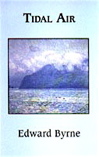
On this Father’s Day I am once again reminded of various scenes shared with my father that continue as images in my mind and frequently are included among the vivid reflections filling lines of my poems. Indeed, one of my volumes of poetry, Tidal Air, presents a book-length poem in the form of a diptych with each half containing a dozen sections about father-son relationships: the first part, “Whole Notes and Half Tones” (described as “Songs for My Son”), regards my relationship with my son beginning with his birth; the second portion, “Cormorants in Morning Light” (labeled “Memoirs for My Father”), presents some significant moments associated with specific elegiac recollections of my father that have arisen since his death. As a sample from that segment, I offer today “Florida Drought: A Remembrance,” the fifth piece of the twelve cantos concerning my father.


FLORIDA DROUGHT: A REMEMBRANCE

A bright haze held all afternoon as August’s
pervasive heat presented itself once again.

After weeks of warm weather, the summer
grass, that now had been tinged brown, stretched

like a tattered sleeve along an exposed bank
blown dry by wind: the yellow-veined palms

tossed softly forth with each breath of Gulf
current. Our skin already stung by sun, we sat

on a bench beneath those trees until evening.
With cool relief brought by each sea breeze,

we sighed in satisfaction. I know the words
we spoke mattered little, or so it seems: today,

only images linger—the red sunset flaming
beyond a flock of gulls, a bright streak of beach,

those bicycle paths unreeling along the shore,
a cargo-laden keel disappearing in the distance.

Soundless sights remain in my memory
like portraits of some season of loss—the last year

we’d experienced such an extended shortage
of rain, the summer you first felt your stunning

pain. Perhaps, I do not need much more
than those short glimpses yet kept as preservation.

Somehow, I will always remember that night—
how palm trees already were slipping to silver

under a cast of pale moonlight as a few full
sails still labored across the windswept bay.

—Edward Byrne


For those interested in reading the complete sequence of poetry in Tidal Air, I invite you to order a copy from Pecan Grove Press at the book’s publicity page on the publisher’s web site. In addition, since this weekend coincides with the U.S. Open Golf Championship, scheduled every year for the final round to fall on Father’s Day, watching the event once again evokes other more pleasant memories of those many fine times shared with my father on a golf course. Indeed, in a previous post at “One Poet’s Notes”—titled “Golfing with My Father” after a poem by W.D. Ehrhart that appeared in Valparaiso Poetry Review and is reprinted in the article—I have written in prose about assorted impressions of my father that are tied to the sport, and I recommend readers revisit that commentary as well.

Tuesday, June 16, 2009

Gary Lechliter: "Bobby Signs Bluegrass"

The VPR Poem of the Week is Gary Lechliter’s “Bobby Signs Bluegrass,” which appeared in the Fall/Winter 2004-2005 issue (Volume VI, Number 1) of Valparaiso Poetry Review.

Gary Lechliter is the author of two poetry collections: Foggy Bottoms (2008) and Under the Fool Moon (2001), both published by Coal City Review Press. His poems also have appeared in various literary journals, including Atlanta Review, Cedar Hill Review, Chariton Review, Midwest Quarterly, New Letters, and Rattle. In addition, Lechliter is a recipient of the Langston Hughes Award for Poetry and the David Ray Award.

Tuesday of each week “One Poet’s Notes” highlights an excellent work by a poet selected from the archives of Valparaiso Poetry Review, except when other posts with news or updates preempt the usual appearance of this item, with the recommendation that readers revisit it. Please check the sidebar to view the list of poets and works that have been past “Poem of the Week” selections. Additionally, readers are reminded that VPR pages are best read with the browser font preference in which they were set, 12 pt. Times New Roman, in order to guarantee the stanza alignment and the breaks of longer lines are preserved.

Saturday, June 13, 2009

An Elegant Epigraph: William Butler Yeats on Sources of Imagination


I shall find the dark luminous, the void fruitful . . .


W.B. Yeats was born on this date (June 13) in 1865.

“He only can create the greatest imaginable beauty who has endured all imaginable pangs, for only when we have seen and foreseen what we dread shall we be rewarded by that dazzling, unforeseen, wing-footed wanderer. We could not find him if he were not in some sense of our being, and yet of our own being but as water with fire, a noise with silence. He is of all things not impossible the most difficult, for that which comes easily can never be a portion of our being; soon got, soon gone, as the proverb says. I shall find the dark luminous, the void fruitful when I understand I have nothing, that the ringers in the tower have appointed for the hymen of the soul a passing bell.” — William Butler Yeats

—From Per Amica Silentia Lunae (1917)


[“An Elegant Epigraph” serves as the recurring title for a continuing series of posts with entries containing brief but engaging, eloquent, and elegant excerpts of prose commentary introducing subjects particularly appropriate to discussion of literature, creative writing, or other relevant matters addressing complementary forms of art and music. These apposite extracts usually concern topics specifically relating to poetry or poetics. Each piece is accompanied by a recommendation that readers seek out the original publication to obtain further information and to become familiar with the complete context in which the chosen quotation appeared as well as other views presented by its author.]

Tuesday, June 9, 2009

Kevin Rabas: "Reseed"

The VPR Poem of the Week is Kevin Rabas’s “Reseed,” which appeared in the Spring/Summer 2007 issue (Volume VIII, Number 2) of Valparaiso Poetry Review.

Kevin Rabas is the author of two poetry collections, Bird’s Horn and Other Poems (Coal City Review Press, 2007) and Lisa’s Flying Electric Piano (Woodley Press, 2009). Rabas has had poems appear in numerous literary journals, including Coal City Review, Malahat Review, Mid-American Poetry Review, Mochila Review, Prairie Journal, Red Rock Review, River King, and Rockhurst Review. In addition, he is a winner of the Langston Hughes Award. Kevin Rabas teaches creative writing and literature at Emporia State University. He also co-edits Flint Hills Review and writes for Jazz Ambassador Magazine (JAM).

Tuesday of each week “One Poet’s Notes” highlights an excellent work by a poet selected from the archives of Valparaiso Poetry Review, except when other posts with news or updates preempt the usual appearance of this item, with the recommendation that readers revisit it. Please check the sidebar to view the list of poets and works that have been past “Poem of the Week” selections. Additionally, readers are reminded that VPR pages are best read with the browser font preference in which they were set, 12 pt. Times New Roman, in order to guarantee the stanza alignment and the breaks of longer lines are preserved.

Saturday, June 6, 2009

Maxine Kumin: "Seven Caveats in May"


Maxine Kumin was born on this date (June 6) in 1925. In an article at “One Poet’s Notes” last June, “Maxine Kumin: To Live Gracefully,” which includes links to a reading by the poet accompanied by a slideshow of lovely photographs of Kumin on her farm with some of its inhabitants, the piece demonstrated a bit of the graceful manner with which she lives. In that post I described Kumin’s career as a poet:
Maxine Kumin has published sixteen volumes of poetry, five collections of essays or memoirs, numerous children’s books, and a handful of novels. She has received various awards over the past four decades, including the Pulitzer Prize for Poetry, and she once served as the Consultant in Poetry to the Library of Congress, a position that now carries the title Poet Laureate of the United States.

As I mentioned over a year ago in my review of Jack and Other New Poems (W.W. Norton, 2005), when encountering Maxine Kumin’s poetry one can sometimes become lulled by the steady and resolute direction of her unpretentious sentences. Whether guided by traditional forms and a regular rhyme or filled with the more relaxed sense of free verse, Kumin’s work normally ends up engaging the reader as she steers the content toward a determined end. Even the patterns in her poems, deliberate meditations on nature or mortality and dramatic pieces reflecting personal or political perspectives, rarely seem very surprising and are hardly suspenseful. Yet, this poet’s usually careful control of language and overriding tone frequently prove persuasive enough to enlighten and enrich.

Moreover, in her more formal poems she still manages to present a relaxed or informal voice, one with a lyricism that invites listeners and with a rationale that reassures readers. Now in her eighties, Maxine Kumin often maintains a lively and engaging monologue in which one witnesses a mixture of her wisdom and her wit.

In the video shown here, Maxine Kumin reads “Seven Caveats in May” at the New York State Writers Institute in 2005. Readers are encouraged to examine further details about Kumin and her poetry included in the lengthier previous posts mentioned above: “Maxine Kumin: To Live Gracefully” and “Maxine Kumin: Jack and Other New Poems.”

Wednesday, June 3, 2009

C.D. Wright Wins Griffin Prize for International Poetry


At a ceremony in Toronto Wednesday evening, C.D. Wright was named the winner of the 2009 Griffin Prize for International Poetry for her book of poems, Rising, Falling, Hovering. Wright had been a finalist once before in 2003 for her collection titled Steal Away. In the video above Wright reads a sample of her work—“Key Episodes from an Earthly Life,” included in that earlier volume—at the 2003 Griffin Prize festivities.

Valparaiso Poetry Review on Twitter

For those visitors who have Twitter accounts, I am pleased to report that updates concerning Valparaiso Poetry Review and periodic posts to VPR’s editor’s blog, “One Poet’s Notes,” are now available through Twitter. Readers can follow literary news events or information concerning poetry and poetics, as well as announcements about publication of latest issues of VPR, by signing up at http://twitter.com/valpopoetry or by clicking on the Twitter logo in the “One Poet’s Notes” sidebar.

Tuesday, June 2, 2009

Joel McCollough: "Scroll"

The VPR Poem of the Week is Joel McCollough’s “Scroll,” which appeared in the Spring/Summer 2005 issue (Volume VI, Number 2) of Valparaiso Poetry Review.

Joel McCollough’s poetry has appeared in various literary journals, including Blue Unicorn, Chattahoochee Review, Cold Mountain Review, Cumberland Poetry Review, Gulf Stream Magazine, Illuminations, Poem, and Southern Poetry Review. His poems also have been published in two anthologies, A Millennial Sampler of South Carolina Poets and Quintet, which includes a chapbook sampling of his work, both released by Ninety-Six Press.

Tuesday of each week “One Poet’s Notes” highlights an excellent work by a poet selected from the archives of Valparaiso Poetry Review, except when other posts with news or updates preempt the usual appearance of this item, with the recommendation that readers revisit it. Please check the sidebar to view the list of poets and works that have been past “Poem of the Week” selections. Additionally, readers are reminded that VPR pages are best read with the browser font preference in which they were set, 12 pt. Times New Roman, in order to guarantee the stanza alignment and the breaks of longer lines are preserved.