A Poet and Editor's Recommended Readings or Responses to Poetry, Fiction, Criticism, and Related Arts
POETRY FROM PARADISE VALLEY
Click Image to Visit the Pecan Grove Press Web Page for Poetry from Paradise Valley
POETRY FROM PARADISE VALLEY web page
Poetry From Paradise Valley
Pecan Grove Press has released an anthology of poems, a sampling of works published in Valparaiso Poetry Review during its first decade, from the original 1999-2000 volume to the 2009-2010 volume.
Poetry from Paradise Valley includes a stellar roster of 50 poets. Among the contributors are a former Poet Laureate of the United States, a winner of the Griffin International Prize, two Pulitzer Prize winners, two National Book Award winners, two National Book Critics Circle winners, six finalists for the National Book Award, four finalists for the National Book Critics Circle Award, two finalists for the Pulitzer Prize, and a few dozen recipients of other honors, such as fellowships from the Guggenheim Foundation, the National Endowment for the Arts, etc.
Readers are encouraged to visit the Poetry from Paradise Valley page at the publisher's web site, where ordering information about the book can be found.
Best Books of Indiana 2011: Finalist. Judges' Citation: "Poetry from Paradise Valley is an excellent anthology that features world-class poetry, including the work of many artists from the Midwest, such as Jared Carter, Annie Finch, David Baker, and Allison Joseph. It’s an eclectic and always interesting collection where poems on similar themes flow into each other. It showcases the highest caliber of U. S. poetry." —Indiana Center for the Book, Indiana State Library
Peter Serchuk has had recent poems appear in MARGIE, Third Wednesday Journal, Inkwell, New York Quarterly, and New Plains Review. In addition, a new collection, All That Remains, is published by MARGIE/Intuit House.
Tuesday of each week “One Poet’s Notes” highlights an excellent work by a poet selected from the issues of Valparaiso Poetry Review, except when other posts with news or updates preempt the usual appearance of this item, with the recommendation that readers revisit it.
As the end of the semester nears, I take this moment to reflect once again on the significant degree of development witnessed in the poetic skill of the students in my undergraduate introduction to poetry writing course during the past few months. I also would like to use this opportunity to announce the class poetry reading, which will be held Wednesday, December 1, at 7:00 p.m. in the Brauer Museum of Art.
Each fall semester during the last weeks of classes I pleasantly discover one special reward of teaching poetry writing. For many years the syllabus in my poetry writing course has included a culminating event to celebrate the fine poems attained by the students in compositions contributed as class assignments.
Fortunately, through the long-standing cooperation of Valparaiso University’s Brauer Museum of Art, every December my students have had the honor of presenting a formal reading in the wonderful setting of one of the museum’s main galleries to which all at the university and townspeople in the surrounding community are invited for an evening of poetry, followed by a chance to speak with the student poets while enjoying refreshments during a reception in the lobby.
The university’s office of public relations assists by publicizing the evening, usually resulting in a large and appreciative audience filling the museum. This semester, as part of the promotion for the student reading, the public relations staff videotaped a couple of the students in my class who will be participating. These recordings and information about the event will be available at the main web page of the university in the days preceding the reading.
I wish to congratulate my students in advance of their reading. I always admire the courage revealed during the students’ reading as they gaze out at those in the rows of chairs before them, a crowd that has often exceeded one hundred. To deliver one’s personal thoughts and emotions to others in lyric poems often leaves the writer feeling very vulnerable, especially when speaking to numerous strangers.
I’m sure a number of the students originally might have been nervously hesitant about a public reading of their poetry when they first learned about it in the syllabus at the start of the semester—particularly because normally some of the students are only freshmen or sophomores and may not even be English or creative writing majors (there have been majors in biology, psychology, physics, and computer science, among others). Nevertheless, every year a certain amount of competence and confidence gathered through class conversations and workshop of their poems apparently permits them to bravely read with assurance.
As I have written in the past, I have frequently been challenged to defend creative writing courses and the notion anyone could learn creative writing in an academic setting the way other subjects are presented and comprehension achieved. Even colleagues have posed such questions out of curiosity. Whenever asked about this, I have responded affirmatively. As in painting and music classes, creative writing courses provide opportunities for students to gain knowledge and to practice the craft. With proper training and encouragement, each individual should demonstrate advancement in his or her abilities over a period of time.
However, I always have qualified my replies by reminding all that accomplishments at the highest levels of creativity and achievements of excellence in writing poetry or fiction, as in any other art, depend upon a certain amount of inherent qualities held by an author—an acute sensitivity to the sound and sense of language, an inquisitive mind filled with imaginative and innovative perspectives, and a deep desire to continually better oneself expressed through ongoing study of examples produced by other writers (past and present), as well as great dedication exhibited in one’s own hard work and an admirable ambition accompanied by the willingness to risk failure.
If addressed with concerns about whether creative writing can be taught, I usually refer to comments by Dave Smith, one of my creative writing teachers, who once offered an explanation in his book, Local Assays: On Contemporary American Poetry: “Writing can be and always has been taught. One may teach both the forms and formulas of literature. . . . In writing what is taught is respect for time, history, discipline, struggle, expectation, and accomplishment.”
When my students end a semester in poetry writing, I usually suggest their task has just begun if they truly want to excel as poets. I recommend that they consider the term’s lessons about how to employ language effectively—and any basic knowledge gained about composition, style, or form—ought to be seen merely as a start toward a more singular and stimulating voice, as well as an invitation to use the tools consequently provided by classroom discussions to find words, lines, and stanzas that supply the literary means to stretch one’s vision, perhaps allowing an instinctive initiation of imagery or an intuitive attainment of insight.
However, I realize few of the students in my creative writing classes ever contemplate continuing with poetry or fiction writing as a vocation, and some may never publish a poem or read their poetry publicly again. Still, I hope all of them will be avid readers throughout their lives, and I believe creative writing courses develop better readers as well as better writers, particularly by encouraging a supplemental view through the author’s eyes when reading. Additionally, as Dave Smith further writes: “Creative writing is one of the few formal opportunities in education for self-discovery and self-creation. It leads a student less to right answers than to right questions. It creates more intelligent, informed, and responsible readers by immersing them in the actual process of imaginative exploration and accomplishment.”
Just as in past years, I have enjoyed my poetry writing course this semester with a fine group of young poets, and I encourage attendance at the class reading by anyone in the area.
Daniel Donaghy is the author of two books of poetry, Streetfighting (BkMk Press, 2005) and Start with the Trouble (University of Arkansas Press, 2009). His work also has appeared in numerous journals, including Alaska Quarterly Review, Cimarron Review, Commonweal, The Hollins Critic, New Letters, Prairie Schooner, Southern Review, and Texas Review. He is an assistant professor of English at Eastern Connecticut State University.
Tuesday of each week “One Poet’s Notes” highlights an excellent work by a poet selected from the issues of Valparaiso Poetry Review, except when other posts with news or updates preempt the usual appearance of this item, with the recommendation that readers revisit it.
In his article published on Sunday at the Huffington Post, “Online Literary Journals Come of Age: 15 Top Online Journal Editors Speak,” Anis Shivani posed a few questions, including the following: “After at least a decade of sustained presence, what can we say about the status of journals that promote literature online?“ and “Have online journals come of age yet?” As I have indicated on numerous occasions in the past, these questions represent a sampling of those I had hoped someday to see in conversations ever since the initial publication of Valparaiso Poetry Review in October of 1999. In fact, as I previously stated a year and a half ago (“Online Literary Journals: Coming of Age”):
When Valparaiso Poetry Review was begun in 1999, I imagined universal acceptance of online literary journals would take a number of years, and I considered the possibility that a decade might pass before electronic literary magazines would come of age. With the general recognition today, by almost all poets and most short-fiction writers, of such journals as satisfactory locations for publication, as well as the nearly universal presence of print journals in some online form, perhaps the maturation of online journals has happened just as I had hoped would occur.
The editors contacted by Shivani offered various observations and opinions in their responses to the Huffington Post. Rebecca Morgan Frank, editor-in-chief of Memorious: A Journal of New Verse and Fiction, opened with the following:
Yes, online journals have "come of age": we've evolved from being the medium that people did not take seriously, and considered ephemeral, to being an enduring medium that models innovation in the important work of keeping literature relevant and accessible to readers. Print journals are following the lead of online journals by going online-only themselves (Triquarterly, Shenandoah), by having a companion online version with different content (Harvard Review, Agni), or by offering limited content and archives online. Online and print journals are essentially doing the same work: bringing together writers and readers.
Colleen Ryor, founding editor of The Adirondack Review, called attention to the universal availability of work in online journals:
Online literary journals are bringing poetry to a wider, more international audience in a way that would be highly impractical, if not impossible, for print journals to do. Because readers can now print out their favorite poems with the click of a button, and writers can reach a much wider audience than was previously possible, it's difficult for printed journals to compete with that immediacy and convenience.
Gregory Donovan, senior editor at Blackbird, noted that online journals are sometimes at the forefront of breaking literary news:
In 2006, Blackbird offered a previously unpublished sonnet by the young Sylvia Plath, including her typescripts and the annotated page from her own copy of The Great Gatsby which inspired the poem, and not only made international news, but told an important story about how a poet is made, not born. That event helped announce the online journal's arrival as a force to be taken seriously.
Andy Hunter, editor-in-chief at Electric Literature, spoke of the circulation numbers enjoyed by online journals:
The obvious answer to "What are online literary journals doing that print journals are failing to do?" is: reaching thousands of readers. A reasonably successful literary website has a readership of over 10,000; fewer than five print journals in the world have that many readers.
Ravi Shankar, editor at Drunken Boat, commented upon the possibilities of presentation in online journals:
Online, the word, once static and paginated, has morphed into movement and sound, hyperlink and interactivity, changing the experience of reading into something richer and more intertextual.
I am delighted by this attention to online literary journals on a site such as the Huffington Post, which will expand awareness to even more readers. However, those familiar with One Poet’s Notes will recall these questions have been addressed a number of times here. For instance, I again refer visitors to an April 2009 article, “Online Literary Journals: Coming of Age,” and a March 2010 article, “Literary Journals, from Print to Online: An Update.” Indeed, I wrote an introductory piece to the tenth anniversary issue of Valparaiso Poetry Review in October of 2009, “Editor’s Note of Appreciation,” that also remarked upon this issue, as in the following portion from my statement:
I believe most readers of contemporary literature have been amazed in the past decade by the growth in popularity and the increased sophistication level of various online literary journals. I know I admire the wonderful work witnessed in many electronic publications nowadays, and I regularly applaud the activities of their editors. Moreover, as I have suggested in my writing elsewhere, I believe we have finally reached a point where readers may safely say they are observing a coming of age for the online literary journal.
I have been pleased to notice, as further evidence of an increased respect for online magazines, the “table of contents” pages of some electronic literary journals now display a wide range of well-known poets and fiction writers whose presence was limited to print journals not too long ago, and whose contributions bring greater attention to those emerging authors publishing exciting work alongside them. Moreover, when I glance at the “acknowledgments” pages of new books of poetry or volumes of literary commentary, I find myself noting how many titles of online journals, including Valparaiso Poetry Review, are represented side by side with those titles of traditional print periodicals, all of which seem to have adopted at least some degree of online presence as well in recent years. In fact, various print journals have evolved into “hybrids,” also offering their content online, and during the past few years, readers have seen esteemed literary magazines start to migrate fully from a print format to an online-only status.
I invite readers to visit the links above. Please take a moment or two to reflect upon and appreciate the progress made by online literary journals in the first decade of this century.
Since 1976, editor Bill Henderson has brought added recognition to the many fine small presses and literary journals publishing quality material with his annual anthology, The Pushcart Prize: Best of the Small Presses. In recent years, the nomination process for the Pushcart Prize has been opened to online journals and their editors. I have been pleased to see this acknowledgment of the quality of writing found in many electronic publications. Therefore, I am honored to offer the half-dozen works listed below as the 2010 nominees from Valparaiso Poetry Review for the Pushcart Prize. I hope readers will again view this action as an expression of VPR’s endorsement for the inclusion of literature from online magazines in the long-standing tradition of this fine anthology.
As I have continually mentioned when nominating works from Valparaiso Poetry Review for the additional recognition of an award or further publication in any “best of” anthology, I value all the poems and depend on all the poets in VPR; therefore, such decisions are not easy. Yet, I welcome the admirable efforts of the Pushcart Press and Bill Henderson to bring attention to the excellent literary works found in small presses and journals, in print and online. Moreover, I am grateful when an opportunity arises for a few of VPR’s splendid poets to reach an even larger audience and find the greater recognition they deserve through possible inclusion in such an anthology.
I am proud to announce the six following poems represent the 2010 nominations from Valparaiso Poetry Review to be considered for inclusion in the next volume by the Pushcart Press, The Pushcart Prize: Best of the Small Presses XXXVI, which is scheduled to be published in 2011:
PUSHCART PRIZE NOMINEES FROM VALPARAISO POETRY REVIEW
As I have mentioned previously, I have created a separate blog site as an open experiment of poetry composition, perhaps a glimpse at an emerging manuscript as it matures. The contents represent portions of an ongoing personal project with a particularly narrow focus intended to eventually develop toward a book-length poem tentatively and simply titled Autism.
The poem will grow as sections are added. The individual pieces are designed so that they may be viewed as independent items; however, I have consciously carried themes, images, and language through the extended sequence with the hope that connectivity and continuity will be preserved among numerous sections of the long poem.
Readers are asked to regard Autism as a work in progress, a partial draft rather than a finished product (even if a few selected segments previously may have appeared in print), and I request everyone realize various revisions—edits, emendations, or expansion—may be made to the posts at any time in the future.
After studying literature and history at Texas A&M and graduating from The University of Michigan Law School, Christopher Cessac received an M.A. from The Writing Seminars at Johns Hopkins University. Cessac’s book of poems, Republic Sublime (Zoo Press) won the Kenyon Review Prize in Poetry. Another collection, Eros Among the Americans, was published by Main Street Rag Press. His work has appeared in Antioch Review, Black Warrior Review, Cimarron Review, Kenyon Review, Mudlark, Sycamore Review, and elsewhere.
Tuesday of each week “One Poet’s Notes” highlights an excellent work by a poet selected from the issues of Valparaiso Poetry Review, except when other posts with news or updates preempt the usual appearance of this item, with the recommendation that readers revisit it.
When the latest issue of Valparaiso Poetry Review was released last month, this blog’s notice reported that the journal had undergone a transition to updated software and a new format. In the process, the many changes created a number of challenges. However, I was pleased the appearance of VPR’s Fall/Winter 2010-2011 issue (Volume XII, Number 1) occurred almost without any problems. Nevertheless, one glitch occurred; although Zara Raab’s review of Marilyn Hacker’s Names could be viewed on most browsers, it was not visible for users of Safari. When I contacted my technical advisor at the university about this error, I was informed “the page contained a bunch of junk code,” which now has been eliminated.
Consequently, I would like to use this opportunity to bring the review by Zara Raab to everyone’s attention:
“How are you American?”
Marilyn Hacker is an American poet with deep roots in Europe and friendships with poets, living and dead, past and present, in places like Pakistan, St. Petersburg, and Paris. English is this poet’s mother tongue, but as she says, “it travels” (51). An American by “language, economic determination” (68), she has New York City, where she studies Arabic in a café with the young Palestinian-American poet Deema Shehabi; but as a Jew, she also has diaspora. Given that in the years of the second Bush presidency with war in Iraq and Afghanistan,
‘God Bless America’ would be blasphemy if there were a god concerned with humanity (50)
the poet longs for asylum or exile—but where is there a place on earth not torn by war or oppressed by despots?
Names is in part a ghazal of longing for a better—more just—country than the one “our” America has become. Even if you do not share Hacker’s vision of justice, these poems are well worth the effort in their power of imagery and metaphor, in their skill and complexity of form. Names is also a book about writing—words, names—and about the Writer’s Life—the risk, danger, and sacrifice. It’s about the daily lives of those who choose not simply to experience life, but to distill that experience. Against the diasporan poet’s need to travel, there is a corresponding need for “staying put” that
Provides the solidest Comfort as daylight diminishes at four: The street becomes, again, a palimpsest Of hours, days, months and years that came before And what is better was, and what is best Will be its distillation. (21)
She is aware of the power and misuse of power writers wield, when “a speechwriter drafts the ukase / which, broadcast to a military base, / sends children and their city up in flames.” (31) Of the large cast of writers in Names, each has a mission, whether it’s the Algerian novelist Kateb Yacine, or the novelist Nathalie Sarraute working underground as a journalist for the French Resistance. Above all, Hacker connects to the political and personal risks of speaking out—exile, imprisonment, death—as well as the paranoia of living in a repressive society. . . .
[I invite readers to examine the rest of the review, and I hope all visitors will also browse the entire new issue of Valparaiso Poetry Review. In addition, I remind readers that VPR: Valparaiso Poetry Review, a Facebook fan page, has now been established, available to all on the Internet, whether or not they have Facebook accounts. Therefore, visitors are invited to record their enthusiasm for the journal by becoming a fan of Valparaiso Poetry Review.]
As suggested by Rembrandt’s painting, The Conversation, accompanying this post, a primary purpose of the VPR editor’s blog has been to generate and accommodate conversations about the wonderful writings in Valparaiso Poetry Review, as well as other works of contemporary poetry or poetics and complementary reports concerning related art forms, such as painting or music. Likewise, additional avenues for communication or discussion have been instituted and designed periodically for regularly informing readers of VPR about contents in the journal’s numerous issues or news concerning its many fine authors.
Recently, the number of members listed at the Valparaiso Poetry Review Facebook page surpassed 2,000. Visitors with Facebook accounts are encouraged to join the Valparaiso Poetry Review Facebook group for posts notifying about publication of latest issues and updates on news of interest to VPR’s readership. This is categorized as an open group anyone can join. In addition, everyone may participate with commentary on the Facebook group page’s discussion board about authors and works appearing in all the issues of VPR.
Each member of this group automatically is informed whenever new issues of Valparaiso Poetry Review are released or other information concerning news about VPR occurs. This group page replaced the original and outdated VPR e-mail subscription list initially created for notification upon the release of new issues.
Furthermore, readers are reminded that Valpopoetry is Valparaiso Poetry Review's Twitter list, which currently includes nearly 1,000 followers and regularly informs readers with brief bits of information or news bulletins containing items concerning poetry and poetics. Visitors with Twitter accounts are encouraged to join Valpopoetry for daily updates.
Finally, VPR: Valparaiso Poetry Review, a Facebook fan page, has now been established, which will be available to all readers on the Internet, whether or not they have Facebook accounts. For various other technical reasons, a number of readers have requested this type of format as an option, and the fan page has become a necessary addition. Therefore, visitors are invited to record their enthusiasm for the journal by becoming a fan of Valparaiso Poetry Review.
As always, I appreciate the continuing support for Valparaiso Poetry Review by its readers and contributors, and I hope everyone will recommend the VPR media pages to friends interested in poetry, poetics, or other topics concerning literature and the arts.
Carrie Shipers is the author of two chapbooks, Ghost-Writing (Pudding House Press, 2007) and Rescue Conditions (Slipstream Press, 2008), as well as a full-length collection, Ordinary Mourning (ABZ Press, 2010). Her poetry has appeared in North American Review, Crab Orchard Review, Connecticut Review, Hayden's Ferry Review, and Antigonish Review, among other journals.
Tuesday of each week “One Poet’s Notes” highlights an excellent work by a poet selected from the issues of Valparaiso Poetry Review, except when other posts with news or updates preempt the usual appearance of this item, with the recommendation that readers revisit it.
The new issue of Valparaiso Poetry Review contains an interview I did with featured-poet A.E. Stallings compiled from parts of an ongoing conversation conducted in a series of e-mail messages to her in Greece during this past summer. Stallings has published two books of poetry, Archaic Smile (1999), which won the Richard Wilbur Award, and Hapax (2006). Her recent verse translation of Lucretius, The Nature of Things, is published by Penguin Classics.
I enjoyed learning additional information about this poet’s background and her approach to composing or translating poetry. I also appreciated her responses concerning expectations or labels sometimes placed upon contemporary poets closely associated with traditional form and rhyming poems. For example, Stallings opens her reply to one question regarding perceptions of formalist poets with the following:
Personally, I find it a little depressing and somewhat perplexing that people want to divide up poems based on whether they rhyme or not. (And let’s face it, this is about rhyme—blank verse can often “pass” for free verse. Meter doesn’t get people exercised, but rhyme sure does.) Are Emily Dickinson and Alexander Pope similar poets, should they be in the same school? Well, they both rhyme. That’s how absurd it is, seems to me. I’d like people to look beyond that to other aspects of the poems.
There are bad and boring poets that rhyme, of course. It is interesting to me that in attacks against formal poetry (and I have served as a jumping off point to some of them in reviews), there is never any naming of names, just clichéd generalities about “new formalism,” whatever that is . . . .
Lynnell Edwards is the author of two books of poetry, including The Highwayman’s Wife. Her poetry and reviews have appeared in numerous literary journals, such as Dos Passos Review, Georgia Review, Los Angeles Review, Pleiades, Poetry East, Rain Taxi, Southern Poetry Review, and Verse Daily. She is the recipient of the 2007 Al Smith Fellowship from the Kentucky Arts Council. Edwards teaches writing and literature courses at the University of Louisville.
Tuesday of each week “One Poet’s Notes” highlights an excellent work by a poet selected from the issues of Valparaiso Poetry Review, except when other posts with news or updates preempt the usual appearance of this item, with the recommendation that readers revisit it. Please check the sidebar to view the list of poets and works that have been past “Poem of the Week” selections.
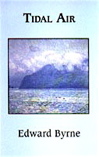
I am happy to report that Yanaguana Literary Review has published a review by Janet McCann of my current collection of poems, Seeded Light. The commentary also contains references to my previous book, Tidal Air.
I am grateful for a number of observations offered in the review, but I am especially pleased to find a detailed focus on “Summer Evening: Truro, 1947,” a poem I included among those I offered in my poetry reading Wednesday evening. The review indicates this work “is really a poem about both what Hopper’s art is and what art is generally.” Indeed, I mentioned during my presentation that I had composed the poem upon reading a biography of Edward Hopper, but I designed the piece to be a metaphor for the overall imaginative artistic process, particularly the way I find it in writing poetry. As McCann’s review states: “Creation for the artist as well as the poet is a mix of observation, abstraction, imagination.”
In addition, I am delighted by the review’s characterization of the works in Seeded Light as “dynamic poems, always moving through a scene, through a life.” I am aware my poems are often labeled descriptive and painterly, terms I treasure, thus I am repeatedly concerned that my pieces also show movement, degrees of physical or emotional development, to avoid becoming static or appearing too sedate.
As I have mentioned in the past, I tend to attempt representations in my poems of contrasting or conflicting forces, subtly positioning opposing elements or emotions for readers to contemplate and find what another reviewer has determined “the beauty of equilibrium”; therefore, I was cheered by McCann’s closing comments in the review: “These poems take readers on very human journeys through translucent landscapes where the world is in some way in balance, or in touch, with what we are. They especially lend themselves to meditative reading, and their gift is a sense of deepened understanding of and participation in the natural world.”
I appreciate this perceptive look at Seeded Light, and I recommend the review to readers.
Order all three in the trilogy for 30% discount . $35.00 (Free shipping for all orders)
Mail a check (payable: "Edward Byrne") to Edward Byrne, English Department, Valparaiso University, Valparaiso, IN 46383
Dark Refuge (Whale Sound, 2011)
Click Image for Audio Chapbook
Recent Release
DARK REFUGE
Dark Refuge, a sequence of poems in an audio chapbook and online text, is now available for free, as well as an mp3 recording, e-book copy, and pdf file of the poetry. A print edition of the book and a cd may also be ordered.
SEEDED LIGHT (Turning Point, 2010)
Click Image for Information
Praise for SEEDED LIGHT:
Seeded Light by Edward Byrne (Turning Point Books, 2010)
Best Books of Indiana 2011: Finalist. Judges' Citation:"As the title implies, [Seeded Light] includes many poems where nature plays an important part. An emphasis on human relationships intertwines with natural description to give these poems philosophical and emotional depths. Byrne brings to life an old family farm gone fallow, a visit to an inn where the speaker spent his honeymoon, and Lester Young playing tenor sax." —Indiana Center for the Book, Indiana State Library
" ... is memorial and social, scenic and intimate ..." —David Baker
" ... offers abundant evidence of a mind’s alertness to the world of nature and to modern urban reality ..." —Alfred Corn
"... as mysterious and elusive as the permutations of light and shadow for which Byrne has such a canny eye ... subtly virtuosic displays of rhyme, alliteration, and assonance ..." —Frank Wilson The Philadelphia Inquirer
"Rich, shaded, and subtle in texture, with second lines often bleeding into the next couplet, these open couplets expand meaning, encouraging the reader to follow." —Zara Raab Poemeleon
"... there is always light, from the slimmest of glimmers to full moony illumination, and it is that light, seeded throughout, that we will remember, long after we close the pages and turn off the lamp." —Barbara Crooker Rattle
"The liveliness of any art, Byrne implicitly and convincingly argues, depends on union of emotion and intellect, design and accident." —Lesley Wheeler The Adirondack Review
“These poems take readers on very human journeys through translucent landscapes where the world is in some way in balance, or in touch, with what we are. They especially lend themselves to meditative reading, and their gift is a sense of deepened understanding of and participation in the natural world.” —Janet McCann Yanaguana Literary Review
"What makes Byrne's poems memorable is his control of plain language that serves as a guiding light." —JL Kato Tipton Poetry Journal
ORDER NUMBERED & SIGNED COPIES OF SEEDED LIGHT
Seeded Light (Turning Point Books, 2010) is Edward Byrne's sixth collection of poetry. The refined poems of this volume invite the reader into a spacious world . . .
Obtain a unique copy of Seeded Light, numbered & signed by the author, at a 25% discount, plus free shipping. Mail a check (payable to "Edward Byrne") for $13.50 to the following:
Edward Byrne Department of English Valparaiso University Valparaiso, IN 46383
Valpopoetry is Valparaiso Poetry Review's Twitter list, which regularly informs readers with brief bits of information and news bulletins containing items concerning poetry or poetics. Visitors with Twitter accounts are encouraged to join Valpopoetry for daily updates.
Readers are invited to join the Valparaiso Poetry Review Facebook group for updates on news and publication of latest issues of VPR. This is an open group anyone can join and currently consisting of more than 2100 members. In addition, everyone may participate with commentary on the Facebook page's discussion board about authors and works appearing in all the issues of VPR.
IMPORTANT: All members of this group automatically will be informed whenever new issues of Valparaiso Poetry Review are released or other information concerning news about VPR occurs. This replaces the old VPR mailing list for notification of new issues.
In addition, readers are encouraged to participate in conversations about VPR contents and to display support for the journal by becoming a fan of Valparaiso Poetry Review.
"One Poet's Notes" presents ongoing personal commentary by a poet/editor about contemporary poetry, fiction, and criticism, as well as various other issues relating to the literary arts, and it is intended to complement content in the semiannual publications, Valparaiso Poetry Review and Valparaiso Fiction Review.
Collections selected for discussion in this editor's blog include distinguished works published in the last few years by small presses, university presses, or major publishing houses.
In addition, readers are reminded to participate in conversations about VPR contents and to display support for the journal by becoming a fan of Valparaiso Poetry Review or of Valparaiso Fiction Review.
Edward Byrne is the author of eight collections of poetry, most recently a trilogy of volumes: TIDAL AIR (Pecan Grove Press, 2002), SEEDED LIGHT (Turning Point Books, 2010), and TINTED DISTANCES (Turning Point Books,2011). DARK REFUGE (2011), an audio chapbook offering a sequence of poems from AUTISM: A POEM, is available from Whale Sound. He has also edited two anthologies of poetry, including POETRY FROM PARADISE VALLEY (Pecan Grove Press, 2010). In addition, his essays of literary criticism have been published in various journals and book collections, including MARK STRAND (Chelsea House Publishers), edited by Harold Bloom; A CONDITION OF THE SPIRIT: THE LIFE AND WORK OF LARRY LEVIS (Eastern Washington University Press), edited by Christopher Buckley and Alexander Long; “Claudia Emerson: Literary Criticism” in POETRY FOR STUDENTS (Thomson Gale Publishing), edited by Ira Mark Milne; and DAVID BOTTOMS: CRITICAL ESSAYS AND INTERVIEWS (McFarland & Co.), edited by William Walsh. He is a professor in the English Department at Valparaiso University, where he serves as editor of VALPARAISO POETRY REVIEW and co-editor of VALPARAISO FICTION REVIEW.
Contact: Edward.Byrne@Valpo.Edu
Valparaiso Poetry Review presents poems, interviews, and essays by new, emerging, or well-known poets, including Sherman Alexie, David Baker, John Balaban, Walter Bargen, Claire Bateman, J.P. Dancing Bear, Jared Carter, Billy Collins, Mark Conway, Peter Cooley, Alfred Corn, Barbara Crooker, Kwame Dawes, Cornelius Eady, Lynnell Edwards, W.D. Ehrhart, Claudia Emerson, Bernardine Evaristo, Patricia Fargnoli, Annie Finch, Daisy Fried, Jeff Friedman, Carol Frost, Brendan Galvin, Reginald Gibbons, David Graham, Jonathan Holden, T.R. Hummer, Colette Inez, Gray Jacobik, Allison Joseph, Adrianne Kalfopoulou, Julia Kasdorf, David Kirby, Dorianne Laux, Laurence Lieberman, Frannie Lindsay, Diane Lockward, Rachel Loden, William Matthews, Walt McDonald, Alicia Ostriker, Elise Paschen, Kevin Pilkington, Stanley Plumly, Rochelle Ratner, Sherod Santos, Margot Schilpp, Vivian Shipley, Beth Simon, Jeffrey Skinner, Floyd Skloot, Dave Smith, Kate Sontag, Barry Spacks, Virgil Suarez, Catherine Tufariello, Brian Turner, Ingrid Wendt, Charles Wright, and many more.
BOOK REVIEWS IN VPR
Valparaiso Poetry Review contains other book reviews and essays on various poets, including Maggie Anderson, David Baker, John Balaban, Linda Bierds, Elizabeth Bishop, Marianne Boruch, David Bottoms, Jericho Brown, Jared Carter, Sharon Dolin, Rita Dove, Lynnell Edwards, Claudia Emerson, B.H. Fairchild, Patricia Fargnoli, Beth Ann Fennelly, Ann Fisher-Wirth, Jeff Friedman, Carol Frost, Brendan Galvin, Jorie Graham, Zbigniew Herbert, Brenda Hillman, Janet Holmes, Cathy Park Hong, Donald Justice, Adrianne Kalfopoulou, Ilya Kaminsky, Mary Karr, Ted Kooser, Philip Levine, Larry Levis, Rachel Loden, William Matthews, Campbell McGrath, Susan Mitchell, Gregory Orr, Michael Palmer, Sherod Santos, Vivian Shipley, William Stafford, Mark Strand, Brian Turner, Charles Wright, and others. Pages for these can be located in the archives section of VPR.
Submit Review Copies of Books
Authors and publishers are invited to submit review copies of recent books to the following address:Edward Byrne - Editor, Department of English, Valparaiso University, Valparaiso IN 46383-6493
Selected Poets Reviewed at "One Poet's Notes" (use blog search for commentary on additional poets)
Each week One Poet's Notes will try to highlight work by a poet selected from the issues of Valparaiso Poetry Review. According to the children's rhyme, "Tuesday's child is full of grace." Therefore, graceful poems from VPR's issues will be featured on Tuesdays except when other posts with news or updates preempt the usual appearance of this item.


 The VPR Poem of the Week is Peter Serchuk’s “Facing the Wall,” which appears in the Fall/Winter 2010-2011 issue (Volume XII, Number 1) of Valparaiso Poetry Review.